
Bandar Abbas - The war between the United States and Iran is officially in a ceasefire, but nobody is speaking as if real peace is actually intended. According to Iranian state media, Tehran has delivered its response to the latest American proposal, yet even the few details currently known show how fragile this moment really is. For now, this is not about a major political reconciliation, not about trust and not even about a complete restructuring of relations. It is about the simple end of hostilities, about another thirty days without open war, about reopening the Strait of Hormuz and about whether the global economy should remain tied to a blocked shipping lane much longer.

Iran delivered its position through Pakistani mediators. Pakistan had already helped broker the ongoing ceasefire and hosted senior American and Iranian representatives for talks in April. Donald Trump stated on Friday that he expected a response from Iran. Now it has arrived, yet its contents remain largely hidden. That fits perfectly into a situation where every side publicly projects toughness while simultaneously searching for ways to control a disaster they themselves continue fueling.

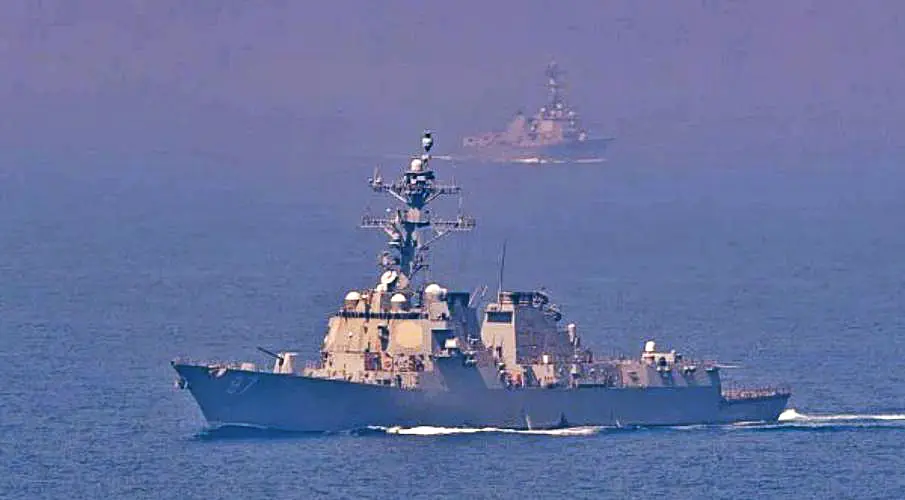
The central point of conflict remains the Strait of Hormuz. This narrow connection between the Persian Gulf and the Arabian Sea is one of the most sensitive trade routes in the world. For weeks it has effectively remained blocked. Around 1,600 ships are stranded inside the Persian Gulf. Tankers can pass only in limited fashion or not at all. The blockade is not being maintained solely by Iran, but is also being intensified through countermeasures by the American side. After several clashes between American and Iranian naval forces, the passage remains a military danger zone. Any incident could be enough to shatter the already fragile ceasefire.

The negotiations therefore initially revolve around a limited agreement. According to current reports, Washington and Tehran are discussing a deal that would halt fighting for another thirty days and reopen Hormuz. During that period, negotiations would then continue toward a broader agreement. It sounds like diplomacy, but above all it is damage control. As long as the shipping lane remains blocked, energy prices rise, supply chains come under pressure and millions of people feel the consequences at gas stations, inside businesses and ultimately in the prices of everyday goods.
Inside the United States, the pressure is already becoming visible. Energy Secretary Chris Wright stated on Sunday that the administration is open to temporarily suspending the federal gasoline tax. The administration supports any measure capable of lowering prices at the pump, he said. According to AAA, the national average price stood at $4.52 per gallon. The federal tax amounts to slightly more than 18 cents per gallon of gasoline and around 24 cents per gallon of diesel. Even if the tax were immediately suspended, the average gasoline price would still remain roughly $4.34 per gallon - far above the $2.98 Americans were paying shortly before the war against Iran began.

That shows how limited such domestic emergency measures really are. A tax cut at the gas pump may briefly relieve some pressure, but it does not solve the actual problem. Prices will not come down in Washington as long as Hormuz remains blocked. Wright admitted he could not provide forecasts for oil or gasoline prices. But he also acknowledged that prices would fall once traffic through the Strait of Hormuz could move freely again. In doing so, he indirectly admitted what this administration prefers not to say openly: the war Trump started is now directly hitting American households.
Donald Trump on Iran’s enriched uranium buried deep beneath the rubble: “We will get it at some point. We are monitoring it. I created something called the Space Force, and they are watching the whole thing. If anybody gets near that place, we will know it - and we will bomb them.”
Trump himself, meanwhile, continues escalating the rhetoric. In an interview today, he said the United States was monitoring Iran’s remaining stockpiles of enriched uranium and would “eventually” obtain the material. At the same time, he threatened that anyone approaching the facilities would be detected and bombed. He declared that the United States would know if anyone came near the site and would “blow them up.” It is the language of a president who no longer treats military threats as a last resort, but as a normal part of political communication.
One central question nevertheless remains unresolved. Since the beginning of the war, Trump has claimed the objective is to permanently prevent Iran from building a nuclear weapon. He repeatedly points to the bombing of Iranian nuclear facilities last summer. At the same time, international inspectors have warned that Iran likely still possesses significant quantities of highly enriched uranium, presumably buried deep beneath the bombed sites. Trump initially downplayed those concerns, saying last month that he did not particularly care because the material was so deep underground. Now he says the United States is monitoring it and will eventually retrieve it. Indifference becomes threat once again, and threat turns once more into contradiction.
Israel is also making clear that it does not consider the war over. In a preview for an interview with “60 Minutes,” Benjamin Netanyahu stated that the war with Iran is “not finished.” Much had been achieved, he said, but nuclear material and enriched uranium still remained and needed to be removed from Iran. Asked how that would happen, Netanyahu essentially replied: you go in and take it. Trump, he added, had told him he wanted to go in there. Netanyahu said he saw no problem with that if an agreement were reached and the material then removed.
These statements show how far apart the positions remain. For Washington and Jerusalem, the end of the war appears imaginable only if Iran not only halts further enrichment, but also surrenders existing material or allows it to be removed from the country. For Tehran, exactly that would represent a massive loss of control over its own nuclear program. Senator Jack Reed, the top Democrat on the Armed Services Committee, stated on Sunday that Iran’s nuclear facilities are extremely difficult to destroy. He said he does not expect Iran’s leadership to surrender control over its nuclear program. Reed also pointed to Iran’s global leverage through Hormuz. As long as Tehran can block or threaten the shipping lane, it possesses a pressure tool extending far beyond the region.
Republican rhetoric sounds no less severe. Senator David McCormick of Pennsylvania, chairman of the Middle East subcommittee within the Foreign Relations Committee, stated that Iran must surrender its enriched uranium, its nuclear weapons and its path toward nuclear weapons during negotiations. The wording itself is delicate because Iran denies possessing nuclear weapons. McCormick said it remains unclear whether Iran will choose the path of reason. If not, the president has made clear that the United States possesses military capabilities capable of applying further pressure.
That leaves the ceasefire trapped in a dangerous intermediate state. It holds, but carries almost no trust. It prevents major attacks, but not smaller confrontations. It creates room for negotiations, yet the key actors continue speaking the language of military power. Iran responds to an American proposal while Trump threatens additional strikes. Netanyahu speaks of a war that is not over. Senators from both parties explain why Iran will either refuse to compromise or must face even greater pressure. At the same time, hundreds of ships wait inside the Persian Gulf while American drivers pay prices that leave this administration politically vulnerable.

The real drama therefore lies not only in Tehran’s response, but in whether anyone is still willing to politically end the war instead of merely tactically interrupting it. A thirty-day agreement can buy time. It can reopen Hormuz, calm oil prices and prevent additional clashes. But it does not resolve the underlying conflict over Iran’s uranium, the Israeli demand for the physical removal of the material, Trump’s instinct toward threats or Iran’s determination not to surrender its most important leverage card.
The coming days will reveal whether Tehran’s response represents a path out of war or merely another step in an endless negotiation over the pause between two attacks. As long as Hormuz remains blocked, the global economy remains hostage to this conflict. As long as Washington and Jerusalem publicly discuss “going into” Iran, every diplomatic formula remains endangered. And as long as Trump believes war can be managed like a pricing problem at the gas pump, every ceasefire becomes little more than another delay before the next explosion.
Updates – Kaizen News Brief
All current curated daily updates can be found in the Kaizen News Brief.
To the Kaizen News Brief In English


Zitat: „….Ein dreißigtägiges Abkommen kann Zeit kaufen. Es kann Hormus öffnen, Ölpreise beruhigen und weiteren Gefechten vorbeugen…“
Oder es bkeibt das, was es jetzt ist.
Ein gegenseitiges Belauern.
„Kleinere“ Feuergefechte.
Selbst wenn der Iran die Strasse von Hormus für 30 Tage frei gibt, ist die Frage, was Trump macht
Ohne Aufhebung der Sanktionen gegen iranische Tanker, wird es nicht voran gehen.
Und so lange es nur eine dreißigtägige Feuerpause ist, bleibt die Sorge der Reeder, der Versicherer.
In 30 Tagen kann viel passieren.
Auf beiden Seiten.
Man sieht es ja jetzt fast täglich.
Der Ölpreis an den Börsen wird reagieren.
Aber die Weltbevölkerung wird davon erstmal nichts zu spüren bekommen.