
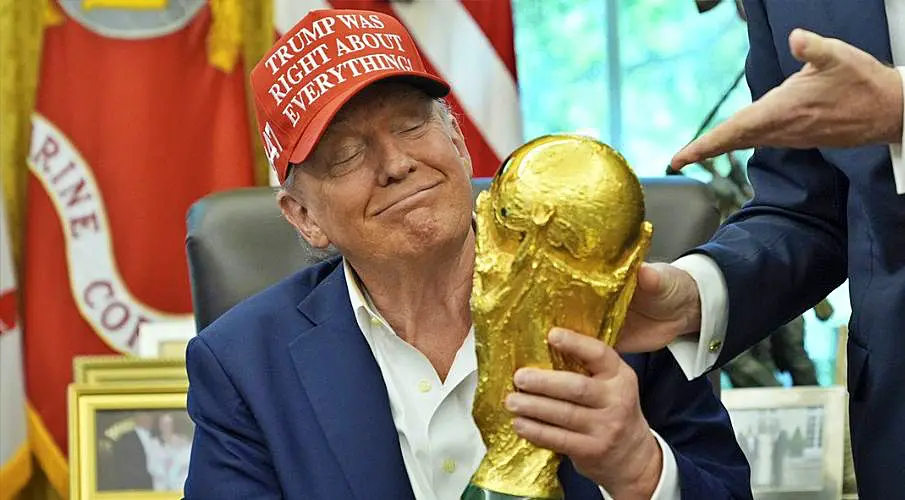
Homeland Security Secretary Markwayne Mullin informed the country that his department is prepared to secure World Cup matches across the United States. Prepared, but not finished, because before the opening match on June 12 in Los Angeles, there is still “a lot of work left to do.” “I feel very comfortable with where we are, and we feel this is a mission that cannot fail. But it is going to be complicated,” Mullin told the House Homeland Security Committee on Wednesday. A mission that cannot fail is a remarkable claim coming from an agency that has recently had ample opportunity to practice failure elsewhere.
Millions of fans will come into the country, he continued, the entire event amounts to “78 Super Bowls in 38 days,” and “we have some very complicated countries playing against each other that have tremendous dislike for one another.” One must already view world affairs in a rather particular way to measure them in Super Bowls and sort nations according to the degree of their mutual hostility as though this were a group stage draw. Mullin thanked state and local authorities at the host locations for their cooperation and ended with a wish: “I hope when FIFA is over, we can show that we can work together and continue keeping our cities and streets safe.” That FIFA itself may one day also be over is a comfort the sentence certainly does not intend.
Beginning June 10, we will report every day, just not about football. Because the real game is not taking place on the field but at its edges, where the same agency welcoming millions of guests usually decides who must leave the country again. Anyone paying attention will not find the more interesting contest inside the stadium.
Updates – Kaizen News Brief
All current curated daily updates can be found in the Kaizen News Brief.
To the Kaizen News Brief In English


Wahrscheinlich werden sie sich genau bis zum Endspiel „zurück halten“, damit Trump seine große Selbstdarstellerbühne bekommt.
Trump interessiert sich weder für Football noch für Fußball.
Was ihn aber interessiert, ist die mediale Aufmerksamkeit.
Er kann nichts weniger ertragen, wenn er nicht im Mittelpunkt steht.
Bzw nutzt jede Gelegenheit bestehende mediate Aufmerksamkeit auf sich zu lenken.
Wer in die faschisten USA reist und die corrupted FIFA unterstützt, hat den moralischen Kompass verloren und lügt sich permanent selber in die Tasche „Fußball ist bicht politisch“.
Boycott FIFA!!!