
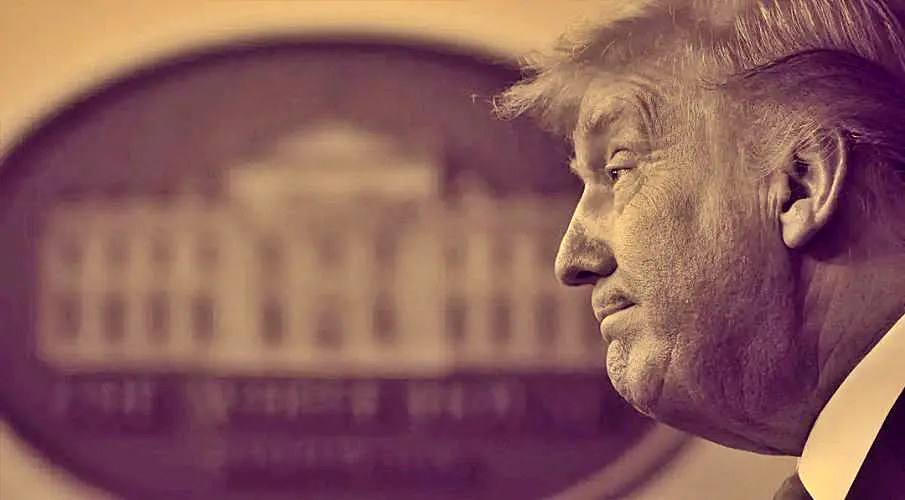
Twice, courts have stopped Donald Trump’s tariffs. Now forced labor is being used as the legal lever against fifty nine countries and the European Union!
President Donald Trump has proposed tariffs of at least ten percent on sixty American trading partners, his most determined effort yet to impose new import duties after the Supreme Court struck down the administration’s sweeping tariffs. U.S. Trade Representative Jamieson Greer stated Tuesday evening that investigations had found that the fifty nine countries together with the twenty seven member states of the European Union had failed to enact or effectively enforce laws against the import of goods produced through forced labor.
It is worth paying attention to the order of events because here it is reversed. Normally, one first has an objective and then takes a measure. In this case, the measure had long been decided, namely the tariffs, and the objective was searched for only after the courts blocked the previous path. Invoking a legal basis known as Section 301, the administration proposed a twelve and a half percent duty on imports from countries such as China, Brazil, South Korea, Switzerland, and the United Kingdom. Goods from the European Union, Canada, and Mexico would face a ten percent tariff.
That Section 301 is now being used has its own history. Trump has made clear that he intends to rebuild his tariff project through this provision after the Supreme Court ruled that he exceeded his authority when imposing duties under the International Emergency Economic Powers Act, or IEEPA, without congressional approval. After the court struck down those tariffs, Trump attempted to revive them in part through a worldwide ten percent duty under Section 122 of the Trade Act of 1974, a provision never previously used. In May, a trade court ruled that the move violated the law. The tariffs had originally been set to expire at the end of July. Greer’s office has also opened an investigation into what the administration describes as “excess production capacity” among sixteen of America’s largest trading partners.
What the actual motivation may be was stated without hesitation by one expert. “After the Supreme Court struck down the IEEPA tariffs, they needed a legal basis to rebuild Trump’s tariff wall, and this was a convenient way to do it,” said Steve Okun, chief executive of geopolitical consulting firm APAC Advisors. He added: “Tariffs are here to stay under the Trump administration.” Greer’s office plans hearings on the proposed tariffs on July 7, after which they are expected to take effect. “The failure of our major trading partners to address imports made with forced labor is unacceptable,” Greer said. “This creates a situation where American workers must compete globally under unequal conditions.”
Some products remain exempt from the tariffs, including beef, bananas, coffee, steel, and a range of critical minerals. Keep beef in mind because it returns in a leading role and in a particularly revealing way. The move is likely to anger some of America’s closest trading partners, whose relationship with Washington has already been strained by difficult negotiations and the Supreme Court’s February ruling. In the days following Trump’s meeting with Chinese leader Xi Jinping in Beijing last month, the Chinese government attempted to draw a line under trade tensions and stated that both sides had agreed not to raise tariffs further while warning that it could retaliate if Washington did so. Mao Ning, spokesperson for China’s Foreign Ministry, told reporters Wednesday that China rejects unilateral tariffs in any form. “Tariff wars and trade wars are in no one’s interest,” she said. Olof Gill, spokesperson for the European Commission, stated that the European Union remains “fully committed” to removing forced labor goods from global supply chains and had already reached a joint agreement with the United States to protect labor rights. Augustine Lo, trade attorney at Dorsey & Whitney, noted that the proposed duties “closely follow trade agreements the Trump administration reached with certain countries before the court invalidated the IEEPA tariffs.” That too says something about the real purpose. A tariff that mirrors earlier arrangements so closely is not seeking justice. It is merely looking for a new sign above the door.
In a ninety eight page report available to us and which we actually read despite the absurdity of it, released alongside the proposal, Greer’s office laid out what it considers to be the failures of countries in dealing with goods produced through forced labor. The report highlighted the widespread use of forced labor involving Uyghurs and other ethnic minorities in the production of cotton and polysilicon in China’s western Xinjiang region. Experts and investigators have documented evidence of forced labor, mass detention, and the internment of Muslim communities, including Uyghurs, in so called reeducation camps. This part is not a pretext but a bitter reality, and the Chinese government contributes by simply denying it. “There is no such thing as forced labor in China,” Mao said, adding that Beijing rejects using this issue “as a pretext for political manipulation.” One side denies a real injustice while the other suddenly discovers it the moment it needs leverage.
How far this use extends becomes visible in the individual justifications. Government representatives justified the proposed ten percent tariff on the European Union by arguing that the Union’s recently adopted regulation against imports made with forced labor will not take effect until the end of 2027. “Because the European Union cannot enforce its measure until then, it follows that it cannot do so effectively until then,” the report states. The Union is therefore being punished because its anti forced labor law does not yet apply, and this is presented as concern about forced labor.
The final act, however, belongs to beef, the very product exempt from tariffs and yet called as a witness by the report. It pointed to a sharp increase in Brazilian beef exports to China. Brazil, a major supplier to China, deepened its trade ties with Beijing after American beef became a casualty of Trump’s trade war. China’s willingness to purchase Brazilian beef that was allegedly produced under forced labor conditions created a competitive distortion by generating a cost advantage, according to the report. Then comes the sentence that reveals the entire exercise. “Other circumstances, such as the size of the American cattle herd, may also have influenced competition between U.S. and Brazilian beef,” the report states. “Nevertheless, under otherwise equal conditions, the United States likely would have sold more beef to China, generated more revenue, and exported more if imports made with forced labor had been prohibited.” Translated, this means: perhaps Americans simply had fewer cattle, but without other people’s forced labor they surely would have done better, assuming equal conditions that never exist.
In the end, what remains is a remarkable process. A real injustice, forced labor in Xinjiang, becomes the tool of a tariff policy that existed first and only later found its reason. The uncomfortable part is not that the justification is false because at its core it is true. The uncomfortable part is that it is true and is still being used. Someone genuinely concerned about victims of forced labor would not exempt beef from tariffs while penalizing the European Union because its forced labor ban does not take effect for another two years. It is the difference between a cause and a pretext, and it can be recognized through one simple question. Would the concern remain if the tariff could still be achieved without it?
To be continued - in court …
Updates – Kaizen News Brief
All current curated daily updates can be found in the Kaizen News Brief.
To the Kaizen News Brief In English


Haben die USA denn strenge Auflagen gegen Zwangsarbeit bzw. Importe aus Zwangsarbeit ? Die EU selbst produziert doch keine Exportartikel in Zwangsarbeit, wieso dann die Zölle ? Ich glaube ich habe einen Denkfehler 😵💫
…kann man gar nicht ernst nehmen und vor gericht wird das einkassiert
Trump ist schlicht von Zöllen besessen.
Nachdem der Supreme Court die Zölle kassiert hat, hätte die EU eine gute Gelegenheit gehabt den vollkommen unfairness Zolldeal mit den USA neu zu verhandeln.
Was macht die EU?
Genau, sie verifiziert den Deal.
Einen DeL der nur aufgrund des Drucks von unrechtmäßigen Zöllen entstanden ist.
Zum Thema Rindfleisch.
Wer glaubt Trump, arbeitet in den Fleischfabriken? Unter anderem Kinder, illegale Migranten (aber nicht bur).
In den USA wird so oft gegen Zwangsarbeit verstossen, dass man sich fragen muss, wie Trump da mit dem Finger auf andere Länder zeigen kann.
Und genau mit dieser Argumentation sollte die EU etc zurück schlagen.
Nicht wieder buckeln um ihn zu besänftigen.
Das es leider weltweit viel Zwangsarbeit gibt, ist leider nicht von der Hand zu weisen.
Aber das als Druckmittel für Zölle zu nutzen, ist einfach unterste Schublade 🤬