
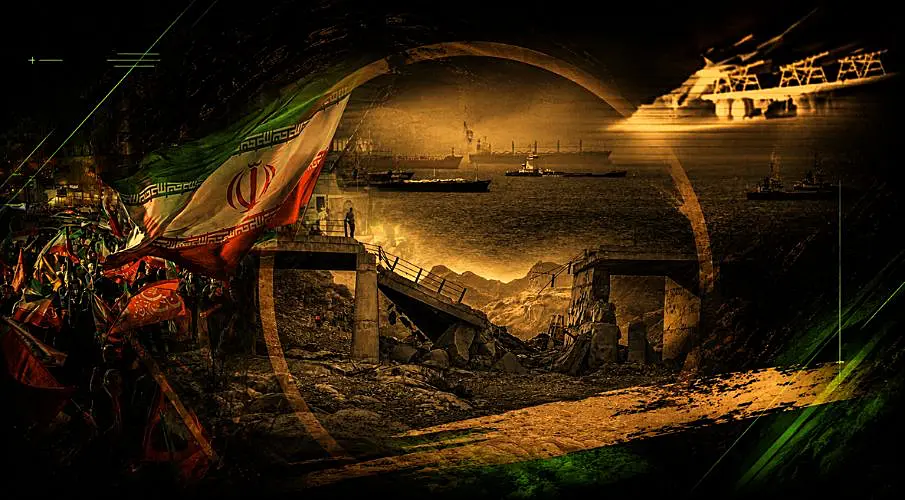
In recent days, 3 American service members have been killed, 2 in Jordan and 1 in Iraq, bringing the total number of American dead in this war to 17. So far, the Pentagon has released 2 names, which was already more than it had grown accustomed to doing lately. Lieutenant Tyler James Feehan, 25, from Hawaii, and Private Isabella Gonzales, 19, from Texas, died Friday when Iranian missiles struck Muwaffaq Salti Air Base in Jordan. A third service member in Jordan was initially listed as missing, until remains were found and identified as his. The service member in northern Iraq died Saturday after being struck by shrapnel during the controlled detonation of a downed Iranian drone. They are the first American combat deaths since March, and they come in a war that has been raging since February 28, when the United States and Israel began their attacks on Iran.

The number 17 is precise, and that very precision distracts from everything that remains unclear. While the Pentagon names its dead according to fixed rules, only 24 hours after their families have been notified, it continues to conceal what is happening alongside those deaths. In the week before the deadly attack in Jordan, Iran had already struck there 3 more times, according to several American officials. Those attacks wounded dozens of service members and damaged several helicopters. The Pentagon mentioned neither the attacks, nor the wounded, nor the damage. In statements released after its own airstrikes, U.S. Central Command spoke only of retaliation for Iranian attacks on commercial ships in the Strait of Hormuz. Not a word about the dead on the bases.

More than 430 American service members have been wounded in this conflict so far, according to U.S. Central Command itself. Yet the Pentagon has stopped updating even that overall figure after reporting it regularly during the early stages of the war. Why, one military official asked, should the United States hand Iran information that could help it aim its missiles and drones more accurately at bases where thousands of American troops are stationed? For the same reason, the command has also stopped announcing how many targets it strikes inside Iran each day. The last major briefing on the war took place in early May. Since then, after nearly 5 months of war, very little has come out of the department about the American strategy. The Pentagon has also remained silent about its own equipment losses, leaving the only public account to come from the enemy. Tehran claims it destroyed a large number of American Black Hawk helicopters and badly damaged facilities including aircraft hangars. Whether that is true cannot be verified, but the fact that no one is refuting it is itself an answer. When one government stays silent, the other speaks, and the public is left to decide which one it distrusts less.

This is where the real wound lies, and it does not affect soldiers alone. In his essay Perpetual Peace, Immanuel Kant set out a principle by which governments can be judged. An action whose guiding principle cannot be publicly acknowledged without defeating its own purpose is unjust, because anything that fears the light of public scrutiny thereby reveals that it does not have justice on its side. That is exactly where the official silence fails. A war whose costs the government hides from its own people removes itself from the judgment of those in whose name it is being fought. What is not counted cannot be weighed, and what cannot be weighed escapes responsibility.
This silence has predecessors, and it must be measured against them. Under previous administrations, the Pentagon generally waited until families had been notified before releasing the number of wounded service members, but it released those figures nonetheless. During the Biden administration, it routinely disclosed how many troops had been injured in attacks by Iranian-backed militias on bases in Syria and Iraq. The fact that it is no longer even publishing an updated overall total is no longer just a matter of operational security. It is a decision about how much the American people should know about their own war.
Trump on the deaths of three U.S. service members in the recent Iranian attacks: "We feel very badly. But you know, those great people were out there so Iran can't have a nuclear weapon. We'll see what happens."
Meanwhile, the war has entered its ninth straight night of attacks. U.S. Central Command reported strikes against Iranian command centers, air defense systems, coastal surveillance facilities, and missile and drone launch sites. Near the northwestern city of Tabriz, about 320 miles from Tehran and believed to be home to underground Revolutionary Guard missile bases, an American strike killed at least one person, according to Iranian officials. "We hit them very hard again last night," President Trump said, adding that the strikes had been carried out in honor of the fallen service members. When speaking about their deaths themselves, however, he struck a different tone. He said America felt very badly, but those great people had been out there to make sure Iran could never obtain a nuclear weapon, and "we'll see what happens." It was the tone of a man ending a letter of condolence with little more than a shrug. Defense Secretary Pete Hegseth said the deaths of the two service members in Jordan would only strengthen America's resolve.

Iran's retaliation struck the very countries hosting American troops. In Bahrain, home to the U.S. Navy's Fifth Fleet, air raid sirens sounded twice on Monday morning. Kuwait reported that its air defenses had engaged an incoming wave of Iranian missiles. Since the collapse of the ceasefire, at least 50 people have been killed and 517 wounded inside Iran, according to Iranian officials, including 8 people who died in an attack on a bridge last Friday. The war is now hitting the civilian infrastructure that millions of people on both sides depend on.

Along the Persian Gulf, the image of this war is now burning inside a single ship. Early Monday morning, a cargo vessel caught fire about 8 nautical miles off the coast of Oman after being struck by a projectile while sailing along the alternate route recommended by the U.S. military to avoid Iran's control of the Strait of Hormuz. The crew abandoned ship, and hours later the vessel was still drifting in flames. Iran's Revolutionary Guard later said it had targeted tankers inside the strait, claiming that 2 ships had exploded and been forced to stop, without directly taking responsibility for the attacks. This is what control over a strategic waterway looks like - one that carried roughly one-fifth of the world's traded oil before the war.
The price of that control is showing up at the gas pump. Brent crude climbed above $90 a barrel, while the average price of a gallon of gasoline in the United States rose to nearly $4, about 34 percent higher than it was before the war began. It is a number Americans see every day when they fill up their cars, and one that weighs heavily on household budgets ahead of this fall's midterm elections. A war that began as a question of national security is returning to the people paying for it as a question of everyday living costs.
And yet, on this Monday, there is one quiet sound that does not belong to war. Both sides have signaled they may be willing to return to negotiations. Secretary of State Marco Rubio said that if the door to diplomacy opens, the United States would gladly see it remain open, but Iran's behavior must change before America's does. "It has to be genuine," he said. Iranian Foreign Ministry spokesman Esmaeil Baghaei acknowledged that proposals to reduce tensions had been delivered through intermediaries, though he declined to provide details. Former Iranian Foreign Minister Mohammad Javad Zarif wrote that Washington could not remove Iran's government, and that only a new regional security framework, built by the region and for the region, would allow the United States to shift its attention elsewhere. At the same time, he warned Iran's own leadership that repeatedly threatening international shipping could turn much of the world against it.
Half of the period envisioned under the failed ceasefire for bringing this war to a permanent end has now passed, including resolving the question of Iran's nuclear program - 60 days, with 30 already gone. Instead of moving closer to peace, the United States is sending more fighter aircraft into the region, including F-16s from Germany and F-35s from the United Kingdom, along with aerial refueling aircraft, reportedly planned even before the latest American casualties. It is the language of escalation, spoken into the very same silence where the door to diplomacy has quietly begun to crack open.
That is where this war stands on this Monday, caught between two movements, one visible and one concealed. Visible are the fighter jets, the burning tankers, and the rising price of gasoline. Hidden are the dozens of wounded from last week, the damaged helicopters, and the missing overall count of those who have paid for this war with their bodies. A nation that is told the names of its dead but is no longer told how many of its wounded there are learns about its own war only to the extent that its government chooses to let it. Kant called publicity the foundation of all justice. By that standard, this administration failed long before the first new peace talks had even begun.
Updates – Kaizen News Brief
All current curated daily updates can be found in the Kaizen News Brief.
To the Kaizen News Brief In English


Keine Empathie für die Gefallenen, noch weniger für die Verwundeten.😞
So behandelt Trump alle Militärangehörigen aus dem Irankrieg.
Erwähnt wird nur,was ihm politisch nutzt.
Keiner erwartet, dass due USA Strategien preis geben.
Aber Verwundete und Tote verdienen Aufmerksamkeit.
Sie sind nicht nur ein politisches Werkzeug.
Iranischen Angaben kann man leider auch nicht trauen.
Aber ohne Widerspruch ider Klarstellung aus den USA, sind das die einzigen Informationen.
Erinnert mich doch sehr an Putins „Soezialoperation“ gegen die Ukraine.
Informationen für das eigene Volk? Nur gefiltert und zensiert.
Putin macht es vor, Trump macht es nach.