
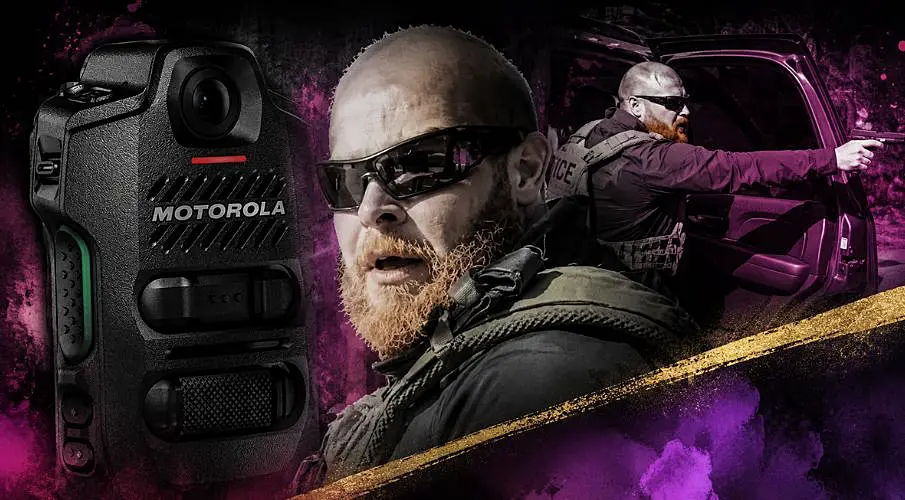
It started with a statement that turned out to be false. After an ICE agent shot and killed 25 year old Colombian national Johan Sebastián Durán Guerrero in Biddeford, Maine, Homeland Security Secretary Markwayne Mullin told Senator Angus King that the agents involved were not wearing body cameras. It sounded like one of those explanations agencies use to avoid responsibility, and it was false.

Four ICE agents who reviewed photographs from the scene, and asked not to be identified out of concern for their careers, clearly recognized body cameras on the gear worn by 2 fellow agents standing only a few feet from the victim. The devices were Motorola SVX units, wireless radio microphones with one additional feature that nobody was using. They have built in cameras. Right now, we're only using them as microphones, one of the agents said, because of the contract with Axon.

Read also our article: ICE Knew Exactly Who They Were Arming. They Did It Anyway

That is the contradiction at the heart of this case. The devices attached to the agents' uniforms are fully capable of recording video. They can store more than 100 hours of footage internally. But the recording function requires a subscription that has never been activated. A second agent showed where a protective cap can be clipped over the camera lens on his own device. Since the cameras weren't being used, he said, they simply left the cap on. Picture that for a moment. A government agent is wearing a camera on his chest with its lens covered, while the weapon on his belt is fully operational.
The reason that lens cap stays on comes down to a second contract. The Department of Homeland Security gets its official body cameras through an agreement with Axon, a police technology company. So the agents are carrying a device that could record video, but they are not allowed to use it as a camera because the camera system is supposed to come from a different vendor. A man is dead, and there is not a single image of what happened.
Ludwig Wittgenstein once wrote, "Whereof one cannot speak, thereof one must remain silent." ICE has turned that sentence into an administrative practice. If no video exists, people can argue about what happened. If you prevent the video from existing, you prevent the argument itself. The silence of the camera is not an accident created by contracts. It is their most convenient consequence.
This case does not stand alone. Durán Guerrero's death came at the same time as the fatal shooting of Mexican immigrant Lorenzo Salgado Araujo in Houston. According to reports, neither man was actually the intended target of the arrest teams, and neither shooting was captured by a body camera. 2 men. 2 cities. Not a single frame of video.
Donald Trump Bought Up to 5 Million Dollars Worth of Axon Stock
Now Axon steps out of the background and into the spotlight, along with a trail that leads all the way to the White House. Axon was formerly known as Taser, named after the stun gun that built the company's reputation and that it still manufactures today. Last month, the president's financial disclosure forms drew widespread attention. ICE had publicly issued a request for up to 220 million dollars worth of conducted energy weapons, a contract that appeared almost tailor made for Axon's products. Just 2 weeks before that solicitation was released, Donald Trump purchased up to 5 million dollars worth of Axon stock.
Read also our article: Excerpt from Our Investigation: The Presidency as a Business - From the Self Lawsuit Fund to the Gifted Jet
So the circle closes. Each link, taken by itself, may appear harmless. Together, they paint a picture that takes your breath away. A president buys stock in a law enforcement equipment company. That company's body camera contract ensures that another manufacturer's cameras remain covered and unusable. And inside that gap, a man dies without a single mechanical witness.

The officials responded the way they always do. Shortly after the shooting in Maine, ICE instructed its agents to suspend almost all traffic stops, only to reverse course as soon as Trump complained. The cameras have been ordered, Border Czar Tom Homan said. There is a plan to distribute them. Half of ICE's field offices already have the equipment. The rest will receive theirs over the next 2 months, funded by the 20 million dollars Congress approved, through contracts with Axon, of course. In other words, the lens cap is still on.
Updates – Kaizen News Brief
All current curated daily updates can be found in the Kaizen News Brief.
To the Kaizen News Brief In English


Danke für diese interessante Recherche.
ICE hat ein Milliardenbudget, aber nicht mal die Hälfte aller Mitarbeiter ist mit funktionierenden Bodycam ausgestattet?
Das ist ja sehr „praktisch“.
Und gerade die tödlichen Zusammenstöße sind vor allem nut den ICE Mitarbeitern, die keine funktionierende Bodycam trugen.
Was ich nicht verstehe.
Es heißt die Bodycams, die kein Bild aufzeichnen dürfen, werden als Mikrofone genutzt werden.
Dann müsste es im Umkehrschluss doch Tonaufnahmen geben, oder nicht?
Ansonsten bringt es doch überhaupt nichts, dass diese Kameras überhaupt getragen werden.
Oder verbirgt sich doch mehr dahinter?