
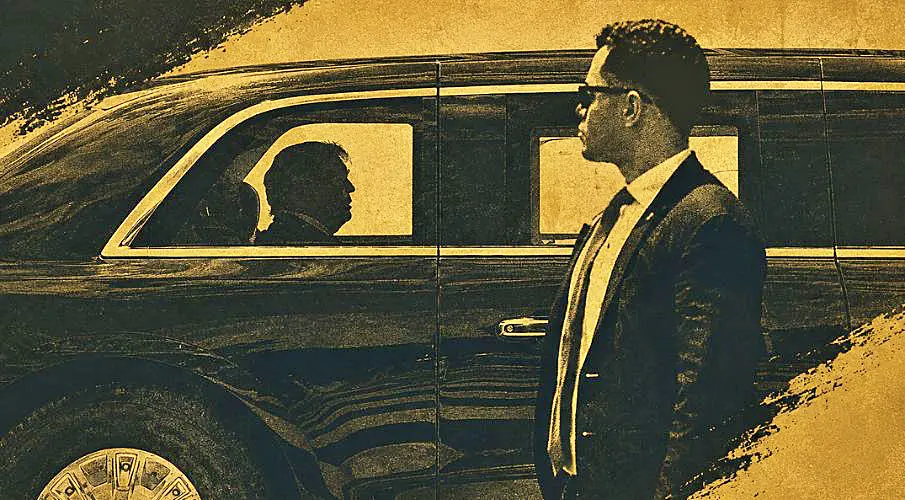
Donald Trump earned two billion dollars over the past year. Part of that money came from hundreds of thousands of his own supporters, who invested in a speculative cryptocurrency called TRUMP, believing its value would soar with his return to the White House. Six hundred thirty six million dollars from that single coin alone flowed into his own pocket. Many of those who followed his call and bought it were left with losses. It is a number that should not be read quickly, but slowly, because it tells the story of an entire relationship between a president and the people who trusted him.

The coin itself depicts Trump with his fist raised, the same gesture he made after the 2024 assassination attempt. It has no intrinsic value, no product, no company behind it. It is nothing more than a wager on an image, on the belief that anything carrying his name would rise with his presidency. This week it emerged that Trump has earned 1.4 billion dollars from the cryptocurrency industry since returning to office. His 927 page financial disclosure shows how he and his family collected enormous sums in 2025 through the struggling Trump Media company and the separate cryptocurrency firm World Liberty Financial, while ordinary investors suffered substantial losses.
Question: "You had a very lucrative year last year. What message does that send to Americans who are struggling financially?"
Trump: "I don't get involved."
One has to look at that contrast to understand what is actually happening here. A president profits from a product bearing his own name while the people who trusted that name lose their money. According to blockchain analytics firm Chainalysis, fifty eight investors in the TRUMP coin each made more than ten million dollars in profits, earning a combined 1.1 billion dollars. Most were early traders who exited before the price collapsed. At the same time, approximately 764,000 cryptocurrency wallets, most holding relatively small positions, lost money on that very coin. Every single trade generated transaction fees for Trump and his partners, producing hundreds of millions of dollars in additional revenue.
TRUMP'S FINANCIAL DISCLOSURE HAS BEEN RELEASED - AND IT IS EVEN MORE STUNNING THAN MANY EXPECTED

The U.S. Office of Government Ethics released Donald Trump's 927 page financial disclosure on Wednesday. It details the income the sitting President of the United States received during 2025:
💰 635 million dollars from the TRUMP cryptocurrency, while the memecoin's price collapsed from 74 dollars to 1.68 dollars, leaving many retail investors with heavy losses.
💰 594 million dollars from the sale of tokens and stablecoins issued by the cryptocurrency project World Liberty Financial, co founded by Trump and his sons.
💰 65 million dollars from selling equity in the same company.
💰 More than 80 million dollars from legal settlements paid by ABC, CBS, Meta, and YouTube to his presidential library.
In total, Trump earned more than 1.4 billion dollars from cryptocurrency during a single year while serving as President of the United States.
His estimated net worth is reported to have increased from 2.4 billion dollars to 6.3 billion dollars since taking office, nearly tripling in value.
While Trump earned more than 1.4 billion dollars from cryptocurrency, many buyers of his memecoin lost money. According to the disclosure, 764,000 wallets ended up in the red.
Kaizen Blog's conclusion: This is the most corrupt presidency in the history of the United States. Period.
Lee Reiners, a former examiner at the Federal Reserve Bank who now teaches at Duke University, chose blunt words. He said it was difficult to comprehend that an American president could enrich himself on such a scale at the expense of so many of his own supporters. According to Reiners, this president has earned more money from cryptocurrency since taking office than in any other year of his entire business career. The White House rejected any suggestion that Trump was exploiting his supporters. Spokeswoman Anna Kelly said every action taken by the president and his administration was in the best interest of the American people, and that neither he nor his family had ever engaged in conflicts of interest, nor would they ever do so. One reads that statement and then looks once more at the numbers. Believing both at the same time is difficult.

The president's wife is also part of the business. Melania Trump earned approximately six million dollars last year from sales of her own memecoin, far less successful than her husband's. Trump also received an additional 799 million dollars from World Liberty, including a substantial share generated when the government of the United Arab Emirates quietly acquired a stake in the company just as Trump returned to the White House. The World Liberty coin, WLFI, has since fallen to below six cents, a decline of more than eighty percent from its peak, causing major losses for investors who bought in at higher prices. For Trump, that collapse mattered little. According to company disclosures, a business affiliated with him received seventy five percent of all WLFI sales revenue, meaning he had already made his money long before the price crashed.
While accumulating this new fortune, his own administration made decisions that directly benefited those same businesses. Early last year, the Securities and Exchange Commission announced that it would not regulate memecoins as securities. Trump himself promoted legislation, which he later signed into law, expanding the use of stablecoins in the United States just months after World Liberty introduced its own stablecoin. John Reed Stark, the former head of the SEC division responsible for investigating online securities fraud, called it tragic that these investors no longer had meaningful protection from the very agency that was supposed to protect them. He said regulators had effectively abandoned them. According to Stark, this is a scheme as old as the securities markets themselves - a classic pump and dump operation that enriches a small group at the expense of the many.
Trump himself has shown no sign of regret over the losses suffered by his investors. Instead, he continues searching for ways to temporarily boost the value of his cryptocurrency projects. Last year, he hosted a dinner at his golf club in Virginia for the largest buyers of his coin, triggering a bidding war that attracted investors from around the world and briefly drove the price higher. A similar event held this year at Mar a Lago generated far less investment. The TRUMP coin traded at 2.83 dollars, down roughly eighty percent from the previous year. Some investors who attended the Mar a Lago event said the coin was effectively dead. No one, they argued, was interested anymore in a meme that had lost ninety seven percent of its value.
Even loyal supporters from the cryptocurrency community have grown disillusioned. In April, cryptocurrency billionaire Justin Sun sued World Liberty, claiming the company illegally prevented him from selling his holdings in WLFI and TRUMP in order to artificially support the price. World Liberty denies the allegations. Other major portions of Trump's 2025 income came from business dealings with foreign governments and companies, particularly in the Middle East. Unlike during his first term, the Trump family has actively pursued international business with governments that have direct interests in American policy. Trump himself has shown little regret over abandoning his earlier promise that his family would not conduct business overseas. He said this year that he could have made many deals and had chosen not to, before adding that he had discovered nobody seemed to care.
The disclosure also reveals how deeply Trump's personal investments are intertwined with decisions made by his own administration. On July 23, Trump purchased up to five million dollars worth of shares in each of Broadcom, Meta, Amazon, Apple, Microsoft, and Nvidia, all companies expected to benefit significantly from the artificial intelligence market. On that very same day, his administration released its artificial intelligence action plan, in which the White House called for deregulation of the industry. Since then, four of those six stocks have gained in value, while Apple and Broadcom have each risen by more than thirty percent. Those purchases did not appear in any of the periodic financial reports covering 2025, despite being legally required. His financial disclosure filed on Wednesday shows that he paid only a small civil penalty for that omission.

When asked how much money he had earned since returning to the White House, Trump gave an evasive answer on Wednesday. He suggested that other people handled his personal investment decisions. He said he did not know whether he had enjoyed the better career in politics or in business. Standing beside his two oldest sons, Eric Trump and Donald Trump Jr., as he boarded the new Air Force One, a gift from the government of Qatar, he remarked that he had certainly enjoyed a great business career and that everyone had seen the money. He insisted that his investment managers made decisions about individual stocks without consulting him or his family. He said he never spoke to them, explaining that he had many of those arrangements, closed accounts or whatever they were called, where one simply put money in and that was it. Large financial institutions handled everything for him.
It is a statement that embodies an entire philosophy of avoiding responsibility. One puts money into an account, speaks to no one, and then supposedly has no idea how 636 million dollars can flow from a coin bearing one's own name and face. It is the oldest question of power presented in a modern form. Someone who claims not to decide is still responsible for what happens in his name. A president who insists that his investment managers operate independently while his own administration benefits the very stocks he purchased only days earlier is asking the public for a level of trust that the facts no longer support.
By comparison, Vice President JD Vance reported far more modest earnings, although he received between one and five million dollars in royalties from his book Hillbilly Elegy, compared with less than one hundred thousand dollars the previous year. The contrast makes the scale of Trump's earnings even more striking. In the end, the picture is almost impossible to stage more perfectly, were it not reality itself. A president who profits from a coin bearing his own face while 764,000 people who believed in him are left with empty pockets. It is not a new story that trust becomes a commodity. What is new is the openness with which that business is now conducted, without shame, without disguise, directly from the Oval Office, documented across 927 pages that many no longer read as a scandal, but merely as another administrative filing.
Updates – Kaizen News Brief
All current curated daily updates can be found in the Kaizen News Brief.
To the Kaizen News Brief In English


Mein Mitleid mit seinen Anhängern ist 0.
Wer solch einem Lügenbaron aufsitzt ist blind und beratungsresistent.
Mir tun die vieln Bürger leid, die ihn nichg gewählt haben, und unter seinen Eskapaden leiden.
Trump „interessiert das nicht“ und „er befasst sich nicht damit“.
Klarer kann er es wohl kaum sagen, dass ihm das Volk, bis auf ein paar nützliche Lobbyisten und Techmilliardären 💩egal ist.
Aber trotzdem behauptet MAGA, er ist der beste Präsident 🙈
Eure Recherche ist wieder grandiose.