
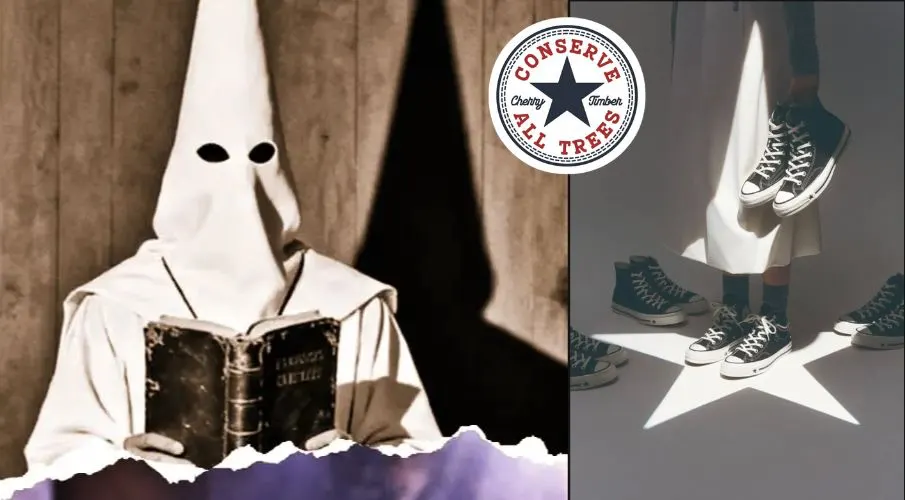
A white skirt, a pair of sneakers, a photo for Instagram. That was all it took for Converse to turn an advertising campaign into a public disaster. South Korean singer Karina is holding a pair of Chuck 70 X sneakers in the photo. The lighting creates a white, triangular shape on her skirt. Critics saw it as resembling a Ku Klux Klan hood. The dangling shoes reminded them of the feet of a lynching victim. Of all companies, one that has sold its shoes as an expression of youth culture for generations had published an image that brought scenes of racist violence to mind for countless viewers.

Converse pulled the ad and apologized. The Boston-based company, which is owned by sportswear manufacturer Nike, released a statement on Friday. The company said it understood why the image was deeply upsetting and acknowledged that it had gotten it wrong. The photo had been removed from its own channels. Converse said it was working to have it removed everywhere else. This should never have happened. The company promised to do better.
An apology can be put together quickly. The question of how the image made it through the advertising department apparently takes a little longer to answer.
On Sunday, Converse refused to provide any further information. In particular, questions about how advertising images are reviewed before publication and how this particular photo got approved went unanswered. Karina and her management company, SM Entertainment Group, also did not immediately respond to inquiries through their Instagram accounts. What the people involved actually intended when creating the image remains unclear.
Online reactions were sharply divided. Numerous users demanded that the employees responsible be fired and called for a boycott of Converse. Others defended the company. They considered a deliberate racist reference unlikely. Texas civil rights attorney Lee Merritt turned his attention to the company's internal procedures. The apology, he said, did not undo what had made it past legal review and the people in charge of advertising. Companies kept failing the same test. Doing better meant recognizing problematic imagery before it was published, before those affected had to complain about it.
The incident is part of a long series of advertising and product decisions that have forced major fashion brands and retailers to apologize over allegations of racist imagery. Just last month, American retail chain Target pulled a children's Halloween costume from its shelves. Critics had seen it as a reference to racist caricatures of Black people, the kind once commonly featured in American stage performances. After fierce reactions on social media, Target apologized as well.
The historical weight of such images doesn't simply disappear because their creation may have been unintentional. The Ku Klux Klan and lynching are among the darkest chapters in American history. Their visual symbols are associated with violence that saw victims persecuted and murdered across generations. An advertising image that evokes such associations therefore deserves careful scrutiny. The resemblance alone, however, says nothing definitive about the actual intentions of those responsible.

Why Converse chose to pass over the original photos from the shoot, which we have obtained, is puzzling. Those very images embody the philosophy of the company: a timeless sneaker icon whose appeal comes from its simplicity and which has no need for questionable visual staging.
Converse itself has a long American history. The company was founded in 1908 in Malden, Massachusetts. As early as 1917, it introduced a basketball shoe with a nonslip sole. In 1934, the model received the signature of basketball player Chuck Taylor, who had promoted the shoe. That gave rise to the legendary Chuck Taylor All Star.
More than 100 years later, Converse has a world-famous brand and apparently still has trouble figuring out what else might be visible in an advertising photo besides its own shoes. The image is gone. The questions for those responsible remain unanswered.
Updates – Kaizen News Brief
Alle aktuellen ausgesuchten Tagesmeldungen findet ihr in den Kaizen Kurznachrichten.
To the Kaizen News Brief In English


Wenn ich mir das Originalfoto ansehe bzw die anderen Fotos aus dem Shooting, dann frage ich mich, wie „versehentlich“ genau dieser Auschnitt den Weg in die Öffentlichkeit gefunden hat.
Ein Versehen war es meiner Meinung nach nicht.
Die Verantwortlichen gehören zur Rechenschaft gezogen.
Allerdings wird das mit einer rassistischen Regierung schwierig.
Die Entschuldigung kam erst nach der Entrusting.
Also auf Druck.
Nicht von Alleine.
Es bleibt ein bitterer Nachgeschmack.
Denn das Bild war online und wird auch nie mehr vollkommen verschwinden.