
New York City (KB) - Kaitlan Collins is at the United Nations and wants to ask Donald Trump a question. The president, however, has something else on his mind. “You should not be here,” he snaps at the journalist. She had announced that she would no longer cover him, so she should stop doing it now. Collins asks anyway. According to a recent poll, 2 out of 3 Americans do not believe the United States is winning the war against Iran. When will that war end? Trump keeps walking. The question goes unanswered, but his anger at the journalist’s presence is impossible to miss. A president who wants to speak before the world starts by complaining that someone is listening.
Like all the journalists there, Collins has United Nations press credentials. She is allowed to work there and will cover Trump’s speech as well. The president had previously barred 3 news organizations from the White House. In response, 5 major American television networks suspended their shared camera and audio coverage on Monday for presidential events they take turns covering on behalf of the other networks. One of the banned networks was supposed to handle that duty that day. The White House would not let it. The other networks said they would not provide a replacement. That did not mean they had stopped covering Trump altogether. Only a pro-administration network stepped in to provide the shared television coverage.
Trump seems to have little interest in that distinction. Outside the UN building, he tells Collins that her network had announced it would no longer cover him. The fact that she is standing in front of him with her own credentials does not fit his idea of who should still be allowed to question him. The dispute has long since become about more than a camera. The 3 banned news organizations have sued the administration. They are challenging the president’s ability to make access to his official activities depend on how journalists report on him. While Collins waits in New York for an answer about the war, another lawsuit has already been filed in Washington. That one concerns a very different kind of access to the president’s words. It costs $100,000 a month. Our own investigations, which we had passed along, uncovered this as well.

Read also our article: Trump at the UN: “I Have Made Peace,” Then Threatens to Annihilate Iran - Iranian Delegation Leaves the Hall - The Melania Lie
The service is called “Truth API.” Anyone who pays the fee can receive posts from government officials on Trump’s own platform, Truth Social, before ordinary users do. That includes announcements from the president that can reveal political decisions and affect global financial markets. Between the moment paying customers receive a message and the moment everyone else gets to see it, that information may already have had an economic impact. A president posts about a war or a decision by his administration. The ordinary reader sees the post later. Others have paid to get it first. That is exactly what courts are now being asked to examine, while the man whose words are being sold is telling a journalist at the United Nations that she should disappear.
Read also our article: The Only Art Trump Has Ever Mastered
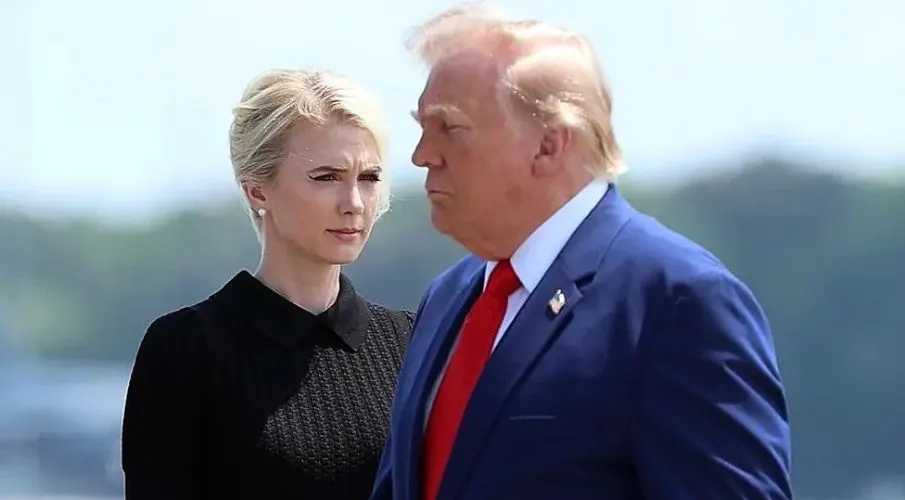
Last Thursday, the watchdog organizations American Oversight and Campaign for Accountability filed a lawsuit against Trump and his aide Natalie Harp. The organizations accuse them of running a business in which wealthy customers receive preferential access to information that could have major consequences for political decisions and the global economy. Harp is specifically named in the lawsuit. She is described as the principal White House staffer responsible for publishing Trump’s posts on Truth Social. That puts a woman who usually works just a few steps away from the president at the center of the case. As recently as September 20, she was photographed at his side while he looked at his cell phone.
For the plaintiffs, the problem lies in the connection between public office and private business. Trump and members of his administration are using their positions to give a financial advantage to a company owned by the president and people close to him, they allege. In their view, government information should be available to all citizens without a company selling selected customers an early advantage. Samuel Davis, one of the attorneys involved in the lawsuit, calls the arrangement illegal. The government exists to serve the people, he argues. Public office must not be used to enrich friends and business associates. Whether the court agrees with that argument remains to be seen.
On Monday, San Francisco followed with a lawsuit of its own. The city is suing Trump Media & Technology Group, the company behind Truth Social. It calls the paid early-access service a corrupt business scheme and accuses the company of violating federal laws governing trading on information obtained in advance, as well as California’s Unfair Competition Law. Natalie Harp is not personally named in that case. The 2 lawsuits target different defendants but concern the same service. Filing the lawsuits does not, by itself, prove that the defendants broke any laws, and no court has yet ruled on the allegations. Trump had not publicly responded to either of the 2 new lawsuits at the time.

His aide has come under scrutiny for a reason closely tied to the daily workings of the White House. When Harp publishes the president’s posts, she works at the very point where, according to the organizations, an official announcement becomes content for a paid service. The plaintiffs’ accusations concern how that access is organized and the potential private profit it generates. San Francisco is focusing on the legal consequences of the head start given to paying customers. Both cases will have to determine what information was distributed through the service and what legal obligations applied to its publication. The $100,000 being charged is not a hypothetical figure. It is the service’s monthly price.
Back in New York, Collins is standing in front of the president. Her question is uncomfortable. The poll she refers to shows that a clear majority of respondents do not believe the United States is winning the war against Iran. Collins wants to know when Trump expects it to end. The dispute over her network’s exclusion gives him something else to talk about. He scolds her for being there at all. The United Nations has authorized her to work there, and Trump’s White House ban cannot change that. The shared television coverage has been suspended; the journalists have not quit their jobs. Collins will keep reporting. She does not get an answer to her question during this encounter.

On Monday, the chairman of the shared television pool had announced his colleagues’ decision in writing. Effective immediately, they would no longer cover events designated for the president’s shared television coverage. The reason was the White House’s decision to prevent the assigned network from carrying out its duties. No replacement would be provided. The statement referred to a specific service in which a small number of camera crews work on behalf of many others. During his encounter with Collins, Trump treated that decision as though the journalist had given up every right to question him anywhere else. She was standing in front of him anyway. Her next question was not about a dispute among television networks. It was about the war.
The events in New York and the lawsuits in Washington involve different legal questions. The White House ban concerns press access to the president. “Truth API” concerns paying customers getting early access to posts on his platform and the allegations arising from that arrangement against those responsible. The courts will have to decide these questions separately. The contrast playing out that day is hard to miss: Trump tells a journalist she is not allowed to question him, while organizations and a major American city are challenging an arrangement that lets others pay for a head start in reading his official announcements. Collins wanted to know when the war would end. What the president had to tell her, above all, was that she should not be there.
Updates – Kaizen News Brief
Alle aktuellen ausgesuchten Tagesmeldungen findet ihr in den Kaizen Kurznachrichten.
To the Kaizen News Brief In English


