
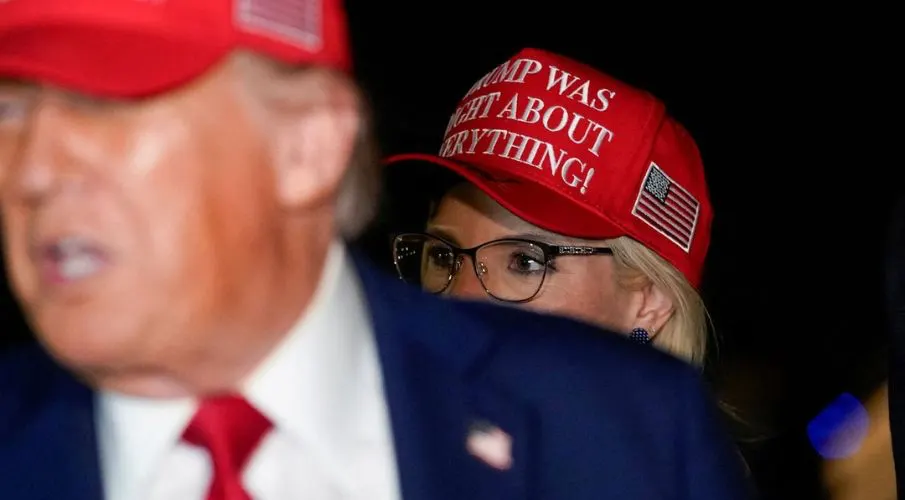
Mike Rogers defended Donald Trump’s war against Iran. The former congressman from Michigan considered it necessary to prevent Tehran from building a nuclear weapon. He also supported authorizing the president to continue the fighting. Now, 6 weeks before the midterm elections, Rogers is calling for the war to end quickly. Families in Michigan can barely afford everyday life anymore, he says in a campaign ad. Groceries are too expensive. Once the war ends, energy costs will drop sharply. Rogers is also calling for a temporary halt to U.S. diesel exports. His earlier support for the war is still on the public record. His new demand is aimed at people whose votes he needs in November.

Rogers is running against Democrat Abdul El-Sayed for a U.S. Senate seat in Michigan. In Iowa, Ashley Hinson is also fighting for a Senate seat. She, too, is now demanding that the war be brought to an immediate and successful end. People in her state should no longer have to pay for it at the gas pump or the grocery store checkout, the Republican congresswoman writes. Earlier this month, she described the war differently. The military operation needed to be finished, she said, and Iowans understood that it had been necessary to prevent a bigger conflict. Hinson voted several times this year against measures to end the war. Most recently, just last week.

Her Democratic opponent, Josh Turek, has not forgotten those votes. Hinson voted 7 times to continue the war, he points out. Posting a message online is easy. When she had the chance to vote to end the fighting in Congress, she made a different choice. Turek serves in the Iowa state legislature. Polls show a close race for the Senate seat. Trump won the state in the 2024 presidential election by 13 percentage points. Hinson’s latest demand now sits alongside her vote from last week. Both are on the record.
Republican lawmakers Zach Nunn and Mariannette Miller-Meeks of Iowa voted differently from Hinson on that measure. They supported withdrawing American troops from the war. Nunn, an Air Force veteran, explained his decision by pointing to Congress’s authority. The window for negotiations had closed, he said, and continued combat operations now required congressional approval. He would not support another war with no defined end. The dispute within the Republican Party therefore goes beyond demands for lower prices. It now also concerns how long Trump can continue the war without renewed approval from Congress.

In Michigan, John James, the Republican candidate for governor, is also calling for the fighting to end quickly. During a press call on Tuesday, he repeated that the United States must do everything it can to protect its citizens and bring the war to a swift end. James had previously voted against measures aimed at ending it. According to the Michigan Democratic Party, he did so 6 times. Its spokesperson, Derrick Honeyman, holds James responsible for his support of the war and predicts that voters will reject him again in November. Whether they do remains to be seen. James’s earlier votes certainly do not change because of what he is saying today.

Republican U.S. Senator Jon Husted of Ohio is also calling for a quick end to Trump’s Iran war. The fighting needs to end as soon as possible. He joins other Republicans who are publicly breaking with Trump’s approach to the war just weeks before the midterms.
The war has now lasted nearly 7 months. Trump and Republican politicians had previously promised a much earlier end. In a poll released Tuesday, just 26 percent of American adults approved of Trump’s handling of Iran. A month after the war began, that figure stood at 33 percent. Among Republicans surveyed, approval has fallen from 73 to 60 percent since March. Most Democrats have opposed the war from the beginning. The declining approval ratings come at a time when Republican candidates are publicly making demands that differ from the president’s. The poll numbers alone cannot tell us why each individual candidate has changed their position.
The economic consequences, meanwhile, are visible at every gas station. According to the American Automobile Association, regular gasoline cost a nationwide average of $4.47 per gallon on Tuesday, nearly $1.30 more than a year ago. Diesel reached a record high of $6.53 per gallon. Higher transportation costs also drive up the prices of other goods. Oil prices have risen since the war began, while Iran has restricted shipping through the Strait of Hormuz. Saudi Arabia’s East-West pipeline to the Red Sea was also damaged this month. Experts expect prices could rise further in the coming weeks.

Detroit: The prices on the sign are in U.S. dollars per gallon, which is approximately 3.79 liters. Converted to euros, 1 liter of gasoline costs about €1.31 and 1 liter of diesel about €1.84, using an illustrative exchange rate of €1 = $1. Since the end of February 2026, the nationwide average gasoline price has risen from $2.98 to $4.47 per gallon, an increase of around 50%. Diesel cost about $3.81 per gallon back then; now it costs $6.53. That is an increase of around 71%.
Trump spoke about expensive gasoline last week at a campaign event for Republicans in North Carolina. Considering what the United States had achieved in Iran, the high price was “a very inexpensive price to pay,” the president said. Rogers now explicitly links his call for an end to the war to the cost of living. Hinson points to the same burden. Trump’s justification and his fellow Republicans’ statements reveal a political disagreement being played out in public just weeks before the election. The president stands by his account of the war. His candidates are talking about what continuing it is costing people.
Republican Senators Chuck Grassley of Iowa and Dan Sullivan of Alaska are also calling for action on high diesel prices. They are urging Trump to halt U.S. diesel exports. Sullivan, who is running for reelection in Alaska, said Tuesday that American workers were producing more diesel than they had in years. Yet people in his state were still paying higher prices at the pump. The Senate is expected to vote later this week on another Democratic-sponsored measure that would limit Trump’s authority to continue the Iran war. Republican senators will then have another chance to decide whether to stand with the president’s position or with demands to place limits on his conduct of the war.
Trump responded with accusations against Republican lawmakers who previously joined Democrats in attempts to limit his war powers. He called the votes meaningless and described the party members involved as bad. After a vote in June, he publicly asked who could do something so unpatriotic. Spokesperson Davis Ingle dismissed criticism from Republicans who are breaking with Trump over Iran. The president was the undisputed leader of the party, its most persuasive spokesman and its strongest driving force, Ingle said. He was committed to preserving Republican majorities in Congress. Vice President JD Vance, by contrast, said when asked about Republican candidates calling for an end to the war that it was perfectly reasonable for them to tailor their campaign messages to their own circumstances.
Democrats accuse the Republican candidates of changing their positions out of concern for the upcoming elections. From our editorial perspective, this sudden change of heart raises a fundamental question about the political responsibility of the Republicans involved: They supported the war and are now demanding an end to it while their voters suffer the consequences. Their voting records provide grounds to question their political ethics without attributing unsubstantiated motives to them. Rogers, Hinson and James now explicitly name a quick end to the war as their goal, after previously supporting Trump’s actions. Whether they back their new demand when the next decisions come before Congress will be clear from their votes. The next vote is scheduled for this week.


