
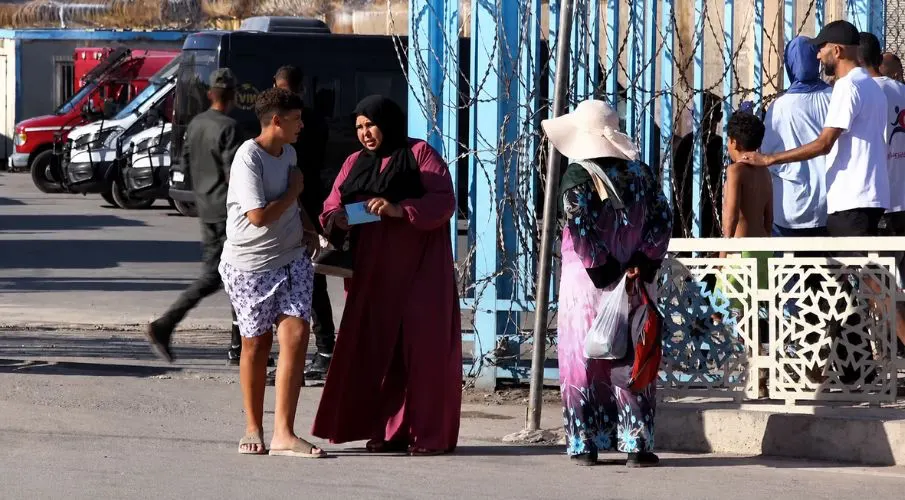
The girl from Tangier made it through the waves onto Spanish soil. Her little brother did not. The 8 year old drowned in the Mediterranean, and her mother disappeared in the chaos as tens of thousands pushed their way around the breakwaters, trying to leave Morocco behind. She is 17, and her story stands for many of the more than 800 minors who, four days after the mass crossing into Ceuta, have been left with nowhere to turn. On Thursday, according to her account, the family swam around the border fence with the crowd, like so many others hoping for a chance, for anything better than what they had left behind. Her identity is being withheld because she is a minor in a vulnerable situation. When she reached the shore, she watched Spanish police pull her brother's body from the water.
From that moment on, she was alone. Local residents gave her food and clothes. One woman took her home so she could wash. She went to a government youth center looking for help and found it overcrowded. Since Thursday she has been without her mother, and everything that has kept her alive so far has come from strangers, not from the state. She does not speak Spanish. Through an interpreter, she says things that stay with you. She says she saw people stepping on the dead. And now, she says, they are children begging in the streets.

She is one of around 860 minors who were still in Ceuta on Monday, according to local authorities. Reporters saw other children asking for food. These minors make up a large share of the 3,000 to 5,000 people who have so far escaped deportation, out of the original 60,000 who crossed into the city. Spain has confirmed 72 deaths, most of them in the water. Morocco reported 11 additional deaths that are not included in Spain's total, according to the Spanish Interior Ministry. Four days later, families are still searching for loved ones, and on Monday more young men continued crossing back into Ceuta even though authorities had already declared the surge over.

Read also our article: Fact Check: Ceuta, or the Art of Turning a Border Surge Into a Narrative
Read also our article: The Rush No One Ordered - And the Dead
The distinction under Spanish law is clear. Adults can apply for asylum, and if their application is denied, they face deportation. For Moroccan nationals, the bar for humanitarian protection is very high. Unaccompanied minors, on the other hand, are supposed to be protected and cared for. What that looks like in reality was shown by a 12 year old boy. Soldiers were leading him away in tears toward the border. He begged not to be sent back. Just a few yards before the crossing, a lieutenant colonel in the Spanish Army stopped the deportation because local residents insisted he was a child, and because cameras were rolling. The boy was then handed over to the Guardia Civil.
A child begging to stay is making a demand of the person looking at him, and turning him away is only possible as long as no one is willing to look. The officer stopped, not because the law had changed, but because witnesses forced him to see what was happening. A few yards farther down the road, with no neighbors and no cameras, the boy would already have been back on the other side. A law that is supposed to protect children only works here when enough people are watching. Without the neighbors insisting and without the cameras, the protection would have remained words on paper, and the boy would have been on a bus back to Morocco.

Not only Moroccans remained behind. Most Moroccan adults either returned voluntarily or were pushed back by police. Those who remain often come from much farther away, refugees from Sudan, Palestinians from Gaza, Afghans, along with people from several African countries. The city's reception center, built for 600 people, is full, and food is running short. One local activist, Ramsés Mohamed Azumik of Asociación Elín, says that is no accident. He believes the goal is to wear people down with hunger and thirst until exhaustion forces them to leave on their own. But for someone from war torn Sudan or from Gaza, there is no door they can voluntarily walk back through. Exhaustion leaves them with nowhere to go.
Voluntary is a big word for a decision made on an empty stomach and without a roof over your head. On one side of the border stands a child begging. On the other side waits the country that child fled. Anyone who calls that voluntary has already given up on the meaning of the word. The more than 800 children who remain are now waiting in a city that hopes they will disappear, while their parents continue searching for them.
Updates – Kaizen News Brief
All current curated daily updates can be found in the Kaizen News Brief.
To the Kaizen News Brief


Kinder sind immer die leidtragenden.
Je jünger sie sind, desto größer das Leid.
Wo sind die Organisationen, wie Unicef um diesen Kinder zu helfen?
Wasser, Nahrung, ein sicherer Schlafplatz.
Und die Hilfe nach der Suche der Eltern.
Hier ist vor allem auch Marokko gefragt sich zu kümmern.
Hilfsorganisationen grenznah arbeiten zu lassen.