
Rotten Food and Cells Without Toilets: How Misery in Detention Pushes Immigrants to Request Their Own Deportation!
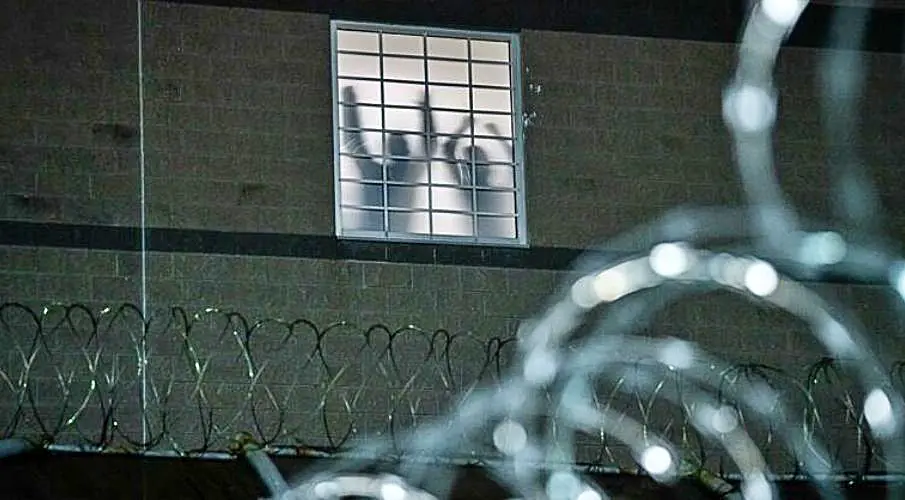
One of the reasons behind the hunger strike at the ICE facility Delaney Hall in New Jersey is the food itself. Detainees held in immigration custody in Newark say they are refusing meals not only to draw attention to the miserable conditions inside but because the meals themselves have become part of that misery. They describe spoiled and expired food, sometimes containing live worms, as a form of inhumane treatment, alongside inadequate medical care, unsanitary living conditions, and complaints that procedural rights are being ignored. As part of the strike, detainees also refused assigned work, according to supporters and participants.

At the same time, together with human rights groups and attorneys, we are trying to bring the bare essentials into ICE facilities where they are missing: medication that never arrives and doctors who do not exist. We fight for every appointment that gives a detainee access to legal counsel. What is considered normal elsewhere has here become the actual mission, and at this moment providing the absolute necessities takes priority over everything else. It is a bitter statement about the condition of a system when the most urgent work consists of securing for a person the things without which no person can live.

Read also our investigations: One Block from the Abyss - How Trump Is Rebuilding America’s Immigration Justice. An Investigative Report from Hell
The New Deportation Machinery in New York – Trump’s Second Offensive and the Return of Fear

Outside the walls, the situation escalated further on Monday when federal officers in tactical gear fired pepper spray and pepper balls at demonstrators gathered outside the facility, reportedly also striking U.S. Senator Andy Kim. Federal authorities sent contradictory messages. On Tuesday, the Department of Homeland Security stated on social media that there was “NO HUNGER STRIKE” at Delaney Hall. Shortly afterward, White House border czar Tom Homan said the strikers would be force fed “if it gets bad enough.” Homeland Security Secretary Markwayne Mullin chose a middle position on Wednesday and claimed that there were “only a handful of individuals” refusing food and that they were doing so only because they wanted “ethnically appropriate food.” Mullin continued: “Well, they can go back to their country and get whatever food they want.”

People in detention can in fact waive their procedural rights and asylum applications and voluntarily choose to leave the country. This is an important part of the Trump administration’s plan to expand mass deportations because forced deportation is expensive and time consuming. But for many people in immigration detention, the decision is not that simple. As the Arizona Daily Star reported on May 24, some detainees say returning to their home countries could expose them to persecution, imprisonment, or death. The newspaper described an openly gay Russian man, an Afghan with ties to the former U.S. backed government, and an Iranian dissident, all of whom feared for their personal safety if deported. All three described abusive and excessive use of solitary confinement at the Eloy Detention Center in Arizona as a method of pressuring detainees to abandon their immigration claims and agree to leave voluntarily. Another detainee in Arizona told the newspaper that a guard said to him: “It’s part of my job. I have to make your life miserable so that you request your own deportation.”
In that one sentence, the essence of the process becomes visible. Departure is called voluntary, yet the guard states the method openly. Remaining is made unbearable so that a person begins asking to leave on his own. A will bent through intentionally inflicted suffering is no longer free will. It is broken and then handed back to its owner as if it were a gift. That reversal is exactly what hides behind the word authorities use to count their successes.
The Department of Homeland Security and CoreCivic, the company operating the facility, denied that detainees were being placed in segregation, as both officially describe isolation, in order to pressure them into voluntary departure. Yet in recent months the government has been remarkably successful in persuading more people to agree. Nationwide, agreements for voluntary departure increased sevenfold during the first sixteen months of the Trump administration compared with the previous sixteen months, according to an analysis by Stateline. These agreements require detainees to pay for their own travel and expose them to financial penalties for delays. That differs significantly from the Department of Homeland Security’s self deportation program, which advertises free flights and a payment of 2,600 dollars for undocumented immigrants who agree to leave. Those who accept voluntary departure can usually avoid receiving a formal deportation order. Such an order makes it nearly impossible to return legally to the United States later to live there.


For a long time, most immigrants arrested inside the United States could ask an immigration judge to be released on bond and continue their case outside detention. The Trump administration effectively closed that door in July of last year by ordering that immigrants who entered the country unlawfully would no longer qualify for bond. Although many judges and several appeals courts have questioned the constitutionality of the rule, together with the Laken Riley Act, the 2025 law requiring detention for immigrants suspected of multiple minor offenses, it has expanded the flow of people into detention facilities.
The result is that more people end up in detention and that the facilities holding them face far greater pressure. Our reporting shows that since Trump returned to office, nearly fifty people have died in ICE custody. In 2025, that marked the highest number of deaths in detention in at least two decades, and developments in 2026 point toward further deterioration. Many of these deaths could have been prevented. That conclusion is based on autopsy reports, court records, conversations with detainees and specialists, and indications that medical staffing and healthcare capacity did not keep pace with rising populations inside detention facilities. The deaths also include a growing number of suicides.
Ten people held by ICE have taken their own lives since January 2025. During the agency’s previous twenty three years of existence, it had otherwise recorded one such death per year at most.
In the middle of these desperate conditions, the hunger strike remains one of the few tools left to people inside. It is the inversion of forced voluntariness. When someone has almost nothing left that can still be withheld, they withhold the only thing that still belongs entirely to them, their own food. And the state, confronted with refusal to eat, answers with the threat of forcing food into the body. Between the manufactured yes of voluntary departure and the forced no of force feeding lies the entire question of who owns a person’s will. Immigrant rights groups have reported hunger strikes in recent weeks beyond Delaney Hall, in places such as the Moshannon Valley Processing Center in Pennsylvania and the Adelanto ICE Processing Center in Southern California.

Authorities at the state and local level have tried to use the few tools available to them to change conditions inside these facilities. In Newark, where Delaney Hall is located, Mayor Ras Baraka requested an independent review by the state Department of Health to ensure safety standards and also asked Governor Mikie Sherrill to authorize the state attorney general to investigate the facility. In California, Attorney General Rob Bonta has spent months investigating Adelanto and other detention facilities and in early May released the fifth report in a continuing series. In that report, detainees described being served nothing but beans and bread, suffering gastrointestinal illness caused by the food, enduring extreme cold, and lacking access to toilets, among other conditions that Bonta described as “cruel, inhumane, and unacceptable.” Lawmakers in California advanced legislation this week that would expand the attorney general’s authority to investigate and report on conditions inside detention facilities. That move follows another bill advancing last week that would impose a fifty percent tax on profits earned by private prison companies.
Our findings also show that in Pennsylvania, the commissioners of Clearfield County, where the Moshannon Center is located, are reviewing the extent of their authority as the contractual intermediary between ICE and the private prison company operating the facility. Because the current contract expires in September, the commissioners are currently considering adding a clause that would strengthen transparency and independent oversight of the center. “There is no reason why we could not include conditions there,” commissioner Dave Glass said.

At the detention facility in Clearfield County and at additional ICE facilities, detainees have gone on hunger strike. The protests are directed against inhumane detention conditions and the conduct of authorities.
In the end, everything returns to that one word the government prefers so much. Departure is called voluntary even when the only alternative has deliberately been made unbearable. An openly gay Russian man, an Afghan who worked for the former government, an Iranian dissident, all of them stand before the choice between a cell without a toilet and a country where they fear persecution or death. Whoever calls that choice voluntary reveals less about the people forced to make it than about those who present it to them.
Updates – Kaizen News Brief
All current curated daily updates can be found in the Kaizen News Brief.
To the Kaizen News Brief In English


Es ist einfach unmenschlich. Doch wer dort „arbeitet“, wer in der Verwaltung sitzt etc. Welche Menschen sind das, dass sie sich dem beugen. Welche Gesellschaft wird damit aufgebaut. Es kommt das Grausen
Gulag, Arbeitslager in China, KZ…. wo ist da noch ein Unterschied zu den Einrichtungen, wie Delany Hall?
Vielleicht bin ich falsch informiert, aber haben nicht Abgeordnete eines Bundesstaates das Recht solch Detention Center, sogar ohne Vorankündigung, zu besuchen?
Ihnen permanent den Zugang, wegen angeblicher Sichertsbedenken“ zu verweigern, wäre dann doch auch nicht rechtmäßig, oder?
Warum machen sich die demokratischen Abgeordneten nicht gemeinsam, lauter und hartnäckiger, stark?
Über die Menschen, die diese Maschinerie aktiv unterstützen braucht man nichts zu sagen.
Es sind die gleichen Typen Mensch, die in KZ den Menschen die Hölle bereitet haben.
„….Ein anderer Inhaftierter in Arizona berichtete der Zeitung, ein Wärter habe ihm gesagt: „Es gehört zu meiner Arbeit. Ich muss Ihnen das Leben zur Qual machen, damit Sie Ihre eigene Abschiebung beantragen.“
Es ist kein Job seine Moral, seine Menschlichkeit zu verleugnen.!