
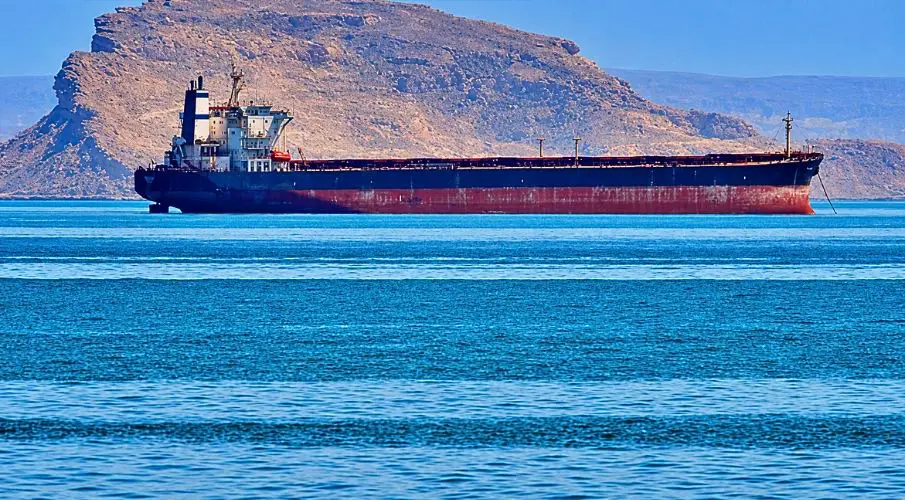
While Vance declared on television that the objective had been achieved and the Strait of Hormuz was open, Iran’s military announced its closure. In Lebanon, the sixth ceasefire in weeks collapsed, the death toll passed four thousand, and in Switzerland nobody wanted to say who was even sitting at the table.
On Saturday, Iran’s military, the Khatam al-Anbiya Central Headquarters, declared the Strait of Hormuz closed to shipping and cited as the reason a clear breach of American commitments to implement the preliminary agreement to end the war. It referred to the killing and displacement of people in southern Lebanon and to Israel’s refusal to withdraw from the region. In those same hours, Vice President JD Vance said on Fox News that the administration had achieved its objective, that the President had made reopening the strait his highest priority, and that this had now happened, with millions of barrels of oil moving through the previous day, proving that the strait was truly open. Two governments, one body of water, and at the same moment the opposite word.
JD Vance says the Strait of Hormuz has reopened following Trump’s order
The Vice President claims shipping has resumed through the key energy route and stated that 16 million barrels of oil moved through the strait in a single day as tensions continued to ease.
The word open carried more than it could hold. U.S. Central Command reported that fifty-five commercial vessels passed through the strait on Saturday, more than on any day since Iran closed the waterway early in the war, and still far below the prewar average of one hundred thirty. American forces remained in the area, they said, to support freedom of navigation. At the same time, the naval arm of Iran’s Revolutionary Guards warned that ships approaching the strait were putting their safety at risk and that vessels deviating from a southern route around Larak Island would face consequences, including mines and confrontations, up to and including being fired upon. Washington had not yet responded to the Iranian declaration.
Read also our article: “First the Oil, Then the Promise,” the Telling Order
The closure came at the very moment when the long delayed talks appeared ready to begin again. Pakistan, acting as mediator, announced talks in Switzerland for Sunday involving representatives of the United States and Iran together with mediators from Pakistan and Qatar. The announcement came while Pakistan’s interior minister met with Iranian representatives, including Foreign Minister Abbas Araghchi. Vance said Steve Witkoff and Jared Kushner, the President’s envoys, had spent hours in Switzerland working on the technical details and had reported back that things were going well. The Pakistanis and Qataris were expected, and he himself wanted to leave within days, saying it was always a delicate dance of coordination and that he was trying to show respect. Switzerland’s Foreign Ministry stated that it continued to provide a discreet and reliable framework and that diplomats from various countries remained in contact, while declining to say who was present or what was being discussed, leaving it unclear whether Americans and Iranians were even in the same room.

One day earlier those same talks had been canceled. Iran withdrew after Israeli strikes in Lebanon, according to three diplomats, and Vance, who had been expected there, saw his visit postponed late Thursday by the White House. For the second time in two days, Lebanon determined whether the fragile agreement would hold. By Saturday, Iran’s negotiating team had nevertheless departed for Switzerland. War and negotiation traveled in the same breath.
In Lebanon, the sixth ceasefire in weeks, agreed Friday afternoon, initially seemed to hold before Israel struck towns and villages in the south before morning. Lebanon’s Health Ministry counted at least seven dead and more than a dozen injured. The Israeli military said Hezbollah had fired more than fifty projectiles at its forces overnight and that it had responded against what it called Hezbollah targets. Hezbollah said it remained committed to the ceasefire but accused Israel of advancing overnight to the Ali al-Taher ridge above the city of Nabatieh and declared that its fighters had ambushed an Israeli infantry unit. It remained committed to the agreement, it said, but would not tolerate any attempt to seize more land or expand the occupation.
Since March, Israel has held large parts of the south and says it will continue operating in what it calls a security zone that now extends more than ten kilometers into Lebanon. As the death toll rose, the Lebanese Army announced that one of its soldiers had been killed in an Israeli strike and accused Israel in unusually direct language of obstructing every solution that could restore stability to the country. The Israeli military said it was reviewing the incident. That army, financed in large part by the United States, is not a party to the war between Israel and Hezbollah, and yet its soldiers are being pulled into the fire and dying in it. On Saturday, the Health Ministry placed the death toll of this war at more than four thousand, a figure approaching that of the last war, which ended in 2024 and was at the time the deadliest in decades.
Iran’s Supreme Leader, Ayatollah Mojtaba Khamenei, kept his distance from the agreement. If it holds, billions in frozen Iranian assets could be released. If it fails, observers say, a single strike could swell into the next escalation and bury the talks again.
So the day stood. A strait that is open in Washington and closed in Tehran. A peace now counted in its sixth attempt, and a place called reliable where nobody wants to say who is there. Above it all a death toll that has caught up with the last war, as though the dying had only paused long enough to be renamed. The word and the world pulled apart, and each government held up its own version and called it the only one. Off Larak, a ship chooses its southern course between the mines while above Nabatieh the smoke rises again. In between, a man says on television that the objective has been achieved. The objective perhaps. Not the end.
Updates – Kaizen News Brief
All current curated daily updates can be found in the Kaizen News Brief.
To the Kaizen News Brief In English


Es wird ein Hin- und her bleiben.
Auf jeden Fall, so lange Israel weiter im Südlibanon bombs, die Hisbollah sicb auch nicht wirklich an die Waffenruhen hält.
Wenn der Iran den Libanon als Priorität sieht, sehe ich keinen Frieden.
Nichts, was über die Absichtserklärung hinaus geht.
Entzieht Trump Israel seine Unterstützung, wird es die Republikaner sehr viele Stimmen kosten.
Amerikanische Juden, nicht einmal die Orthodoxen, hatten Kamala Harris für eine Aussage zugunsten des Gaza Streifen abgestraft.
Zeigt Trump jetzt seine antsemitische Fratze und lässt Israel komplett fallen.
Vielen in seiner Regierung und dem Umfeld würde das gefallen.
Auch den Evangelikalen, die Juden nicht für Christen halten.
Oder lässt er das mit dem Iran weiter in Bombardierung, Drohung, Erpressung etc laufen?
Fordert Katar jetzt eine „Gegenleistung“ für das Flugzeug?