
The American government gives Iran its oil back and celebrates an agreement on nuclear inspectors that Tehran denies in the very same breath. One country’s frozen money is supposed to enrich another country’s fields, supervised by the state that owns the resort.
On Monday, the American government lifted its oil sanctions on Iran for sixty days and in doing so reversed a policy it had built itself. Tehran may now increase exports and demand market prices, it may settle in dollars and sell to American buyers, after years in which it had to discount its oil to purchasers willing to risk Washington’s anger. It is a gift to a country whose economy the same man first hit by tearing up the agreement and reimposing sanctions, then placing under a blockade meant to break it.
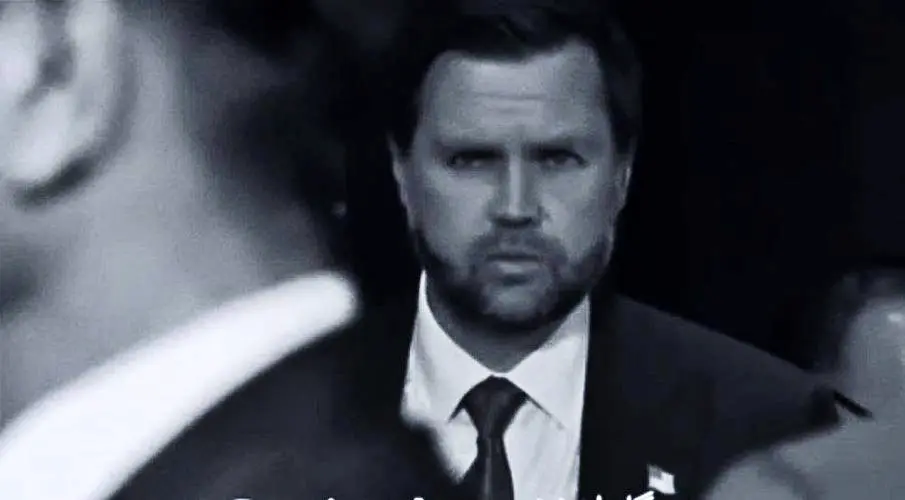
But on the most important point, the two sides spoke in opposite terms. Vice President JD Vance declared after the first session in Switzerland that Iran had agreed to allow inspectors from the International Atomic Energy Agency back into the country, a first step toward permanently ending a weapons program. Trump presented it as an established fact and wrote that everyone knew Iran would agree to major weapons inspections to secure nuclear honesty for a long time. The spokesman for Iran’s Foreign Ministry, Esmail Baghaei, said in response that Iran had made no new commitments and that any cooperation with inspectors would take place within existing procedures established by parliament and the National Security Council. The atomic agency remained silent on both claims. The agreement, it seems, so far exists only in one side’s briefing.
That the matter remains cloudy has its own history. Iran allowed inspections under the 2015 agreement and restricted them after Trump withdrew in 2018. It almost completely ended them last year after American and Israeli strikes hit its facilities. Tehran has always insisted the program serves civilian purposes, yet it enriched uranium to levels approaching the purity required for bombs, far beyond what a power plant needs. The hardest question, what happens to that uranium, was postponed, and President Pezeshkian declared that Iran would never abandon its right to enrichment.
The money at issue belongs to Iran itself, and the administration has a plan for that too. Vance presented a proposal attributed to the president’s son in law, Jared Kushner, under which frozen Iranian assets, one of Tehran’s main demands, would be released and spent on American goods, soybeans and corn, and also wheat. The United States and Qatar would oversee the release, and terrorism must not be financed from it. If the funds were ever released, Vance said, they would make American farmers richer and feed the Iranian people. Iran’s central bank chief had declared that the necessary agreements for the release had already been signed, while Vance suggested that nothing final had yet been decided on the complicated matter. Tehran initially made no comment on the plan. So a country’s own frozen assets are supposed to flow in order to enrich another country’s fields, supervised by the state that owns the resort where the negotiations take place.
Vance called the talks a very good foundation for a lasting end to the war the United States and Israel began in February, while mediators from Qatar and Pakistan spoke of encouraging progress. The ceasefire reached a week ago provides sixty days, extendable, and lower level negotiators are to continue working in Switzerland. New channels are meant to ease tensions in the Strait of Hormuz and in Lebanon, where Israel and Hezbollah have reduced their attacks, and the line for de escalation had been active since Sunday afternoon. Before the war, one fifth of the world’s oil and gas passed through the strait. Ghalibaf, the parliament speaker and head of the Iranian delegation, flew that evening with Foreign Minister Seyed Abbas Araghchi to Oman to establish new rules for monitoring the passage. And Secretary of State Marco Rubio travels from Tuesday to Thursday to the Emirates and Kuwait, and finally Bahrain, to discuss the agreement and maritime transit.

On the water, reality reflected what the speeches claimed. Data firm Kpler counted seventy one passages over the weekend, thirty five on Saturday, compared with one hundred to one hundred thirty per day before the war. The central main route remains mined and closed, and ships are diverting through the northern corridor in Iranian waters and the southern corridor in Omani waters. Oil prices eased, Brent crude fell nearly three percent to seventy eight dollars and twenty nine cents per barrel, American crude to seventy four dollars, and stocks traded just below their highs.
While one side announced its successes, it simultaneously warned against believing the other side. Before departing Zurich, Vance advised the media to distrust what appears on Iran’s social media. He said it was funny that after the first meeting a storm of reports claimed the Iranians were leaving, and then they negotiated for nine more hours. So they trust their own announcement and doubt the other side’s, while the president in the same breath turns his own claim into fact.
This is what diplomacy looks like when it becomes an announcement. A man tore up an agreement seven years ago and fought a war, and now he is building a murkier one in its place and calling it victory. The oil flows again. The question of the bomb remains open, and whether inspectors will ever come, nobody knows except the man who already claims they will. In the end, the disturbing thing is not that two sides speak differently, they always do. It is that one of them mistakes the sentence for the thing itself and speaks the word agreement before one exists, as though the world could be talked into being if only it were declared loudly enough to already be there.
Updates – Kaizen News Brief
All current curated daily updates can be found in the Kaizen News Brief.
To the Kaizen News Brief In English


Für Trump wäre es ein traumhafter Deal, wenn der Iran exklusiv US-Waren kaufen würde.
Damit wäre er bei MAGA ein Held.
Die Atomfrage rückt für Öl und Waren in den Hintergrund.
Die Sicherheit Israel’s ist gar kein Thema gewesen.
Dabei war das doch, angeblich, der Grund für den völkerrechtswidrigen Angriff.