
At the gas station in rural Harrison County, Iowa, Lance Sulentic keeps doing the math on his motorcycle. Riding now costs him an extra $300 to $500 a month because of higher fuel prices, and the 56 year old insurance agent calls the three presidential elections in which he voted for Donald Trump the three biggest mistakes of his life. Gas was supposed to drop to $2 a gallon. Groceries were supposed to get cheaper. Energy prices were supposed to be cut in half. Every American was supposed to receive two checks. There were supposed to be no new wars. The border wall was supposed to be finished. Thirty million people were supposed to be deported. None of it happened, he says. Now he plans to either sit out the election or vote Democrat.
Sulentic is not some former Democrat who switched sides. He belongs to the hard core of the Republican base, the kind of voters without whom the party cannot win elections. And people like him are now showing up in polling numbers that have Republicans genuinely worried. A wave of discouraging data from surveys, door to door canvassing and focus groups is pouring in just months before November's midterm elections, in a year that was already expected to be difficult because the president is struggling in the polls and the party in power almost always loses seats.

What has party strategists most concerned is how deep the disappointment now runs. It has reached the party's most loyal supporters, the people who have shown up in every primary and every general election over the last four election cycles. According to polling from Americans for Prosperity Action, the conservative super PAC backed by billionaire Charles Koch, roughly one out of every five dependable Republican voters is now wavering. In Iowa, Ohio, North Carolina, Montana, New Hampshire and Michigan, many are considering staying home or even voting Democratic because of inflation and the economy. Nathan Nascimento, the group's executive director, calls it "a big chunk" and "a scary number." And that 20 percent only includes the party's most reliable voters. Republicans who mainly turn out for Trump but often skip other elections are not even included in that figure. They remain the party's second longstanding problem. As Nascimento puts it, Republicans now have a problem with their dependable base, not just with their occasional voters. He says that once canvassers reach them at their doors, most move back toward Republican candidates or at least away from supporting Democrats.

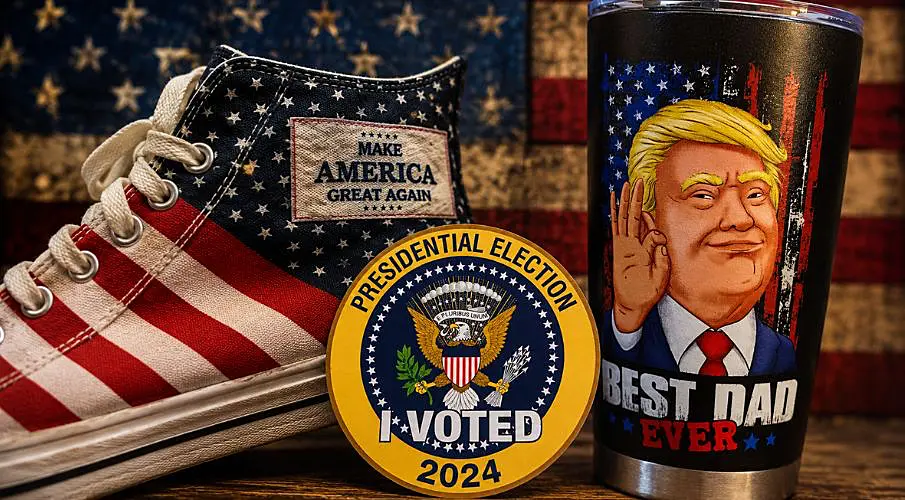
Lance Sulentic was one of Donald Trump's most devoted supporters. The president shaped nearly every part of his daily life, from the clothes he wore to the items that surrounded him every day.
A demagogue survives on promises, and the bigger the promise, the easier people are willing to believe it because bold words often offer more comfort than careful ones. But disappointment does not begin in someone's head. It begins in their wallet. No speech can argue away the price on a gas pump, and an empty wallet is a far tougher teacher than any political opponent. Sulentic did not suddenly abandon his beliefs. He simply started adding up the bill that arrives every month, and that bill led him to his own conclusion.
The polling reflects exactly what campaign workers are hearing on doorsteps. According to an Ipsos survey, Democrats now lead by ten points among voters who say they are absolutely certain to cast a ballot. If that gap holds, it could become decisive, even though Democrats lead the overall generic ballot by only three points, 48 percent to 45 percent. Republican pollster Mitchell Brown of Cygnal puts it bluntly. It is not that Democrats are outperforming expectations. Republicans are falling below theirs. Democrats, he says, are showing the same level of enthusiasm they had before the 2018 midterms when they won back the House of Representatives. Republicans are nowhere near that level today.

Lance Sulentic was deeply rooted in Iowa's evangelical conservative community. For him, faith and politics were inseparable. Photos repeatedly show him surrounded by Christian symbols, his church community and countless pieces of Donald Trump memorabilia.
Read also our investigation: America in a Christian Jihad - and in the End America Is Supposed to Belong Again to Those It Never Belonged To
The group causing the greatest concern is also the one that matters most. Brown says men under 40 have become the most vulnerable bloc, frustrated by inflation and the economy. These are the same voters who helped carry Trump back into the White House in 2024 and who decided the outcome in the battleground states that are once again becoming competitive. The people drifting away are not casual voters on the sidelines. They are the people who put him back in office.
Republican leadership continues speaking as if it were living in a different reality. Party officials insist Republicans are united, on offense and armed with the largest campaign war chest in party history because voters remain energized and understand what is at stake. At the same time, however, the president is pushing one of the most aggressive congressional redistricting efforts in modern history in an attempt to soften expected election losses. That move says more than the optimistic talking points ever could. A party with truly energized voters does not need to redraw district lines to protect itself.
Even in reliably Republican Iowa, the cracks are becoming impossible to ignore. The races for governor and one U.S. Senate seat have suddenly become highly competitive. While canvassing in Urbandale, a suburb of Des Moines, Republican volunteers repeatedly encountered voters complaining about the war with Iran and the rising cost of living. Several openly said they planned to vote Democratic this fall. In a state Trump carried comfortably twice, that alone is remarkable.
Huge applause greeted President Trump during his visit to the Machine Shed restaurant in Urbandale, Iowa, on January 27, 2026. Today, those scenes already feel like images from another time. The mood across the country is steadily shifting.
Back in Washington, many Republicans believe the party itself is partly to blame. Senator Ron Johnson of Wisconsin, who is not up for reelection until 2028, says Republicans must reignite their own base. He believes many loyal voters see Republican lawmakers as having become too comfortable. The Save America Act, which would require proof of citizenship and voter identification, collapsed because Republicans could not unite behind it, prompting Trump to publicly criticize members of his own party. Beyond the 2025 tax package, little has been done to address the rising cost of living. A Trump spokeswoman insists the administration continues delivering results by lowering prescription drug prices, bringing jobs back and reducing gasoline prices. Those are the same gasoline prices Lance Sulentic checks every month before reaching his own verdict.
Some Republicans now want Trump to use his political reach and the roughly $400 million campaign fund controlled by MAGA Inc. to energize less reliable Republican voters. Trump has always been far better at mobilizing people when his own name is on the ballot than when others are running. Senator Kevin Cramer of North Dakota says he recently told Trump in the Oval Office that he remains the party's greatest asset for turnout. Trump reportedly answered that Republican voters would show up as long as Congress passed the Save America Act. One side points at the other, while the White House is placing its hopes on the Republican convention in Texas this September to reignite enthusiasm.

The man speaking most openly may also be the one with the least left to lose. Senator Thom Tillis of North Carolina, who has decided not to seek reelection, believes the traditional Republican base will eventually turn out. But he fears the party's reputation among moderate voters has already been damaged by inflation, the economy and now the war with Iran. Whether Trump can motivate the voters who only turn out for him to support other Republican candidates is, in Tillis's view, the question that will decide November. In Harrison County, Iowa, that answer is already sitting on a kitchen table. A man looks over his monthly bills and concludes that one political promise now costs him an extra $300 to $500 every single month.
Updates – Kaizen News Brief
All current curated daily updates can be found in the Kaizen News Brief.
To the Kaizen News Brief In English


Nur 1 von 5 Stammwählern steht auf cer Kippe.
Das ist nicht viel und würde nicht die Mehrheit kosten.
Schon gar nicht, wenn die Stimme im fast komplett roten Bezirk fehlt.
Durch die Wahlkreise, doe panic neu zugeschnitten werden, und das Electorial Colleg mit seinen Wahlmännern zählt ohnehin nicht jede Stimme.
Sondern wer die Mehrheit der Wahlmänner erreicht.
Letztlich werden fast alle Republikaner wieder republikanisch wählen.
Weil man das immer so gemacht hat und viel zu bequem ist sich mit dem Wahlprogramm und der Heritage Foundation zu beschäftigen.
Wer wie Sulentic 4 Mal Trump gewählt hat ist dumm.
Alles war ok, bis die eigene Brieftasche schmerzt. Traurig, dass alles andere nicht zählt.
Sogar als negativ bewertet wird, dass keine 30 Millionen abgeschoben wurden 😞
So Jemand wird NIE demokratisch wählen.
Im günstigsten Fall geht er nicht wählen.
Die Demokraten müssen mobilisieren.
Sich auf die Unzufriedenheit der Republikaner zu verlassen wäre naiv.
Vielleicht gibt es kurz vor den Wahlen ja auch wieder ein Attentat?
Irgendwas fällt dem demented Siziopathen schon ein.
Oder er schickt seine 6. Januar Armee der Begnadigten los, falls das Wahlergebnis ihm nicht gefällt.
Vielleicht auch schon vorher?
… einer von fünf sind 20% und wir reden hier von hardliner zzgl die ,oderaten wähler wo auch geschätzt 20% auf der kippe stehen, das ist viel – trump gewann die letzte wahl mit 1% vorsprung, dass würde locker reichen berechnet man die aktuell 10% dazu
Stimmt, die Dimension war mir so nicht bewusst.
Meine MAGA supporten Trump unverändert mit Inbrunst.
Alles an Kritik sind Fake News
Trump ist der beste Präsident ever
Demokraten alles woke Leftist, Terroristen die die USA hassen