
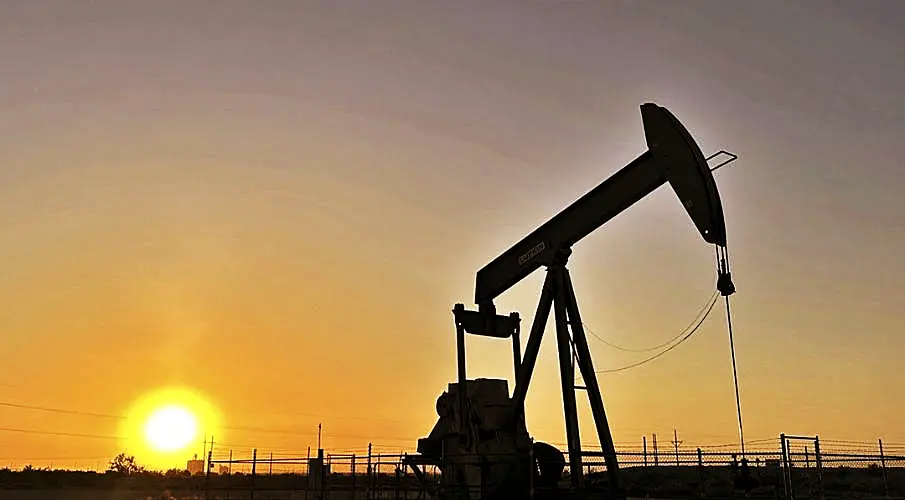
While Washington talks about weapons deliveries, attacks, and military strength, a very different calculation is unfolding more than 7,000 miles away. In New Mexico, the cash registers are ringing. Every increase in oil prices pours new millions into the state treasury. The war with Iran has shaken global oil markets, uncertainty surrounding the Strait of Hormuz continues driving prices upward - and that is turning a Democratic-controlled state in the American Southwest into one of the biggest financial beneficiaries of the conflict.
For many politicians there, it has become a political nightmare. New Mexico is one of the few Democratic-dominated states in the United States whose social programs depend heavily on oil revenue. Money from drilling rights, taxes, and lease agreements finances free school meals, health care, childcare programs, and college tuition. At the same time, many Democrats there openly oppose both the war and the decades-long dependence on fossil fuels. Now this very war is forcing those same politicians to work with revenue generated by exploding oil prices.

Deb Haaland, former Secretary of the Interior and now a candidate for governor, described that contradiction with unusual openness. She said it is difficult to celebrate financial gains while children are dying on the other side of the world. Under Joe Biden, Haaland belonged to the voices pushing to limit new oil and gas projects. Now she faces a reality inside her own state that cannot simply be explained away with campaign slogans. New Mexico now produces more oil than every American state except Texas. According to the state budget office, every single dollar shift in the average price of oil changes state revenue by roughly $59 million.
For the current fiscal year alone, state officials are now projecting an additional revenue surge of approximately $850 million. That equals around twelve percent of the state’s entire general fund budget. For a state marked by deep poverty, heavy Medicaid dependence, and chronically weak infrastructure, this is no longer a side issue, but a question of political power itself. Haaland is attempting to transform the windfall into a broader social policy agenda. She wants to expand the child tax credit and provide greater relief for lower-income families. She speaks about having obligations toward building a better world. At the same time, she also knows many of those programs would barely be financially possible without oil. That is precisely where the political explosiveness lies. The progressive wing of the Democratic Party has spent years talking about climate protection, renewable energy, and moving away from fossil fuels. Yet one of the most socially ambitious states in America is financing its programs through oil.

Sam Bregman, the district attorney from Albuquerque and Haaland’s Democratic rival, also wants to return the additional money directly to the public. He has proposed one-time payments of $500 for residents earning under $200,000 annually and is calling for tax relief for senior citizens. His argument is simple. The resources belong to the people, so the money should flow back to them.
Republican candidates are going even further. Some are now openly discussing abolishing the state income tax entirely. Gregg Hull, former mayor of Rio Rancho, wants to transform New Mexico into something resembling a second Texas - financed by oil. Doug Turner is calling for larger tax reforms and stricter rules governing social programs such as free childcare. Duke Rodriguez is even challenging the entire childcare system in court, accusing Governor Michelle Lujan Grisham of implementing key parts of the program without sufficient legislative approval.

The debate demonstrates how deeply the war is now shaping domestic politics inside American states. While rising energy prices are primarily viewed as a burden in Europe, oil-rich regions of the United States are experiencing the exact opposite. The war raises gasoline prices, pressures consumers, and increases strain on businesses - while at the same time state revenues explode upward. That is exactly why financial expert Justin Theal described it as a “double-edged sword.” The state earns more money while many ordinary people lose at gas stations and throughout everyday life.
The situation is especially uncomfortable for progressive Democrats now funding social programs through the very industry they ultimately want to phase out. Political scientist Lonna Atkeson describes the contradiction openly. Many left-leaning politicians in the state, she said, did not even want to talk about the fact that their programs are financed by oil. But reality can no longer be ignored. New Mexico has now built up a sovereign wealth fund worth approximately $68 billion. Large portions of it originate indirectly from the oil industry and help finance schools, infrastructure, health care, and public investment.
At the same time, it remains completely unclear how long the boom will last. The ceasefire between Iran and the United States is widely viewed as fragile. The Strait of Hormuz remains a major uncertainty factor for global energy supplies. As long as every new incident there shakes global markets, money will continue flowing into New Mexico. And that is the deepest irony of this entire development. While bombs in the Middle East drive oil prices higher, an American state is debating how to finance free childcare, tax credits, and health programs through the profits of war. Some call that pragmatic. Others call it a moral contradiction. In New Mexico, it increasingly appears to be both at the same time.
Updates – Kaizen News Brief
All current curated daily updates can be found in the Kaizen News Brief.
To the Kaizen News Brief In English


Für die Wähler in New Mexiko steht an erster Stelle folgendes; „…Für einen Bundesstaat mit massiver Armut, hoher Medicaid-Abhängigkeit und chronisch schwacher Infrastruktur ist das keine Randerscheinung mehr, sondern eine politische Machtfrage…“
In New Mexico leben die meisten Menschen der USA unterhalb der Armutsgrenze.
New Mexiko ist sehr liberal (Abtreibung, Marijuana etc), hat deutliche Gesetze zum Schutz der Bevölkerung gegen „Staatsgewalt“.
Auch die demokratischen Wähler interessiert, bedauerlicherweise, nicht das Leid der vom Krieg betroffen Menschen, die Toten.
Für sie zählt der tãgliche Kampf um die Versorgung ihrer Familien mit dem Nötigsten an erster Stelle.
Man kann weiter Kritik üben an den Gewinnen aus fossiler Energie.
Das ist gut und wichtig.
Aber wichtig ist auch, das Geld weiterhin in soziale Programme, Infrastruktur etc zu stecken.
Nicht den Abbau von Sozialleistungen etc, wie die Republikaner es wollen, voran zu treiben.
Das Geld fließt derzeit.
Unabhängig ob man sich der Schuld über den Irankrieg bewusst ist oder nicht.
Es wäre aber falsch das Geld nicht zu nutzen.
Denn dann landet es bei den Republikanern, die vor allem ihre eigenen Bedürfnisse befriending, anstatt bei den Bürgern.
Vielleicht könnten die Ddmokraten in New Mexico einen Fonds einrichten.
Zum Aufbau ziviler Infrastruktur, wie Schulen und Krankenhäusern, im Iran.
Wenn der Krieg beendet ist.
Nicht ideal, aber es wäre ein Schritt.