The Drone Dealers - How a Network for Combat Drones Emerged Behind Russian Hardware Store Brands!

Behind well-known Russian brands for power tools, generators, and garden equipment lies what appears to be a far larger business than previously known publicly. Our own investigations show that a network of companies connected to the brands Hüter, Resanta, and Wichr maintains ties to the development and production of Russian combat drones used in the war against Ukraine. At the center stands the family of businessman Viktor Podtschufarov. Through multiple firms and corporate holdings, the trail leads to drone systems carrying the names “Groza,” “Sowa,” “Sanoza,” “Slon,” and “Notschnaja Wedma.” The same people and companies also repeatedly appear in connection with software used for drone guidance and artillery coordination.

A central role is played by the Moscow-based company “Instrotech,” formerly known as “Vertikal.” The company is linked to the brands Hüter and Resanta. Additional connections run through the company “Technoinvest” to “Kreuss,” which distributes products under the Wichr brand.
From that exact business environment, the trail continues directly into military projects. According to our investigations, the production association “Globus” is also connected to the same corporate group. The “Groza” trademark and patents for suppressing enemy drones were registered there. Viktor Podtschufarov does not appear alone. His sons Ivan and Grigori Podtschufarov, along with Anna Sucharewa, also appear across various corporate structures and holdings. Grigori Podtschufarov is connected to “Technoinvest,” which at one point held full ownership of “Instrotech,” formerly “Vertikal.” At the same time, there were overlapping personnel connections with the production association “Globus.”
Anna Sucharewa, meanwhile, appears within the orbit of the company “Media Effekt.” That company holds patents for the programs “Glas” and “Groza.” These are software systems used for drone guidance and artillery targeting. Ivan Podtschufarov is connected to the company “Wysota.” The trademark “Sowa” is registered there - the name of a reconnaissance drone that, according to our investigations, is supplied to Russian military forces.
Several different systems are now being developed under the name “Groza.” These include FPV drones as well as heavy attack drones. One system receiving particular attention is the combat drone “Sanoza,” which according to developers can carry payloads of up to ten kilograms. Additional systems include the cargo copter “Slon” and the hexacopter “Notschnaja Wedma,” openly described in Russia as a counterpart to Ukrainian “Baba Yaga” drones. The “Notschnaja Wedma” reportedly includes thermal imaging cameras and can carry multiple mines. At the same time, the “Glas/Groza” software is apparently now even being taught at Russian military academies. Russian state-aligned media outlets and military Telegram channels regularly report on deployments of these systems in the war against Ukraine.

Operator of a Supercam S350 drone. Drones of this type can reportedly operate together with the new control system.
It is also striking how heavily the ownership structures are now shielding themselves from scrutiny. Many of the companies involved have been converted into private joint-stock corporations. That makes it significantly harder to determine who actually stands behind individual firms and how financial connections operate. The same company names repeatedly appear throughout the network - “Vertikal,” “Technoinvest,” “Kreuss,” “Globus,” “Media Effekt,” “Nowotech,” and “Wysota.” Taken together, the picture that emerges is that of a business network that spent years selling civilian technology products and now appears deeply integrated into military development.

Particularly remarkable is the apparent proximity to political and social power structures inside Russia. Publicly available images show Viktor Podtschufarov together with Metropolitan Georgi of the Nizhny Novgorod and Arzamas Metropolis. In Russia, such connections are often viewed as signs of close relationships between business elites, regional power networks, and patriotic wartime projects. The case above all demonstrates how dramatically Russia’s war economy has changed. Many systems are no longer emerging solely from traditional state defense conglomerates. Instead, entirely new military structures are developing around civilian technology companies. Firms that once mainly sold generators, tools, and garden equipment are now developing combat drones, reconnaissance systems, and artillery software.
That is precisely the real significance of these investigations. The war is no longer being sustained solely by giant state weapons manufacturers. Increasingly, military technologies are emerging from a network of private firms, consumer brands, and family-linked business structures that outwardly still resemble ordinary civilian trading companies.
FBI Director Kash Patel Shows Up Snorkeling at the Pearl Harbor Memorial - And the FBI Conceals the Trip

When Kash Patel traveled to Hawaii last summer, the FBI proudly released photos from visits to the Honolulu Field Office and meetings with local security agencies. What the official statements omitted was the part of the trip now causing visible disbelief even inside Washington. Just days later, Patel participated in what internal government emails described as a “VIP snorkeling excursion” around the USS Arizona - the sunken battleship at Pearl Harbor that still contains the remains of more than 900 American servicemen.
According to internal emails, the tour was organized together with the military. Participants were explicitly warned not to touch the wreck under any circumstances. Access of this kind is normally heavily restricted. Snorkeling and diving around the USS Arizona are effectively prohibited for the public. The area is considered a military grave site and one of the most sensitive memorial locations in the United States.
What makes the situation especially explosive is that the FBI failed to mention the excursion in a single press release. The agency also concealed that Patel remained in Hawaii for two additional days after his official schedule had concluded. Critics now accuse him of increasingly blending official travel with private activities. Patel had already faced criticism over his use of government aircraft and conspicuous foreign trips.
Even former military personnel reacted with visible irritation. Navy veteran Hack Albertson said such an excursion felt “like a bachelor party inside a church.” Pearl Harbor, he said, is not an ordinary place but a grave site. Other relatives of Pearl Harbor survivors were less outraged but openly questioned why ordinary family members do not receive similar access. The trip took place immediately after Patel’s visit to New Zealand, where he opened the country’s first standalone FBI office. Even there, controversy erupted after reports emerged that Patel had gifted local security officials non-functioning 3D-printed pistols - despite such items potentially violating local weapons laws.
Read also our article: Diplomacy in a Hail of Bullets - How FBI Director Kash Patel Offended New Zealand With 3D Pistols
Now the next incident is raising new questions about the behavior of the FBI director.
Trump Suddenly Defends Hundreds of Thousands of Chinese Students - And Turns His Own Movement Against Him
With only a few sentences, Donald Trump has unsettled the exact political base that spent years celebrating every hardline policy toward China. While parts of the Republican right continue mobilizing against Chinese students, visas, and universities, Trump has now openly rejected demands to ban Chinese students from the United States. Preventing roughly 500,000 Chinese students from attending American universities would be “very insulting” to China, Trump declared. Yet the second sentence was even more remarkable. Remove half a million people from the university system, he said, and “you will watch that system collapse.”
That means the very same president is now openly defending the enormous economic importance Chinese students hold for American universities. Many institutions now finance entire departments through international tuition payments, especially from China. Major research universities in particular would be financially far weaker without those revenues. Politically, however, Trump’s statement appears as a direct contradiction of his own rhetoric over many years. During his first administration, he regularly warned about Chinese espionage at universities, spoke about technology theft, and tightened visa rules for Chinese students and researchers. Hardliners within the Republican Party still demand sweeping restrictions today.
Now Trump suddenly sounds almost like university administrators and business leaders who have spent years warning about losing Chinese students. That is exactly why the statement is likely to create major anger within parts of the MAGA movement. While many there continue demanding harsh economic and political confrontation with Beijing, Trump is now openly stating that American universities are practically dependent on Chinese students.
“I Believed the Trump Cult” - More and More Former Supporters Are Publicly Turning Against Him
The number of former Trump voters publicly distancing themselves from Donald Trump continues to grow. Television programs, social media platforms, comment sections, and discussion forums are increasingly filled with statements that would have seemed almost unimaginable only a few years ago. One such statement is currently spreading especially widely online. A former hardcore Republican now says he owes an apology to all of America. He says he cannot believe he supported Donald Trump for so long. Trump, he says, is destroying the American Constitution.
The man also describes his earlier enthusiasm for the movement. He attended numerous Trump rallies and proudly wore the red “Make America Great Again” cap. Today, he says he is ashamed of it. Even the memory of wearing that hat is now difficult for him to endure. In earlier years, such statements inside MAGA circles would immediately have been branded as betrayal. Yet they are now becoming visibly more common. Particularly striking is the fact that many former supporters do not explain their break with Trump through single political decisions, but through a broader feeling of disillusionment. Many openly write that they believed Trump, trusted him, and adopted his narratives - until they eventually felt they themselves had become part of a political cult.
At the same time, it remains important not to mistake social media for all of American society. Online conflicts often appear louder and larger than they truly are outside digital platforms. Trump still maintains enormous support. Yet precisely these kinds of public reckonings show that the cracks within his once nearly unified movement are growing wider.
Rubio Indirectly Contradicts Trump - And Calls Ukraine the Strongest Army in Europe
Marco Rubio created a remarkable contrast to Donald Trump’s position with only a few sentences. While Trump has spent months increasingly pushing pressure on Kyiv and rapid negotiations with Moscow, Rubio now spoke unusually openly about the actual situation at the front. Russia, he said, is losing five times as many soldiers every month as Ukraine. Even more strikingly, he described the Ukrainian armed forces as the strongest and most capable army in Europe. That second statement in particular is drawing attention in Washington. It directly contradicts the narrative increasingly emerging from Trump’s orbit. There, Ukraine is often portrayed as militarily exhausted, lacking long-term prospects, and eventually destined to accept Russian conditions. Rubio, by contrast, describes a completely different picture - a battle-hardened military that continues resisting after years of war while inflicting enormous losses on Russia.
What makes the situation especially politically explosive is that Rubio is not one of Trump’s traditional internal Republican critics. That is exactly why his remarks sound like an indirect contradiction of the White House line. Anyone publicly stating that Ukraine possesses Europe’s strongest army and continues inflicting massive losses on Russia automatically raises the question of why Washington is simultaneously pushing harder for concessions to Moscow.
Read also our article: The Revolt Against Johnson - How Republicans Together With Democrats Are Forcing a Ukraine Vote
Inside the Republican Party, the conflict over exactly this issue is growing sharper. One faction continues demanding maximum support for Kyiv and views Russia as increasingly weakened militarily. Others want the war ended as quickly as possible - even if that ultimately means territorial losses for Ukraine. Rubio’s remarks show just how deep that division has become.
Head of U.S. Border Patrol Suddenly Resigns - Amid New Allegations
Michael Banks, one of the central figures behind Donald Trump’s intensified deportation and border policies, has unexpectedly resigned as head of the U.S. Border Patrol. Officially, Banks sounded calm in interviews. He claimed he had gotten the ship “back on course” and that now was simply the time to hand over responsibility and spend more time with family and private life.
But the abrupt resignation comes precisely as allegations are reportedly circulating in Washington involving possible links to prostitution scandals. Details remain unclear so far. Nevertheless, the combination of the sudden departure and the emerging accusations is already causing significant unrest within security agencies.
Banks was considered one of the most loyal enforcers of Trump’s hardline border agenda. Under his leadership, deportations expanded, new border measures were implemented, and pressure on migrants increased dramatically. For many Republicans, he became a symbol of uncompromising policies against illegal immigration. That is exactly why his resignation politically damages the Trump camp. It also matters because the Trump administration consistently framed border policy as an issue of morality, order, and national discipline. If one of the central faces of that agenda now resigns under the shadow of personal allegations, a credibility problem emerges very quickly.
So far, neither the Department of Homeland Security nor Banks himself has commented extensively on the accusations. Nevertheless, pressure for answers is already growing. In Washington, many now find it striking just how suddenly and quietly one of the key architects behind Trump’s border offensive disappeared.
Trump Believes Xi Jinping - But Doubts About China Continue Growing Around Iran

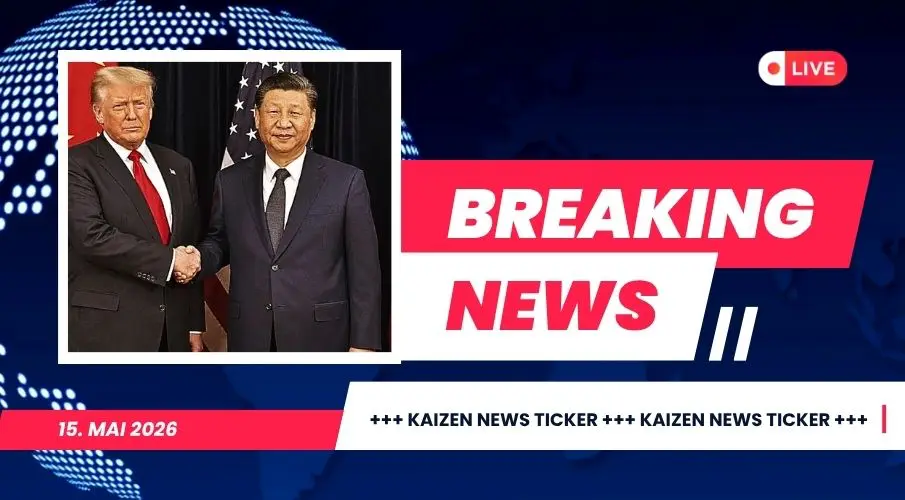
Donald Trump now claims after his visit to China that Xi Jinping personally assured him Beijing would not supply weapons to Iran. The Chinese president even offered assistance with potential negotiations involving Tehran and the reopening of the Strait of Hormuz, Trump said during an interview with Fox News. “If I can help in any way, I would like to help,” Trump quoted Xi as saying. Yet those statements collide with intelligence reports and investigations that paint a far more complicated picture. Already in April, CNN reported, citing U.S. intelligence sources, that China was preparing new deliveries of air defense systems to Iran. According to those reports, portable anti-aircraft missiles could potentially be routed through third countries to conceal their origin. Trump at the time openly warned China of “major problems” if Beijing actually moved forward with such shipments.
Additional pressure emerged later through reporting by the Financial Times regarding a Chinese satellite allegedly received by Iran’s Revolutionary Guard network in late 2024. According to the newspaper, Iran used the system to monitor American military installations throughout the Middle East both before and after missile and drone attacks. Targets reportedly included sites in Saudi Arabia, Jordan, Bahrain, and Iraq. Beijing has denied all accusations. China’s Foreign Ministry described the allegations as unsubstantiated and accused Western governments of deliberately spreading rumors against China. At the same time, the United States recently expanded sanctions against several Chinese companies accused by Washington of assisting Iran with satellite imagery.
Another accusation also drew major attention back in May. Investigations showed that the Chinese company Harxon allegedly supplied antennas for Russian drones disguised as civilian agricultural equipment. According to those reports, the systems ultimately ended up inside the Russian Alabuga production complex, where drones based on Iranian Shahed technology are manufactured. That is exactly why many observers are now viewing Beijing’s latest assurances with considerable skepticism. Our investigations into the matter continue and …
To be continued ...


Russland war schon vor den Sanktionen gut darin wahre Zwecke von Firmen zu verschleiern.
Sag mal „Globus“ ist das auch die Baumarktkette, die in Deutschland Filialen hat. Quasi nur in der ehemaligen DDR?
Wie Du schon oft angemerkt hast.
Die Sanktionen gegen Russland sind löchriger als ein schweizer Käse. 😞
Diese hervorragende Recherche bestätigt das mal wieder.
Kash Patel ist untragbar als Direktor des FBI.
Belegt ist, dass er Privatreisen als Dienstreisen deklariert hat, zumindest Teile davon.
Diese Respektlosigkeit vor den gefallenen Soldaten in Pearl Harbor ist unglaublich.🤬
Das ist kein verdammtes Disneyland, sondern ein Friedhof.
Ein Friedhof für Soldaten, die unter grausamen Umständen dort gestorben sind.
Aber 2026 fällt einem FBI Direktor nicht einmal das auf die Füße. 🤬
Der Zusicherung Pekings kann man genau so wenig trauen, wie den Zusicherungen Russlands.
Aber wer Trump genug den Hintern pudert und ihn glauben lässt, er ist der Größte, dem glaubt Trump nur zu gerne.
Stehen doch im Hintergrund persönliche Deals.
Aber wer sich das Foto genau ansieht, sieht, wessen Hand oben ist.
Grundkurs Psychologie:
Gleichberechtigte Partner geben sich die Hand vertikal.
Dominant zeigt sich in der Hand oben, oder, wenn man die zweite Hand noch oben drauf legt.
Xi’s Hand ist oben.
Er weiß welchen begrenzten IQ Trump hat und Putin hat ihn sicher auch instruiert.
China heißt nicht umsonst „Land des Lächelns“. Immer optisch das Gesicht wahren.
Egal mit welchem Schwachkopf man zu tun hat.
Ein Besuch bei Xi und plötzlich sind chinesische Studenten wichtig und willkommen.
Das ist wie beim Treffen oder Telefonat mit Putin.
Was geben die dem, danit er nach deren Pfeife tanzt?
Scobolamin?
Nur mit Geld ist das ja langasam nicht mehr zur erklären.
Aber seine MAGA kaufen ihm ja alles ab.
Auch solch 180° Wendungen.🤬
Schade, dass die zweifelnden MAGA noch so in der Minderheit sind.
Bis zu den Midterms haben die anderen MAGA noch genug Zeit die wieder auf Kurs zu bringen.
Letztlich zählt, wo das Kreuz bei der Wahl gemacht wird.
Die MAGA die ich kenne, rücken nicht einen Millimeter von Trump ab.😞
Rubio versucht sich wohl als gemäßigter Republikaner zu positionieren.
Für den unwahrscheinlichen Fall, dass MAGA den Bach runter geht.
Sicher habt ihr Michael Banks im Blick.
„Mehr Zeit mit der Familie verbringen“ ist sicher nicht der wahre Grund.
Nur leider wird xer Nachfolger auch ein Trump-Loyalist ohne Moral und Gewissen 😞