
The arrest of Christian Castro is far more than the detention of a single ICE officer. It represents a case that has become one of the Trump administration’s biggest political and legal problems in connection with its deportation crackdown in Minnesota. After months of investigations, the 52-year-old was arrested in Cameron County, Texas, near the Mexican border. He now faces multiple charges. The allegations range from felony assault to filing a false police report.

For investigators in Minnesota, the arrest marks an important step forward. For the Trump administration, it is another troubling development in an operation that was originally presented as a model of its national immigration enforcement strategy.
The case dates back to January 14. At the time, Operation Metro Surge was in full swing. Thousands of federal agents had been deployed throughout the Minneapolis and St. Paul metropolitan area. Washington celebrated the operation as a success. On the ground, however, a very different picture emerged. Our own reporting documented that reality.
The surveillance video released by the City of Minneapolis contradicts the account given by then-Homeland Security Secretary Kristi Noem. While Noem claimed an ICE officer had been attacked with snow shovels and broom handles, investigators say the footage shows a different sequence of events. The later dismissal of charges against Julio Cesar Sosa-Celis and Alfredo Aljorna, along with internal investigations involving the agents involved, pushed the incident into the national spotlight.
According to prosecutors, Christian Castro and other agents pursued Venezuelan national Alfredo Alejandro Aljorna to a residence in Minneapolis. Julio Cesar Sosa-Celis also lived there. Authorities said both men were legally present in the United States.
What happened next quickly became a national story.
Investigators allege that Castro fired through the front door of the residence and struck Sosa-Celis in the thigh. Federal authorities immediately promoted a narrative claiming officers had been attacked by several men armed with a snow shovel and a broom handle. Based on that version of events, Sosa-Celis and Aljorna themselves were charged.

But the story did not withstand closer scrutiny or further reporting.
Weeks later, investigators reviewed surveillance footage from a city-owned camera. The footage captured the minutes leading up to the shooting. A man can be seen standing outside the home holding a snow shovel. Moments later, the shovel is thrown aside. A brief struggle follows near the front steps. The exact moment of the shooting is not clearly visible. Nevertheless, the video was enough to cast serious doubt on the original account provided by the officers.
The charges against the two Venezuelan men were eventually dropped. Particularly notable is the fact that the original cases against Alfredo Alejandro Aljorna and Julio Cesar Sosa-Celis were based almost entirely on statements made by the officers involved. Once investigators reviewed the surveillance footage, the foundation of those allegations collapsed. The videos contradicted key parts of the original narrative. Federal prosecutors subsequently dismissed the cases against both men. The accused became witnesses in an incident that could now send the officers involved to court. That marked a complete reversal of the investigation. Damit begann ein völliger Richtungswechsel der Ermittlungen.
Suddenly, the focus was no longer on the two men but on the officers themselves. The Department of Justice and ICE opened investigations into whether agents had misled investigators about what actually happened. Particularly significant was the role of ICE Director Todd Lyons. Lyons publicly stated that two officers had apparently lied about the circumstances of the incident. The reporting and the reviewed video evidence ultimately left little room for any other conclusion. The original account provided by the officers was no longer sustainable. Christian Castro is considered one of those officers.

The Hennepin County Attorney’s Office subsequently filed charges. Mary Moriarty described Castro’s arrest as a critical step forward in the prosecution. But the matter extends far beyond a single case. Over time, Operation Metro Surge became one of the most controversial federal operations of the Trump administration. Tensions in Minneapolis continued to rise. Demonstrations spread. Criticism of federal enforcement tactics grew louder.
Particularly serious are the deaths of Renee Good and Alex Pretti.

Both were American citizens. Both were shot and killed by federal officers during the operation. Both cases are now under intense investigation. The shootings of Good and Pretti triggered outrage and anger far beyond Minnesota. The incidents intensified scrutiny of the deployment of thousands of federal officers throughout the region and led to demands for a full accounting of the entire operation.


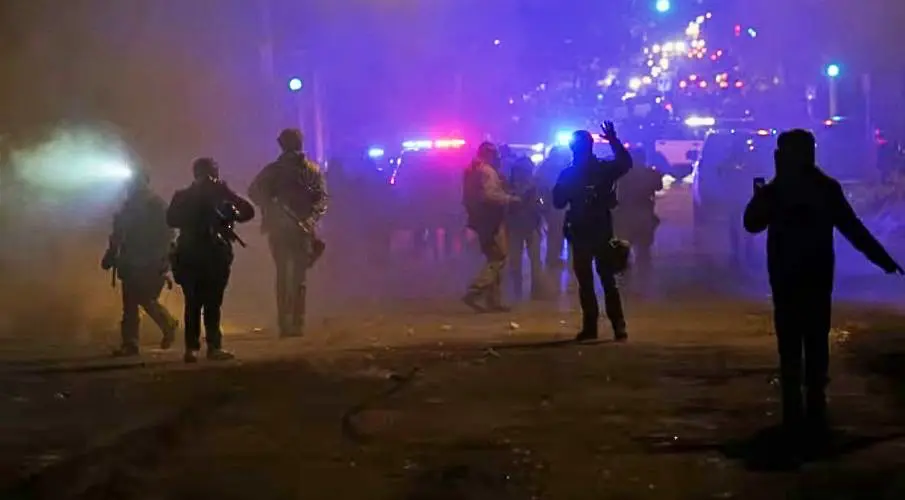
We ourselves spent weeks on the ground in Minneapolis. Tear gas became part of everyday life during that period. Day after day, we stood in the streets, documented raids, assisted affected families, and worked directly with detainees. In Minneapolis alone, we took on more than one hundred arrest cases. Today, those individuals are back on the streets and continue to live in the United States. Many of the cases that were once presented as proof of the operation’s toughness did not withstand later review.
Minnesota later sued the Trump administration to gain access to evidence in the cases involving Renee Good, Alex Pretti, and Julio Cesar Sosa-Celis.
At the same time, a broader conflict emerged between Minnesota and Washington.
The central question is now who has the authority to investigate and prosecute federal officers for actions taken while on duty. The Trump administration and its allies have advanced a broad interpretation of immunity for federal agents. Minnesota authorities strongly disagree.
That is precisely why Castro’s arrest is so significant.
Federal officers normally enjoy substantial legal protections while carrying out their duties. The fact that an ICE officer has been arrested and criminally charged over conduct during a nationwide deportation operation is anything but ordinary.
Castro is not the only officer facing scrutiny.
In April, prosecutors charged ICE officer Gregory Donnell Morgan Jr. He is accused of pointing a firearm at people inside a vehicle during the Minnesota operation. Morgan later surrendered to authorities. His attorney denies all allegations. The case could eventually be moved to federal court. However, if a conviction were secured under Minnesota law, the consequences would be significant.

Under Minnesota law, a conviction for second-degree assault with a dangerous weapon carries a mandatory minimum sentence of three years in prison. Even more noteworthy is another fact: Donald Trump would have no authority to pardon a conviction obtained under Minnesota state law.
Meanwhile, the number of investigations continues to grow.

According to Mary Moriarty, more than thirty investigations involving federal officers who participated in Operation Metro Surge remain open. That number alone demonstrates that authorities no longer view these incidents as isolated cases. Questions also emerged regarding the circumstances of Castro’s arrest. While prosecutors stated that the Department of Homeland Security’s Office of Inspector General assisted in the arrest, the agency later publicly disputed that claim. It said it was neither involved in nor present during the operation. The Texas Rangers, however, confirmed their role in the arrest.
For officials in Washington, the situation is becoming increasingly difficult.
What was originally presented as proof of the Trump administration’s determination on immigration enforcement is now overshadowed by investigations, criminal charges, surveillance footage, court proceedings, and unresolved questions. The arrest of Christian Castro does not end this story. It is likely to be only one of many cases that will shape the legacy of Operation Metro Surge for years to come.
To be continued ...
Updates – Kaizen News Brief
All current curated daily updates can be found in the Kaizen News Brief.
To the Kaizen News Brief In English


Ein echter Lichtblick ist die Festnahme Castros.
Geschuldet der unermüdlichen Recherche und mutigen Staatsanwälten in Minnesota.
Es muss weiter gegen diese gewalttätige ICE Typen vorgegangen werden.
Gegen illegale Verhaftungen und Durchsuchungen.
Und ja, das Alles muss auf Staatenebene erfolgen, damit Trump Keinen begnadigen kann
Wahrscheinlich stellen die ICE Typen dann gleich einen Antrag auf Entschädigung aus dem Trump Fonds
… wird noch viel arbeit, aber sie werden abgeholt