
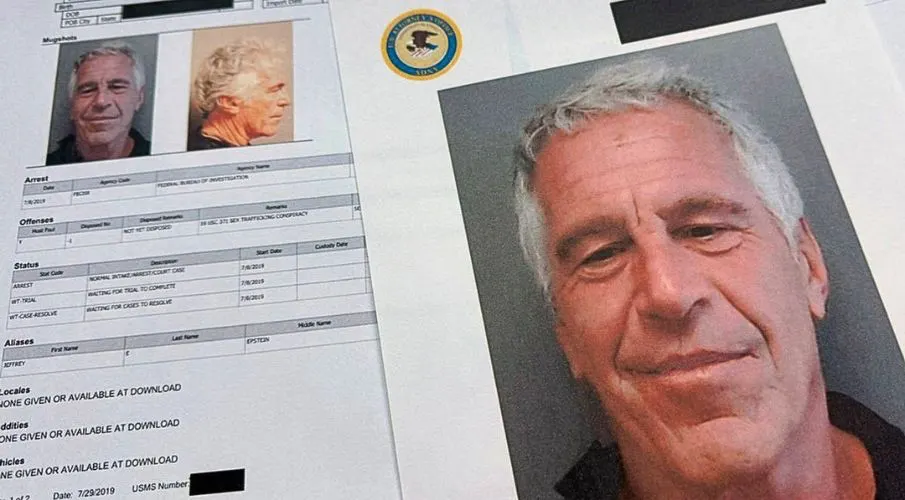
Several European countries are continuing to investigate Jeffrey Epstein and the people around him. What they need from the United States to do that, they apparently are not getting. Investigators in Poland, Norway and Latvia have asked the U.S. Justice Department for legal assistance. No answers came. Britain is also waiting for documents from Washington for its own investigations. That means what started as an American fight over the Epstein files has long since become an international problem. European authorities are trying to find out what connections Epstein had on the continent, who did business with him, who passed information to him and which people from his circle could still matter to investigations today. Some of the documents they need are in the United States. And that is exactly where investigators are getting nowhere.

Norway describes the situation especially clearly. Marianne Bender, a prosecutor with Norway's economic crime authority Økokrim, said they are in contact with representatives of the U.S. Justice Department. But the Norwegian request for legal assistance has still not been approved.
“This is very unfortunate for the Norwegian investigation. Økokrim hopes that the U.S. Justice Department will eventually approve our request,” Bender said.

Latvia is waiting too. Latvian State Police spokeswoman Simona Gravite said her country had sent several requests for legal assistance to the responsible authorities in the United States. So far, none of those requests has received a response. Polish investigators are also reporting a lack of support from Washington.
The case involving Britain is even more explosive. It involves, among others, Peter Mandelson, one of the best-known British politicians of recent decades and a man with documented ties to Epstein. Mandelson lost his post as British ambassador to the United States and also had to leave the House of Lords. British investigators are looking into whether he may have passed confidential government information to Epstein. London wanted unredacted sections of the American Epstein files for that investigation. But the U.S. Justice Department did not hand over those documents either.
For British investigators, this is not some minor detail. If they are trying to determine what information Mandelson passed to Epstein and what contacts were behind it, redacted documents can hide crucial names or connections. Without access to the complete documents, part of the investigation remains blocked.

All of this is happening under Attorney General Todd Blanche, while the Trump administration has also been facing growing pressure for months inside the United States over its handling of the Epstein files. Donald Trump himself made the issue a major topic during his campaign. His administration promised transparency and a sweeping release of the records. By now, however, the fight increasingly revolves around which documents are released, what stays redacted and what information remains unavailable to the public.
Victims of Epstein's abuse have also repeatedly demanded full answers at last. That is exactly why the treatment of European investigators stands out so much. While Washington is under pressure at home over a lack of transparency, foreign law enforcement agencies are apparently also waiting for documents and answers. Epstein's activities were never limited to the United States. He spent time in Europe regularly, had numerous contacts there and moved for years in circles of politics, business and society. Paris played an important role in his life. Beyond that, there are other European connections that did not somehow become settled just because he died.
We know very well ourselves how difficult the road through the Epstein files is. That is why we rely neither on the U.S. Justice Department nor on other American investigative agencies. For weeks, we have been carrying out our own research in France, which at the same time repeatedly gives us the chance to follow Germany's state elections on the ground. If this story is going to be uncovered any further, it will happen through the editorial team's own reporting. That has taken us further so far than any official agency. The Justice Department drags things out, obstructs and blocks - there is no sign of any serious interest in a full investigation.
International cooperation could therefore bring new information to light. It could show which contacts have not yet been fully investigated or which people need to play a bigger role in European investigations.
But that is exactly where the cooperation has stalled
Norway is waiting for approval of its request for legal assistance. Latvia is waiting for answers to several requests. Poland has received no support either. Britain is not getting the unredacted documents it asked for.
This is no longer just about how Washington handles its own Epstein files. Through its conduct, the U.S. Justice Department is now also deciding how far investigators outside the United States can get with their investigations. And while Todd Blanche and his department continue not to deliver, European investigators remain dependent on American help in a case whose connections reached far beyond U.S. borders years ago.
Updates – Kaizen News Brief
Alle aktuellen ausgesuchten Tagesmeldungen findet ihr in den Kaizen Kurznachrichten.
To the Kaizen News Brief In English


Ich danke euch dafür, dass ihr dran bleibt…..