
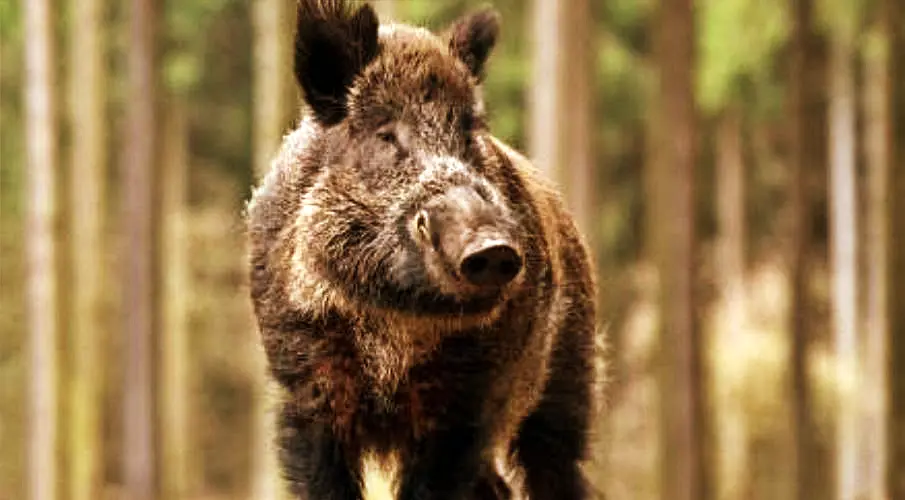
Thirty-nine years after the explosion in reactor unit four of the Chernobyl nuclear power plant, hunters in German forests are shooting wild boar and not sending the meat to market. Not because it is tough or diseased. But because it is radioactive.
In 2025, 2,927 wild boar killed in Germany were measured with radioactivity above the legal limit of 600 becquerels per kilogram. This is not an outlier, not an isolated case, not a relic from a forgotten debate. This is the reality of Germany’s forests, four decades after a disaster that is officially considered managed.
The mechanism is as simple as it is relentless. Forest soils in Bavaria, Baden-Württemberg, Saxony, and Thuringia still contain cesium-137 - deposited by radioactive fallout that spread across Europe after the explosion on April 26, 1986. Cesium-137 has a half-life of around 30 years. That means the substance will remain measurable in the soil well into the second half of this century. Mushrooms and forest plants absorb the cesium from the ground. Wild boar eat the mushrooms. And so the radiation from 1986 moves into the animal of 2025.

Bavaria carries the greatest burden. Around 2,300 of the 2,927 affected animals were recorded there. Baden-Württemberg follows with 491 cases, Saxony with 109, Thuringia with 18. These are the regions over which the radioactive rain fell most heavily at the time - not a coincidence, but the result of geography and weather patterns from April 1986 that still leave their mark today.
Meat that exceeds the limit of 600 becquerels per kilogram cannot be sold. The animals are disposed of. For each adult boar killed, the state pays compensation of 204.52 euros to the hunter, for a juvenile animal 102.26 euros. The total amount of compensation paid is how the number of affected animals is recorded in the first place - there is no comprehensive sampling, only this indirect method through hunting and payments.
What has changed is the number. In 2022, there were still around 7,500 radioactive wild boar. In 2025, there are just under 3,000. The curve is trending downward, experts speak of slow improvement. That is true - but it obscures the fact that 39 years after Chernobyl, nearly three thousand animals still have to be removed from German forests each year because their meat is too radioactive for human consumption.
Chernobyl is not a closed chapter. It is a process with a long timeline, unfolding quietly in soils and bodies, without demanding attention and without depending on memory. The forests remember on their own.
Updates – Kaizen News Brief
All current curated daily updates can be found in the Kaizen News Brief.
To the Kaizen News Brief In English


Danke für die interessante Info über die Folgen von Tschernobyl und infolgedessen die Cäsiumbelastung bei Wildschweinen.
…ich danke dir
Wir haben den Regen in Baden Württemberg mitbekommen, da wusste man noch nichts von dem Unfall und im Strahleninstitut ging der Alarm los, als kontaminierte Mitarbeiter hinein wollten. Erst danach gab es erste offizielle Meldungen.
…ja, das ist bei einigen leider passiert
Eine interessante Recherche.
Der Boden vergisst nicht.
Radioaktivität baut sich leider nur langsam ab.
Das es sich derart in Wildschweinen ablagert, war mir nicht bewusst.
Ob das auch für Rotwild in der Region gilt?
Ich kann mich noch gut an die ersten Fernsehbilder erinnern.
Die Warnungen keine heimischen Pilze zu Essen.
Von Wild war da nie die Rede.
Nach gut 5 Jahren wurden die Warnungen für Pilze aufgehoben.
Wobei eigentlich Jedem, der etwas Ahnung von Chemie hat, dass 5 Jahre zu kurz sind
… muss ich mir merken „der Boden vergisst nicht“