
The number is out there and it is concrete enough to no longer be ignored. Maybe six more weeks of jet fuel. No more. Fatih Birol says it without emphasis, without dramatization. Birol is a Turkish economist and has been head of the International Energy Agency based in Paris since 2015. The IEA is one of the most important institutions worldwide when it comes to energy supply, markets and crisis analysis. It is a statement. And it carries the weight of a reality that can no longer be argued away.
What is happening right now is not a typical supply crisis. Birol speaks of the largest energy crisis we have ever experienced. Triggered not by a single disruption, but by the simultaneous cutting off of key flows - oil, gas, transport routes. At the center is the Strait of Hormuz. A passage through which roughly one fifth of the world’s traded oil once flowed. Now it is blocked, restricted, politicized.

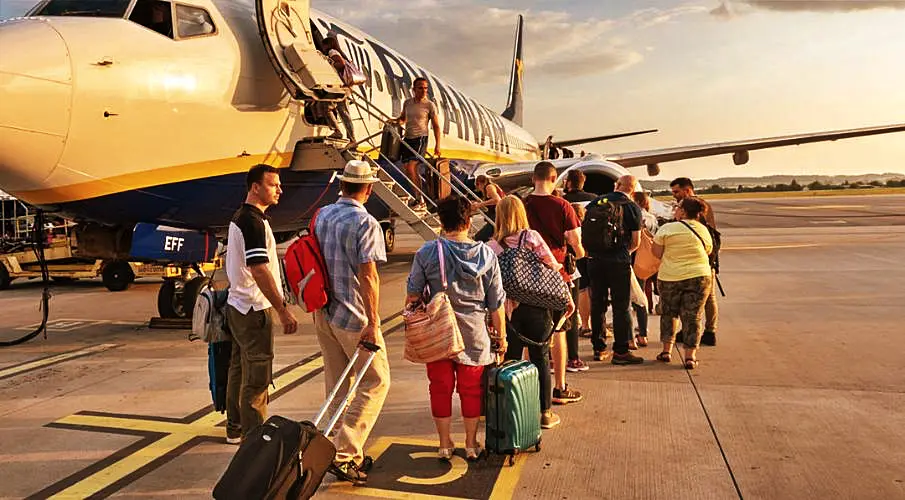
The consequences are no longer theoretical. If nothing changes, flights will soon be canceled. Not at some point, but soon. Connections between European cities that still feel routine today could disappear simply because there is no fuel left. Aviation is one of the first sectors to feel the shortage directly. And it is only the beginning.
Prices are already rising. Gasoline, gas, electricity. Everything is increasing. Birol describes it in a matter of fact way, but the dynamic is clear: the longer the blockade lasts, the harder it will hit growth and inflation worldwide. It is not a regional problem. It is global pressure working its way into every economy.
It hits hardest those who are barely heard. Countries in Asia, Africa, Latin America. States that have neither the reserves nor the political influence to counter it. But Europe cannot shield itself either. Wealth does not protect against physical shortages. Energy cannot be talked into existence when supply routes are blocked.
Part of the solution is visibly there. More than 110 oil tankers and over 15 LNG ships are stuck in the Persian Gulf. They could ease the situation if they were able to pass. But even that would only buy time. At the same time, infrastructure is damaged. More than 80 key facilities in the region have been hit, a third of them severely. Even if an agreement were reached tomorrow, a return to previous levels would take months - possibly up to two years.
Another point, quiet but decisive, is the so called toll system. Ships pay to be allowed to pass. What appears to be a pragmatic interim solution could become a precedent. Today the Strait of Hormuz, tomorrow other chokepoints like the Strait of Malacca. If this principle takes hold, global trade will change permanently. Not as a temporary measure, but as a new rule.
The situation is clearer than many want to admit. It is not just about prices, not just about markets. It is about availability. About the question of whether energy is still arriving at all. And if it is not, things will become quieter. Fewer flights, less movement, less room to maneuver.
Six weeks is not a scenario. Six weeks is a deadline.
Updates – Kaizen News Brief
All current curated daily updates can be found in the Kaizen News Brief.
To the Kaizen News Brief In English


Und Reiche macht uns abhängig von fossiler Energie 🤦🏻♀️. Wir müssen autark werden, so gut es geht. Unser kleines Balkonkraftwerk hat 500 Euro gekostet und in 12 Monaten 270 Euro an Stromkosten gut gemacht. Wenn zumindest mehr Autofahrer auf Stromer umsteigen, dann bleibt mehr Öl für Z.B. Flieger und Schiffe. Aber die Abhängigkeit bleibt.
..ja reiche ist in unserer recherche-aganda in die top3 gerutscht, denke, da wird man sehr fündig werden
Leider sind wir weit entfernt von einer Unabhängikeit von Gas und Öl.
Es gibt noch viele Bereiche, die nicht darauf verzichten können.
Flugzeuge, Schiffe und diverse andere wichtige Infrastrukturen.
So trifft dieser Konflikt eigentlich jeden Menschen.
Die Einen mehr, die anderen weniger.
Genau da liegen die Gefahren.
Wie weit geht „man“ (Staaten) um die Weltwirtschaft, die eigene Wirtschaft zu stabilisieren?
Maut?
Menschenrechte?
Die Gewinner sind Putin und Trump.
Putin bekommt durch den hohen Ölpreis Milliarden in seine Kriegskasse und bleibt bei fossilen Energiequellen autark.
Trump gewinnt mit Insiderhandel und Vergabe von „Drll baby drill“ Lizenzen in den USA, sowie der Ölforderung in Venezuela.
China hat seltene Erden und könnte sich damit fossile Energiequellen besser organisieren, als Staaten die nichts im Tausch haben und/oder nicht extrem reich sind.
Die furchtbare Situation macht Länder erpressbar.
leider kann ich dem nichts hinzufügen, was es abschwächen würde