
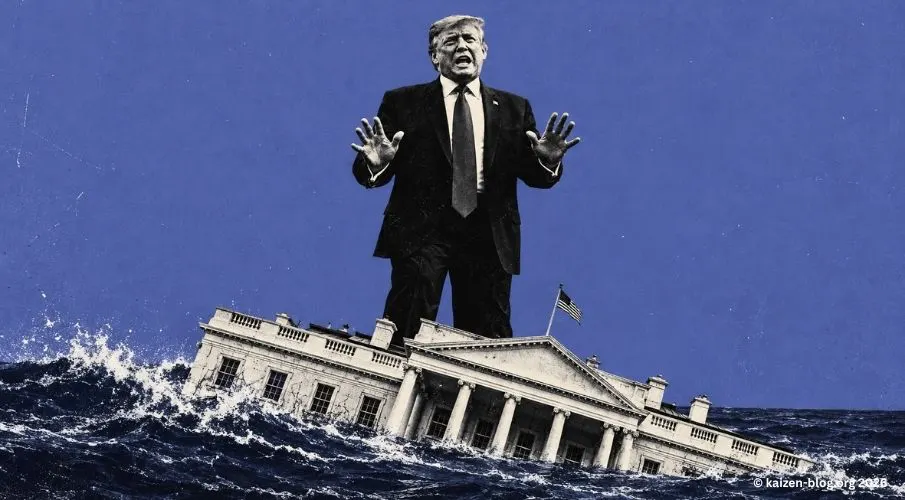
Donald Trump wanted to make America cheaper. Three weeks before the midterm elections, his own Labor Department has handed him a bill that thoroughly undermines his promises. In September, the U.S. inflation rate climbed to 3.7 percent, up from 3.4 percent in August. In just a single month, the cost of goods and services jumped 0.6 percent, the biggest increase in five months. The very president who promised Americans lower prices now has to explain why their money keeps losing value. Political speeches don't do much good at the grocery store checkout.
The situation is particularly brutal when it comes to gasoline. Prices jumped 9.1 percent between August and September alone. Compared with September 2025, the increase is a staggering 34.2 percent. The war against Iran has severely disrupted oil and natural gas supplies. Its consequences are now reaching nearly every American household. After all, expensive fuel rarely stays at the gas pump. It rides along on trucks, shows up in shipping bills, and eventually lands on price tags. Russia's war against Ukraine is also putting pressure on energy markets. Diesel, in particular, has become more expensive, driving up freight transportation costs even further.
Airfares rose another 1.2 percent in September. Compared with a year earlier, plane tickets have become 22.4 percent more expensive. Hotel stays cost 2 percent more than the previous month and 4.4 percent more than a year ago. New and used cars also became more expensive. So did shoes and sporting goods. Price increases are spreading into areas that go far beyond the immediate consequences of the war. Even excluding food and energy, the annual inflation rate rose to 2.6 percent, up from 2.4 percent in August. The monthly increase was 0.3 percent. That puts inflation even further away from the Federal Reserve's goal of keeping it consistently at 2 percent.
Grocery prices, of all things, offered a little relief. Prices at grocery stores fell 0.1 percent in September and were up 1.8 percent from a year earlier. Ground beef became 0.8 percent cheaper over the month, although it still cost 5.4 percent more than a year ago. A temporary price drop does little to change the bills families have been paying for months. Even higher wages offer limited relief when the cost of living rises faster. Average weekly earnings, adjusted for inflation, fell below their year-earlier level for the first time since May.
This development is hitting Trump just before an election increasingly dominated by the question of whether people can afford everyday life. According to a recent representative survey, just 17 percent of American adults approve of how he is handling the cost of living. Only 26 percent approve of his overall handling of the economy, a new low. Those numbers leave little room for the familiar self-promotion of a president who likes to announce economic victories before they happen. For many Americans, the question now is how they are going to pay their next bill.
Even the enormous investments in artificial intelligence are driving up prices. The construction of new data centers is increasing demand for computer components and semiconductors. Those costs are now reaching ordinary consumers buying electronic devices. According to an estimate by Goldman Sachs, this expansion may have added roughly 0.5 percentage points to annual inflation as measured by the Federal Reserve's preferred inflation gauge. Nintendo provides a clear example: Before September 1, 2026, the Switch 2 officially cost $449.99 in the United States. Since that date, its suggested retail price has been $499.99. Apple's iPhone 17 became about 10 percent more expensive than the previous model, although improved technology also played a role.
Businesses are preparing further price increases as well. New Jersey-based appliance manufacturer Chefman last raised its prices in 2024. CEO Ralph Newhouse warned that further increases in diesel costs could force the company to raise prices again. So far, the company has used $20 million in tariff refunds to absorb additional costs. That option is increasingly being exhausted. PepsiCo has already announced higher prices for various snack foods and beverages. The bill for more expensive energy is once again being passed on to consumers.
The Federal Reserve is facing an unpleasant decision. In September, it raised its key interest rate for the first time in three years, to approximately 3.9 percent. Chairman Kevin Warsh had warned that inflation was moving back toward the target too slowly. Fed officials will meet again on October 27 and 28. After the September inflation figures were released, the probability of another rate hike, as reflected in futures markets, rose to approximately 50 percent. Other investors still expect the Fed to hold off until December. Higher interest rates make borrowing more expensive and can slow demand. They can't replace missing oil, though.
Stock prices slipped slightly after the inflation figures were released, while Treasury yields rose. Borrowing costs could increase further as a result. At the same time, retirees will receive a 3.6 percent cost-of-living adjustment under the new calculations. Yet even that increase tells the story of an economy where prices stubbornly keep climbing. The election is on November 3. Until then, Trump can make plenty more promises. Americans are already paying their bills according to a very different set of numbers, not according to his lies.
Updates – Kaizen News Brief
Alle aktuellen ausgesuchten Tagesmeldungen findet ihr in den Kaizen Kurznachrichten.
To the Kaizen News Brief In English


