It took more than half a year before investigators in Minnesota finally obtained the evidence they should have had from the very beginning to investigate two killings. Federal authorities turned over hard drives containing witness interviews and police body camera recordings, along with the SUV Renee Good was driving when ICE agent Jonathan Ross shot and killed her in January. Until this month, all of that evidence remained under the control of the very agencies whose own personnel are at the center of the investigation. Hennepin County Attorney Mary Moriarty confirmed the transfer of all evidence, including material related to the shooting of Julio Sosa-Celis, and summed up its significance in a single sentence: investigators no longer have to speculate about evidence they were never allowed to examine. That one sentence describes everything that came before. The State of Minnesota was forced to reconstruct two killings while federal agencies withheld the most critical parts of the case file.
Hennepin County Attorney Mary Moriarity announced an "important milestone" in the investigations into the fatal shootings of Renee Good and Alex Pretti, as well as the shooting of Julio Sosa-Celis. The Minnesota Bureau of Criminal Apprehension now has custody of the hard drives containing previously withheld evidence. It has also taken possession of the vehicle Renee Good was driving before ICE agent Jonathan Ross shot and killed her on January 7. Die Ermittlungsbehörde BCA verfügt inzwischen über die Festplatten mit zuvor zurückgehaltenem Beweismaterial. Außerdem befindet sich nun auch das Fahrzeug von Renee Good in ihrem Besitz, bevor sie am 7. Januar von ICE-Beamten Jonathan Ross erschossen wurde.
Jeremy Bentham wrote that publicity is the very soul of justice because it places even the judge under public scrutiny while judgment is being rendered. Without that public scrutiny, no one truly judges. The only thing that matters is who controls the evidence. That is exactly what happened here. It was not a court that decided what Minnesota was allowed to know. It was the agency whose own officers are under investigation. Whoever controls access to the evidence controls the outcome of the review long before any review actually begins.
The road to this point was long. After federal authorities refused to cooperate, Minnesota opened its own independent investigations. In March, the state sued the Trump administration for access to the evidence, accusing it of withholding material from investigators examining potential violations of Minnesota criminal law committed on Minnesota soil. Journalists, witnesses, activists, and ordinary citizens contributed every piece of evidence they had. It did not take long before a significant gap emerged between the government's version of events and what actually happened. This was never a procedural dispute over paperwork. It was a fight over whether a state could independently investigate the very federal agencies employing the officers under scrutiny.
Read also our article: Investigations Show - How an Ignored Directive Cost Renee Good Her Life
Shots Fired on a Public Street – An ICE Operation Kills a Mother and Leaves a Child an Orphan
Alex Pretti – A Life That Does Not Fit the Official Account
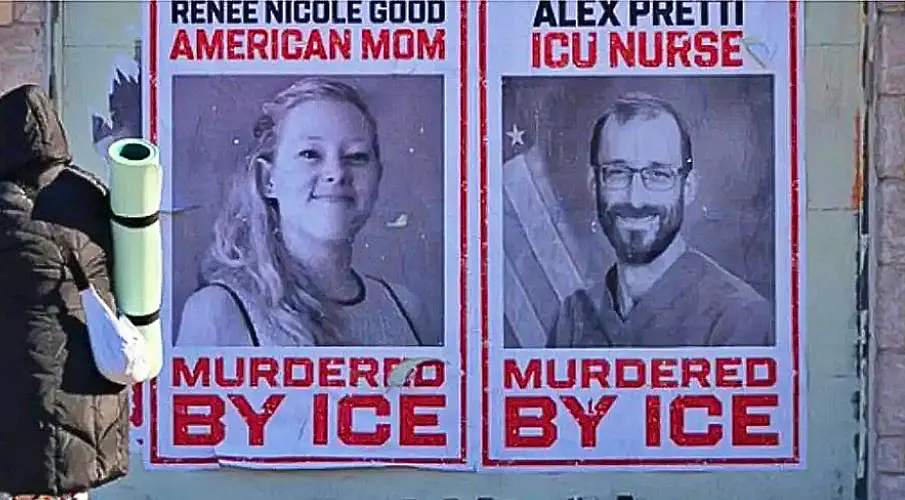
Renee Good and Alex Pretti were American citizens with no criminal records. Both were shot and killed by masked federal immigration agents during Operation Metro Surge. Their deaths focused national attention not only on the officers' use of deadly force but also on the process used to investigate it afterward. Jonathan Ross returned to duty while Minnesota investigators remained locked out of the evidence. Good's vehicle stayed in federal custody together with the recordings, witness statements, and digital evidence that made an independent investigation possible.
The circumstances surrounding Pretti's case were different, but the same wall remained in place. Family attorney Steve Schleicher said federal authorities never committed publicly to full cooperation. During a recent meeting, U.S. Attorney Daniel Rosen declined to answer even the most basic questions about the evidence in Pretti's case. The family had to ask for cooperation that should have existed from the very first day after a fatal shooting. Attorneys representing the Good family described the evidence transfer as an important step toward justice, but it came only after more than six months with no certainty that Minnesota would ever be allowed to examine the material.
Minnesota Attorney General Keith Ellison said he was deeply troubled that the federal government had spent more than six months hiding evidence from state investigators. The sequence of events supports that conclusion. The evidence was never missing because it did not exist. It existed all along, and federal authorities alone decided when Minnesota would be allowed to see it. Why that changed now remains unanswered. Recent court filings suggest the transfer may be connected to ongoing negotiations over evidence in the criminal case against ICE agent Christian Castro, who faces charges for the nonfatal shooting of Julio Cesar Sosa-Celis. Federal authorities still have not publicly explained why an entire state was denied access to this evidence for more than six months.
Read also our article: Further Successes Against ICE - The Christian Castro Case and the Cracks in Trump’s Deportation Crackdown
The damage has already been done. Investigators lost valuable time they can never recover. Families waited without complete answers. The officers remained uncharged while the agencies connected to them guarded the very evidence needed to independently evaluate their conduct. To this day, no charges have been filed in either fatal shooting. Houston shows that these two cases are not isolated exceptions. There, prosecutors also accuse federal authorities of withholding information in the killing of Lorenzo Salgado Araujo by an ICE agent, including the identities of the officers involved. What happened in Minnesota is therefore not an accident. It is a recurring obstacle whenever outside scrutiny begins.

What changes now is not the outcome but the scope of the investigation. Prosecutors can finally compare the recordings with witness statements, examine the digital evidence, inspect Good's vehicle, and determine whether the complete record supports criminal charges. One obstacle maintained by federal authorities for more than six months has finally been removed. At the same time, a new obligation begins. Minnesota must now complete its investigation, publicly explain its findings, and decide whether the evidence is sufficient to charge one or more of the officers.

Renee Good and Alex Pretti remain at the center of this investigation, and the transfer of the evidence documents above all how long their families were denied an independent review. The question that now remains belongs to Minnesota itself: whether access to the evidence will ultimately lead to accountability.
To be continued ...
Updates – Kaizen News Brief
All current curated daily updates can be found in the Kaizen News Brief.
To the Kaizen News Brief In English


Das sind diktatorische Maßnahmen und haben mit einer unabhängigen Justiz nichts mehr zu tun. Es muß um selbstverständliche Dinge lange gekämpft werde. Es ist einfach arg was aus Amerika geworden ist. Heilig waren sie nie, aber jetzt sind sie am Tiefpunkt.
Unglaublich, dass ein rechtstaatliches Verfahren von Bundesbehörden ohne Konsequenzen derart verzögert werden durfte.
Die Mörder von Good und Pretti sind weiter im Duenst, erhalten Gehalt, leben ihr Leben und zerstören im Namen von ICE Familien.
Good ist tot. Ihre Familie wird diese Lücke für immer spüren.
Pretty ist tot, er fehlt so vielen.
Minnesota MUSS Rückgrat beweisen und Anklagen erheben.
Und sofern das auf Staatenebene passiert, kann Trump sie nicht begnadigen.
Ob und wann die Beweise für die beiden anderen tödlichen Schüsse frei gegeben werden, ist fragile.
Wobei Texas sicher mehr blockieren wird.
Eurer unermüdlichen Recherche und Arbeit ist dieser Erfolg zu verdanken.
Und ich weiß, Ihr und Eure Mitstreiter bleiben dran.