
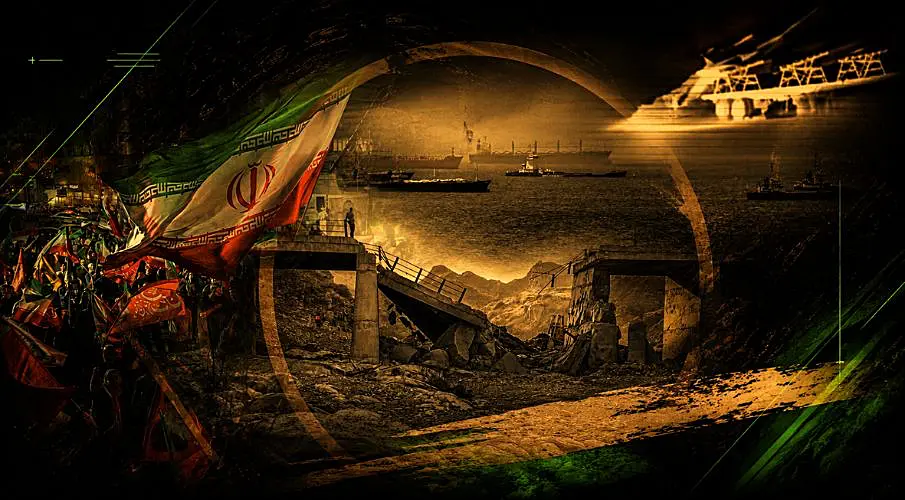
A war can be timed like an election campaign when enough cynics are in the room. Senior advisers to Donald Trump are pushing to keep the Iran war from escalating further before the November midterm elections in order to limit Republican losses, according to 4 people familiar with the discussions. After the vote on November 3, the White House will consider whether to ramp up the attacks again; a return to full-scale war is by no means decided. So the war is not pausing for peace, it is pausing for the election. And that very night, both sides were already striking each other again. A conflict that kills people becomes a variable in a schedule, and the math only works as long as nobody looks too closely.
The order of priorities has been stated openly. “We are keeping the pressure on Iran,” a White House official said, “but November is a priority.” Keeping the war limited would keep the unpopular conflict out of the headlines while Republicans defend their narrow majorities in the Senate and House of Representatives. Vice President JD Vance and Secretary of State Marco Rubio support the idea of keeping the conflict quiet until then, according to people in the White House. A war as an item in an election calculation, that is where things stand. Turning down the volume does not mean ending it, it means postponing it.

The numbers explain the urgency. A poll from late August found only 31 percent support for the war and around 63 percent opposition, with voters especially angry about high gas prices. Trump’s own approval rating has fallen from 40 to 33 percent since the conflict began. A war that costs votes gets put on mute until the ballots are counted. What bothers voters disappears from view until their vote has been cast.
The pause has a second reason. It would give the military time to replenish its heavily depleted ammunition stockpiles; according to consistent reports, there is practically nothing left of certain long-range precision missiles. The heads of the military branches warned Pentagon chief Pete Hegseth in writing that a prolonged war was unsustainable and would weaken readiness elsewhere. The Pentagon, meanwhile, insists it has everything the mission requires. Stockpiles cannot be replenished by declaration, and the generals see the wall the spokesman is painting over. A war that empties its own depots can only pause or lose, and pausing sounds better before an election. Between the warning from those in uniform and the reassurance from the office, the truth usually lies with those in uniform.
The calm is getting harder to maintain by the day. Iran’s leadership has grown more confident after months of disruptions in the Strait of Hormuz and faces little domestic pressure; it is likely to continue hitting American and allied targets in the Gulf at least occasionally, from bases to energy infrastructure. The U.S. would then come under pressure to retaliate, and a spiral could drag both sides back into an air war, whether Washington wants it or not. Over the weekend, the U.S. hit rocket launchers on Larak Island, Iran fired toward Jordan and the United Arab Emirates, and on Tuesday the U.S. bombed more targets around Hormuz, the heaviest outbreak since July, with military personnel and civilians killed in Iran. Even the Gulf states that initially pushed for a harder approach are now united in urging de-escalation. The temporary ceasefire therefore depends on the patience of an opponent that has no reason to be patient.
The biggest uncertainty is the president himself. On Tuesday, Trump threatened that if Iran retaliated, it would be hit harder, and that the biggest strike of them all was already waiting in the wings. On Wednesday, he said the campaign would not last long and that the election played no role in his Iran policy: He is not running, his party is running, and he will help his party. But his advisers say November is the priority, and he is known for changing his mind overnight. The president’s word and his people’s calendar openly contradict each other. A commander who aims by the polls ends up hitting neither the enemy nor peace.
For now, the White House is relying on economic pressure, threatening countries that trade with Iran with sanctions and maintaining its own blockade at the Strait of Hormuz. White House spokeswoman Olivia Wales calls the blockade the most powerful in world history and insists Iran will never be allowed to have a nuclear weapon. But Iran has lived under sanctions for decades, sanctions that hurt the economy without changing the leadership’s course. Treasury Secretary Scott Bessent himself acknowledged that the pressure campaign could trigger military retaliation, meaning the economic route itself could ignite the next escalation. China is not going along anyway, which calls the entire strategy into question, says Alex Plitsas of the Atlantic Council. Barbara Leaf, the State Department’s top Middle East official under Joe Biden, warns that the regime has every incentive to disrupt the supposed calm, and that it is not real calm anyway. Pressure that hits back, and a blockade hardly anyone supports, add up to more of a hope than a strategy.
What remains, then, is a war that follows election dates, an open admission of its own pointlessness. People are killed on schedule, the war pauses for appearances, and the thread is picked up again once the ballots are safely cast. “The calendar is driving Iran,” a White House official said, and rarely has one sentence revealed more. Half a year of war, a seventh month without a goal, and the only fixed point is Election Day. The dead do not vote, so the timing of their deaths can be negotiated. - 5:30 p.m. Trump claims the U.S. has “virtually unlimited” ammunition stockpiles
Updates – Kaizen News Brief
Alle aktuellen ausgesuchten Tagesmeldungen findet ihr in den Kaizen Kurznachrichten.
To the Kaizen News Brief In English


