
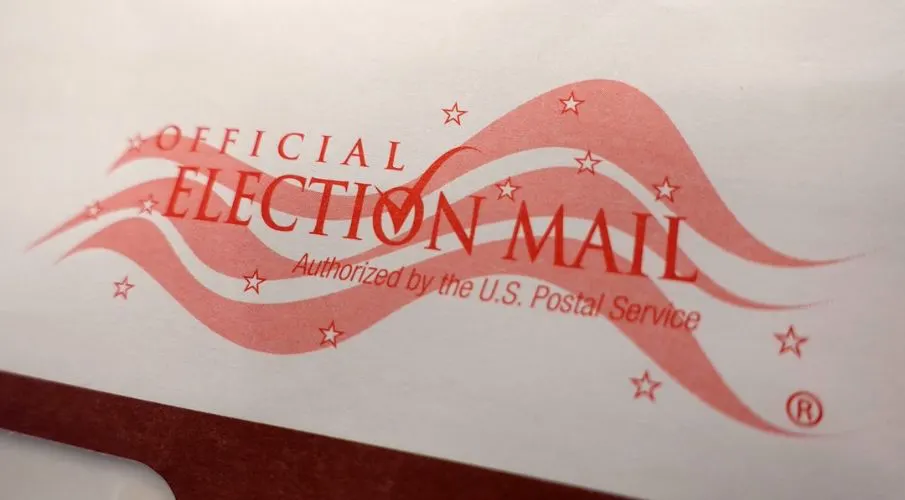
A mail-in vote would first have to get past Donald Trump’s new postal rules. Just weeks before the midterms, the United States Postal Service would have been given a role that went far beyond carrying envelopes: States were supposed to provide lists of voters allowed to receive mail ballots. The Postal Service would have delivered only to people on those lists. Washington also demanded new envelopes meeting Postal Service requirements. Every voter was supposed to get an individual barcode. On Monday, the Supreme Court stopped the plan. For Trump, it is a major defeat just before November 3.
The Supreme Court rejected the Trump administration’s request to lift the preliminary injunction blocking the new mail-voting rules. That means the rules remain blocked for now. Justices Alito and Thomas dissented. They would have granted the government’s emergency request and allowed the new rules to take effect.
The ruling itself feels almost mockingly short considering what the administration wanted to change. 1 paragraph. The government was unlikely to succeed on the merits of its case, the majority wrote. No signature, as is typical in emergency proceedings like this. The Court did not release a vote count either. Samuel Alito and Clarence Thomas dissented. Brett Kavanaugh sided with the majority and gave his own reasoning. Trump’s administration wanted to reach deep into the mechanics of an election that was already underway. The highest court needed only a few lines to pull the emergency brake.

Behind the fight is an old obsession of the president’s. Trump has claimed for years, without evidence, that mail voting is riddled with widespread fraud. Now that suspicion was supposed to become government procedure. The Postal Service would have had to check whether a voter appeared on a previously submitted list. Only then would the mail ballot have been delivered. The mail carrier would effectively have become another gatekeeper on the road to the ballot box.
Then there was the packaging. States would have been required to use envelopes approved by the Postal Service. Each voter was supposed to have an individual barcode. Washington can put rules like that on paper pretty quickly. Printing companies live in a different reality. Some states had already produced their election materials. Others had already begun mailing them. More than 12 others planned to do so by the end of this week. November was not going to wait for Washington to finish its fight.
Election officials therefore warned of massive practical problems. Designing new envelopes just weeks before voting and building them into procedures already underway could cause delays. In some states, the switch could be practically impossible. While Trump’s lawyers fought in court for new powers, completed ballots elsewhere were already sitting on tables or packed into mailbags. Politics can ignore a deadline. An election calendar rarely does anyone that favor.
Madison, Wisconsin, mailed 18,000 absentee ballots on Tuesday. More than 1 week earlier than planned. Election officials apparently wanted to get them out the door before the next legal twist once again threw their work into question. In Weber County, Utah, officials were already considering setting up their own distribution centers. Voters could have picked up their mail ballots there in person and bypassed the Postal Service entirely. When an election office starts trying to route around a government postal service because Washington wants to rewrite its role in the middle of an election, the situation has moved far beyond ordinary bureaucracy.

That is exactly where Kavanaugh came in. In his view, there was at least a fair prospect that the Postal Service could, in principle, have the legal authority to impose rules like these at some point. For 2026, however, applying them would be “arbitrary and capricious.” State and local election officials simply did not have enough time to reasonably implement the new rules. So Kavanaugh did not close the door forever. For this election, he slammed it in Trump’s face.
Democratic-led states and voting-rights groups had warned about exactly this kind of intervention. The plan was unconstitutional and threatened the democratic electoral process, they argued. Such a last-minute change could create chaos while early voting was already getting underway in many states. The Supreme Court did not write a philosophical treatise about it. The government was unlikely to win on the merits. That was enough to keep the block in place. Jena Griswold, Colorado’s Democratic secretary of state, put the political meaning plainly. Colorado voters’ mail ballots had been protected, she said. Trump’s attempt to sabotage the 2026 election had failed. The courts had prevented the Postal Service from deciding which voters could receive a mail ballot. Trump would continue to fail in further attempts to take control of the midterms, Griswold said.
Colorado votes largely by mail. Trump’s plan would have directly affected a great many people there. Griswold said her state would fight attempts to suppress votes or unlawfully bring elections under federal control. Big constitutional fights often come down to a very simple question: Does the envelope reach the voter?
Pressure also eased noticeably in Washington State. Elections director Stuart Holmes said he was “pleased and relieved” that mail voting could continue this fall, at least for now, under the procedures already in place. The state had prepared backup options. But the ballots had already been printed. Switching course would have cost a great deal of money. In Washington, the democratic world order was, for a moment on Monday, something very tangible: printed paper that did not have to go back through the machine.

Alito wanted to clear the way for Trump. In his nearly 8-page dissent, he pointed to the broad authority of the United States Postal Service to regulate the mail. In his view, the new requirements resembled ordinary mailing rules, such as including a recipient’s address or putting postage on an envelope. The government had a strong interest in enforcing its rule, he wrote. At the same time, the rules could make federal election mail more visible and help detect possible election fraud. Thomas joined him.
Alito expressly acknowledged the difficulties facing the states. He took the problem very seriously, he wrote. In his view, however, it still was not enough to justify denying the government’s request. That left a fine line running through the Supreme Court. Kavanaugh thought similar rules might be possible later, but he would not impose them on this election. Alito and Thomas would have let Trump move ahead now. The calendar suddenly took on almost constitutional weight.
For election officials, the decision did not come a day too soon. For weeks, a legal back-and-forth had created uncertainty while the states were trying to prepare for the election at the same time. Some had already mailed ballots. Others were about to. Hanging over the entire process was the question of whether Washington would rebuild the track while the race was already underway. The Supreme Court has stopped that reconstruction job for November.

Trump still managed to accomplish something. For weeks, people were once again debating whether mail voting could be trusted. That is exactly the distrust he has been feeding for years. A president does not need to win a court case to spread doubt. Sometimes the case itself is enough. The claim travels light. The rebuttal comes later carrying binders. That is especially explosive because Trump’s party could lose the midterms. As the election approaches, the president is once again trying to raise questions about the integrity of the voting process. The new postal rules would have carried that fight directly into the delivery of mail ballots. Even their failure does not erase the weeks of uncertainty. Some election offices have already reacted to them.
Read also our article: January 3 - Trump’s Final Battle Against American Democracy Could Begin in Congress
For November 3, the existing system will now remain in place for the time being. Mail ballots that have already been printed do not have to be redesigned. States can continue with their planned procedures. For now, the Postal Service cannot add another layer of screening to determine which eligible voters actually receive their ballots. A political fight of national proportions therefore comes down, for the moment, to something very ordinary: The Postal Service is supposed to deliver election mail. The legal fight could return. Kavanaugh explicitly left open whether the Postal Service might legally introduce similar rules if election officials were given enough time to prepare. The Supreme Court has therefore not buried Trump’s idea forever. It decided that this administration cannot force it into an election already underway just weeks before the midterms.
Trump wanted to put a new gate in the path of mail voting just before November 3. His administration took the fight all the way to the Supreme Court. That is where it stopped. Of all things, a system of envelopes and mailing deadlines has, for now, proved more resilient than the political will of the president. Trump can keep claiming that mail voting is suspicious. For these midterms, at least, he cannot have it sorted through the Postal Service under his new rules.
Updates – Kaizen News Brief
Alle aktuellen ausgesuchten Tagesmeldungen findet ihr in den Kaizen Kurznachrichten.
To the Kaizen News Brief In English


