
These forests are among the projects closest to our hearts. We are fighting to make sure Donald Trump cannot carry out this destruction. As long as the fate of the national forests is being decided, we will support this project as best we can..
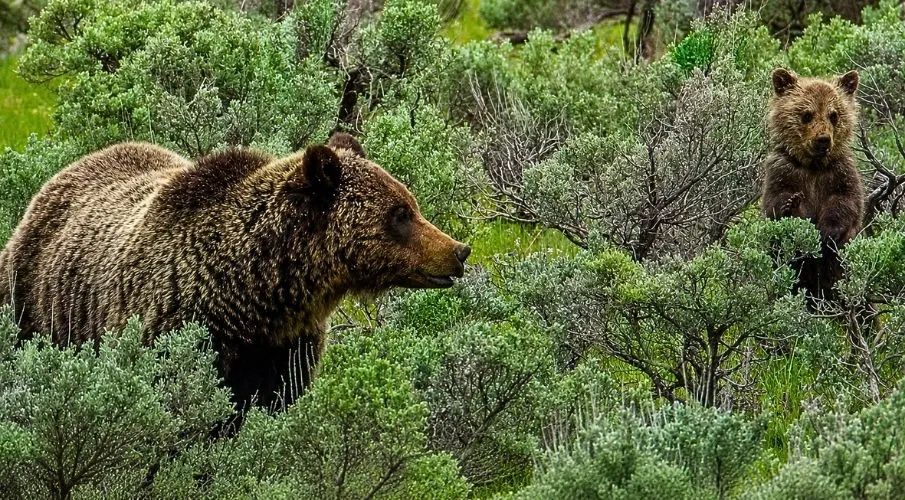
Where a road ends, access ends too. For 25 years, it ended early across large parts of America's national forests because a rule from 2001 restricted the construction of new roads and logging there. Donald Trump's administration wants to erase that boundary. A forest takes centuries to grow and can be opened up with a signature; that imbalance of time runs beneath this entire project. According to a report by the Center for Biological Diversity, repealing the Roadless Rule could accelerate the extinction of more than 400 already endangered animal and plant species, among them the grizzly bear, an emblematic animal of a continent that loves to celebrate its wild edges and is far less eager to protect them.
These areas were called roadless because, at one point, people deliberately chose to leave them that way. The 2001 rule drew a line around what humans had not yet reached and declared the untouched itself something worth protecting. The numbers in the report read like an inventory of what could disappear. Around 3 million hectares of habitat for endangered species would be at risk, along with roughly 2,900 kilometers of protected rivers and streams. Across more than 18.2 million hectares of national forest, roads could once again be carved through the land and trees cut down. Drilling for natural resources would also be allowed there.

You can find the full project here: THE ROADLESS RULE PROTECTS MILLIONS OF ACRES AND AMERICA’S RAREST ANIMALS. TRUMP WANTS TO KILL IT
A road rarely stays alone. After the first route comes the vehicle that can drive it, then the machinery that cuts down the tree; once land is opened, it attracts exactly the kind of use it was opened for. Randi Spivak, who is responsible for public lands at the Center for Biological Diversity, said these forests are home to some of America's best-known animals, from grizzlies to giant salamanders. At the same time, they provide clean drinking water to many communities. More roads would mean dirtier water and fragmented forests, and fire finds fuel more easily in terrain like that. For a generation, the rule kept these areas in their own natural state; repealing it would leave lasting damage to wildlife and waterways. The landscapes no one has developed yet would carry that damage too.

The list of animals whose extinction could be accelerated includes the grizzly and the wolverine, the spotted owl and the gray wolves of the Rocky Mountains. There are also wild salmon in the Northwest and Alaska. In the Southwest, the Mexican spotted owl and the Gila trout, along with rare butterflies and wildflowers across several parts of the country. In the Rocky Mountains, 3.9 million hectares of roadless land would be up for grabs, including 1.2 million hectares of particularly important habitat and around 17,700 kilometers of rivers where 21 endangered species live. In Montana, those same areas feed the watersheds that supply Bozeman with drinking water, along with communities in the Flathead and Seeley-Swan valleys.
In Alaska, the plan hits Tongass National Forest, 3.8 million hectares of land where more wild salmon are produced than in any other national forest in the country. A commercial and sport fishing economy worth around one billion dollars a year depends on it; in southeastern Alaska, one in every ten jobs depends on that industry. The forest also provides drinking water to more than a dozen communities. In Sitka, around 9,000 people depend on the Blue Lake Reservoir, and logging could carry so much sediment into the water that the federal exemption allowing the city to avoid expensive filtration could disappear. A forest doing the work of a water treatment plant, as long as you leave it standing.
In the South and Southeast, this is about the eastern hellbender, the largest salamander on the continent, the Carolina northern flying squirrel and the bog turtle. Around 445,000 hectares of roadless land and 2,100 kilometers of waterways would be affected. In Georgia's Chattahoochee National Forest, they protect the headwaters of a river that supplies more than 70 percent of the drinking water for metro Atlanta, more than 5 million people.

In the Southwest, more than 4 million hectares are up for grabs, including around 445,000 hectares of priority habitat and 6,800 kilometers of waterways where 101 federally protected species live. The Mexican gray wolf is among them, along with the jaguar, the Mexican spotted owl and certain species of minnows; some are found nowhere else in the United States, while others survive only in scattered populations. A single developed valley can be enough to change the entire home of a species like that. At the same time, the national forests there provide around 45 percent of Phoenix's water and 75 percent of Flagstaff's. Albuquerque gets about 75 percent of its drinking water from the Rio Grande and the Carson and Santa Fe forests.
Along the Pacific Coast, around 3.4 million hectares would be affected, including 1.3 million hectares of valuable habitat and roughly 2,050 kilometers of waterways, home to 145 protected species. Among them is the Sierra Nevada red fox, with an estimated population of just 18 to 39 animals. A species whose entire remaining population fits into a single sentence.
In the Northeast, around 118,000 hectares are affected, habitat for the American marten and the protected northern long-eared bat. In the upper Midwest, around 212,000 hectares are under debate, including roughly 51,000 hectares of particularly important habitat, along with areas supporting 33 protected species, among them the Canada lynx and the gray wolf.
The total of 400 species is made up of countless small populations, of 18 foxes on the Pacific Coast and animals whose entire world ends at the next clearing. The grizzly gets the attention, but the quieter argument is the water: it runs down from those same hillsides into the faucets of millions of people who have never heard of a spotted owl and for whom the forest, until now, was little more than a color on a map.

The US Department of Agriculture came out in favor of repealing the rule on August 18 and opened a public comment period. The restrictions in place since 2001, it said, were outdated and stood in the way of people who use the land. They also made it harder to carry out measures intended to make forests more resistant to fires. Agriculture Secretary Brooke Rollins said the old rules had to be scrapped in order to make America's forests healthy again. The words come from the language of care, renewal and resilience; beneath that calm language sits permission to tear the forest apart. The justification invokes fire, and the report turns that argument against it: with every new road, the wildfire risk rises because people carry fire into the places they drive. The public can submit objections until September 21, after the department has already made clear what it wants.
The plan fits into this administration's environmental policy. Since returning to the White House, Trump has allowed off-road vehicles onto public lands and into national parks and scrapped protective buffer zones around drilling near a World Heritage site in New Mexico. He has specifically ordered tree cutting in national forests. At the same time, the US Forest Service is being restructured, the agency responsible for around 78 million hectares. Across those lands, the meaning of protection and the meaning of use are being rewritten right now. The word hanging over all of it is healthy, and what it means is the saw.
Updates – Kaizen News Brief
Alle aktuellen ausgesuchten Tagesmeldungen findet ihr in den Kaizen Kurznachrichten.
To the Kaizen News Brief In English


Für mich erschreckend.Wieviel Macht ein einzelner hat die einfach automatisch nicht begrenzt werden kann auch wenn es um Vernichtung geht: zuerst um lebenswichtige Räume, dann um Arten, dann um die Zukunft von Generationen. Kann nur hoffen, dass dem im Kongress Grenzen gesetzt werden. Und alle Unterstützung und Dank für Euren Einsatz.
Es ist eine aktuell untragbare Situation, die weltweit mehr und mehr an Bedeutung zunehmen wird.
Hoffentlich… Weltweit wird Trinwasser immer knapper und der irre Ami peitscht diese Entwickling noch massiv voran.
…man geht aktuell mit allen Mitteln dagegen vor