
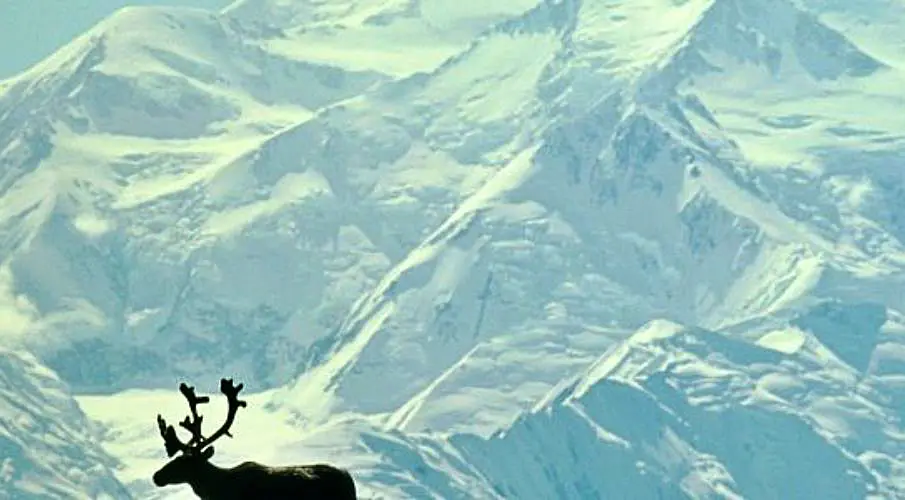
Trump's auction of drilling rights in the Arctic wildlife refuge attracted not a single major oil company, and yet it is another step toward extraction in a land that belongs to the caribou and the polar bears!
On Friday, the administration auctioned drilling rights in the Arctic wildlife refuge, an untouched expanse as large as the state of South Carolina, home to caribou, polar bears, and millions of migrating birds. The result was a failure that can hardly be concealed. Not a single major company submitted a bid, only two participants took part and together paid 3.7 million dollars for five parcels. These leases cover roughly 29,000 hectares out of approximately 279,000 hectares that had been offered within the nearly eight million hectare area. Kevin Pendergast, the Alaska director of the federal Bureau of Land Management whose agency conducted the auction, nevertheless said when announcing the result: "Interest was solid." And further: "We look forward to learning more about the area's subsurface as the lessees advance exploration." It takes a language of its own for an absence of bidders to be called solid interest.

One year earlier, Interior Secretary Doug Burgum, Energy Secretary Chris Wright, and Environmental Protection Agency Administrator Lee Zeldin had flown to the tundra of the North Slope on the Arctic Ocean, to Utqiagvik, with the mission of "unlocking" Alaska's extraordinary resource potential. On Friday, well over a year later, that promise was tested and it failed the test. The two bidders were Alaska based natural gas company Hex Energy and the Alaska Industrial Development and Export Authority, a state owned corporation that is not an oil company and would likely have to lease drilling rights to third parties. Neither responded to requests for comment. The Gwich'in Steering Committee, a group of Alaska Native people whose members have long been connected to the Porcupine caribou herd that moves through the area, called the auction "a failure." "Once again, no major oil and gas company showed up to bid because they know drilling in the Arctic refuge is a losing business," said executive director Kristen Moreland. "We will continue fighting the Trump administration's leasing program and work with our friends and allies to protect this sacred and irreplaceable landscape from any kind of development." Here, the market itself delivered the verdict, and its verdict was that the major producers stayed away.
The association of major oil companies, the American Petroleum Institute, stated through its vice president Holly Hopkins that the Interior Department deserved credit for "efforts to restore certainty to federal leasing policy" that give companies "the flexibility" to "strategically invest in parcels with the greatest development potential." She did not address the result directly but added: "We continue to expect investment across the state." The auction is part of a broader push to open Alaska to development. The administration is expanding extraction on public lands and federal waters, approved a 340 kilometer mining road north of the Arctic Circle, and is advancing a new natural gas pipeline through the state. Some of these efforts activate projects that had been stalled for decades, and they have alarmed environmental groups and divided Native communities. Administration officials say drilling and mining in Alaska will meet energy and raw material needs, strengthen national security, and benefit Alaska's economy and that of the entire country.

That only a few bids were submitted mirrors the auction held by Trump's first administration in January 2021, which also drew little interest, with the Alaska Industrial Development and Export Authority serving as the main buyer. Those leases became entangled in legal disputes and were later canceled by the administration of Joe Biden. Another auction shortly before Biden left office attracted no bidders at all. "This lease sale clearly fits into the broader pattern of prioritizing drilling, development, and extraction interests over conservation, public access, and long term preservation," said Gregg DeBie, senior attorney at the Wilderness Society, which is suing over development in the area. "This administration treats this land as something that should be handed away as an asset, while we believe it should be protected for future generations."
It would be too simple to tell this story as a conflict between developers and conservationists because the Native communities themselves are divided, and that belongs to the truth of what is happening. Voice of the Arctic Iñupiat, an alliance of twenty two Indigenous groups on the North Slope, supports drilling in the area if it is done properly and economically benefits the community, said its president Nagruk Harcharek. A portion of revenues from extraction in the area would be distributed among those communities. "From the North Slope perspective, we want it because it makes economic sense for us," Harcharek said. "We benefit from this development. We invest this money into our communities." Born in 1985, he remembers that as a child into the early 1990s he had no indoor plumbing until tax revenues from extraction helped build modern wastewater systems in Utqiagvik. It is an argument that cannot simply be dismissed because it concerns poverty and the necessities of life. In contrast, the group Sovereign Iñupiat for a Living Arctic opposes drilling and condemned the Interior Department's October decision to reverse Biden era protections for the area, as well as the earlier decision to reinstate leases acquired in 2021.
Precisely because conditions seemed favorable, the result carries weight. With oil prices rising because of the war with Iran and a friendly administration in office, the auction could have turned out differently, said a representative of the oil industry who remained anonymous because he was not allowed to speak publicly before the sale. The area lies not far from the start of the Trans Alaska Pipeline at Prudhoe Bay, which has enough spare capacity to bring oil to market easily. The economics are similar to exploration further east in Alaska's National Petroleum Reserve, where extraction in the refuge would likely cost only a few dollars more per barrel. An auction in the petroleum reserve in March drew significant interest, with 187 lease areas sold for 163 million dollars across roughly 526,000 hectares in a reserve spanning more than nine million hectares. In the refuge, however, the risk is higher, the industry representative said, also because environmental groups are expected to fight harder there and because extraction there, unlike in the reserve, remains untested. Before leasing in the refuge was written into a tax and spending law during Trump's first term, the area had been closed to development for roughly half a century. Oil from the refuge might not reach the market before the end of this administration, creating the risk that a future Democratic administration could halt extraction again. Seen this way, even by the oil industry's own calculations, the auction made no sense, and suspicion remains that it was never about the oil but about the principle that nothing should remain unsold.

What is at stake is the landscape itself. Environmental groups, including the Wilderness Society, are challenging the steps to open the area and argue they violate the Endangered Species Act and laws protecting conservation areas. Roads and production facilities would fragment wildlife habitat and disrupt migration of the Porcupine caribou herd, which travels thousands of kilometers to the coastal plain to calve, DeBie said. Polar bears, listed as threatened, also have much at stake because they dig dens in the area where they raise their cubs. "They bring in these massive tracked vehicles and begin working the ground in winter exactly where the polar bears have their dens," DeBie said. "That crushes the cubs. The mothers abandon the dens." And further: "This landscape is untouched and too fragile to support large scale industrial activity."
In the end, what remains is a simple question beneath the transaction itself. What does it mean to auction untouched land that does not belong only to us but to the caribou, the polar bears, the birds, and the people whose lives have always been tied to the herd? A price was placed on something shaped over thousands of years and measured in dollars per barrel. Even those who were expected to buy stayed away in overwhelming numbers, and the land was still offered up. That is the truly revealing part. An auction that failed as business succeeds only as a declaration, and the declaration says that nothing is sacred enough to remain outside the offer, not even a place where in winter polar bear cubs die beneath the weight of machines.
Updates – Kaizen News Brief
All current curated daily updates can be found in the Kaizen News Brief.
To the Kaizen News Brief In English


Mögen sich alle verfügbaren Kräfte weiter dagegen wehren 🙏🙏🙏
…aber ganz, ganz sicher !!!