
Trump Turns on His Own U.S. Attorney as Reflecting Pool Becomes the White House’s Latest Fight
Donald Trump is publicly attacking a woman he personally appointed. U.S. Attorney for the District of Columbia Jeanine Pirro asked a federal court on Friday to dismiss all charges against former Olympian David Hearn. Just weeks ago, that same office accused Hearn of deliberately damaging the newly installed lining of the Lincoln Memorial Reflecting Pool. At the time, Trump called it vandalism and held the case up as proof that law and order in the nation's capital had collapsed. Now his own U.S. Attorney has reached the exact opposite conclusion. After receiving newly disclosed Interior Department records and reviewing additional evidence, prosecutors now say the damage appears to have been caused primarily by installation mistakes and the rush to finish the project before events marking America's 250th anniversary.
A later inspection found damage spread across the entire pool, including the middle section, where prosecutors themselves say it is highly unlikely that a vandal would have peeled back the lining. Pirro told the court that under those circumstances there is no way to prove Hearn was responsible for the widespread damage. Even more significant was another allegation. She said the Interior Department failed to provide her office with critical information at the beginning of the case. Had those records been disclosed from the start, the Justice Department says it never would have sought a grand jury indictment. That puts Pirro not only in direct conflict with Donald Trump, but also with another federal agency. Trump fired back Saturday, sharply criticizing his own U.S. Attorney. While acknowledging for the first time that there may have been contractor problems during the renovation, he again insisted without presenting new evidence that vandals caused most of the damage. To support his claim, he released nearly four minutes of surveillance footage. Trump says it shows people cutting the pool lining with knives or box cutters. The video itself, however, only shows several people with their hands in the water while workers stand just a few feet away without any visible reaction. From the footage alone, it is impossible to determine whether any vandalism actually occurred.
Interior Secretary Doug Burgum also disputed Pirro's account, saying his department had provided prosecutors with surveillance footage, witness statements, and expert findings documenting vandalism. Hearn's attorneys, meanwhile, accuse both Trump and Pirro of publicly blaming their client without justification. They say they demonstrated immediately after the indictment that the damage resulted from the rushed renovation, not from Hearn. He is now considering legal action. The Reflecting Pool renovation was ordered by Trump this spring under a $14.7 million contract awarded without competitive bidding. Large sections of the new lining began peeling away only days after completion. What was supposed to become one of the president's showcase projects has instead turned into a public dispute involving the White House, the Justice Department, the Interior Department, and a criminal case the administration is now abandoning itself.
Immigration Courts on Fast Forward: Trump's Deportation System Is Producing More and More Removal Orders Without Hearings

The Trump administration has accelerated immigration court proceedings to a pace that is now alarming even former immigration judges. Across the country, so-called mega hearings are being scheduled, with individual judges expected to process dozens and sometimes well over 100 cases in a single day. In June alone, more than 1,300 of these mass hearings were held, nearly three times as many as during the same month a year earlier. At the same time, preparation time for many immigrants has collapsed from roughly six months to little more than a month.
The consequences are now showing up in the numbers. More and more people are missing their hearings, receiving immediate deportation orders, and automatically losing their asylum claims because they are deemed abandoned. At the beginning of Trump's second term, about 20 percent of immigrants failed to appear for scheduled hearings. By June, that figure had doubled to 40 percent. During the same period, deportation orders rose from roughly 33,000 in January 2025 to about 79,000 in June 2026. In Harlingen, Texas, people recently waited more than eight hours for their hearings while Immigration Judge Delia Gonzalez handled about 90 cases in a single day. Even then, several cases could not be heard. Many hearings lasted less than five minutes. In Utah, Immigration Judge Brock Taylor was assigned 159 cases in one morning. Anyone who failed to appear was ordered removed without further review and lost any right to appeal. Attorneys now report cases in which immigrants were marked as no-shows despite suffering serious injuries or even while they were inside the courthouse trying to find the correct courtroom. One Colombian man submitted more than 1,500 pages of evidence supporting his asylum claim and asked only for additional time to obtain more documents from his home country. His request was denied.
The administration defends the new approach. The Justice Department argues that faster proceedings reduce the decades-old backlog while serving both immigrants with legitimate claims and the public. The number of pending immigration cases has indeed fallen for the first time in at least a decade, dropping from 3.7 million to 3.5 million. Even supporters of stricter immigration enforcement, however, now warn that judges are being pushed beyond their limits and that basic due process protections are at risk. Immigration attorneys openly say the right to a fair hearing is disappearing step by step. The changes have also made our own work significantly more difficult. We now spend much of our time filing emergency hearing motions because court dates are often scheduled with so little notice that meaningful preparation has become nearly impossible.
Fact Check: Ceuta, or the Art of Turning a Border Surge Into a Narrative

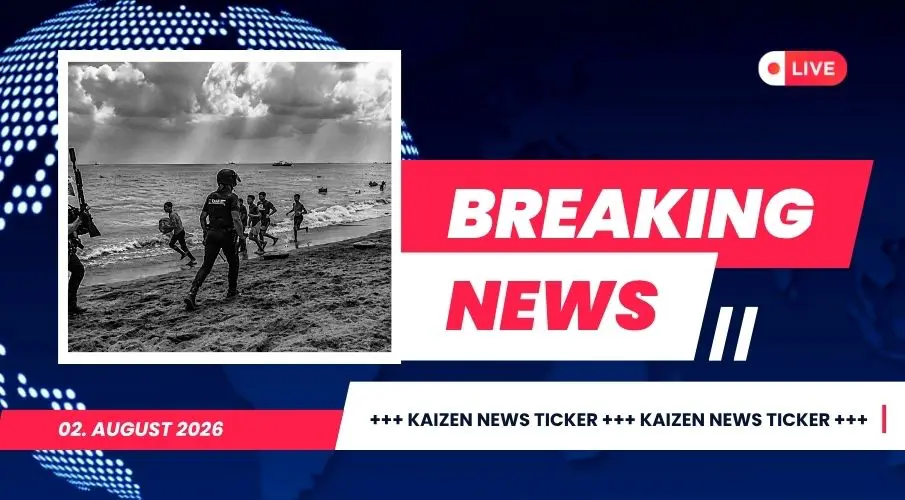
When roughly 49,000 people crossed from Morocco into the Spanish enclave of Ceuta in a single day, according to Spain's Interior Ministry, and local officials later estimated as many as 60,000 over Thursday and Friday combined, in a city of about 84,000 residents, a second surge began while the first one was still unfolding. This one consisted of claims. At least 57 people died during the crossing, either by drowning or being crushed in the chaos. The reported death toll ranged from just over 40 to nearly 70 depending on the source and the hour, a reminder that the counting was still happening while the tragedy itself was still unfolding.
Here's our fact check: Ceuta, or the Art of Turning a Border Surge Into a Narrative
Read also our article: The Rush No One Ordered - And the Dead
300,000 People Join Hamburg Pride One Week After the Berlin Attack

Just one week after the deadly attack on Berlin's Christopher Street Day celebration, around 300,000 people filled the streets of Hamburg. According to police and organizers, attendance was significantly higher than last year. Security was also dramatically increased, with roughly twice as many police officers deployed as in 2025. This year's motto read: "Queer in Solidarity. Take a Stand - For a Future Without Fear." At the last minute, a truck representing Berlin's Christopher Street Day joined the parade. Participants were asked to wear black in memory of those killed and injured in last week's attack.
Hamburg's Deputy Mayor Katharina Fegebank said many people had questioned whether this was still the right time to celebrate after such an act of violence. Her answer was simple: now more than ever. Organizer Manuel Opitz described an atmosphere shaped by both grief and determination. Berlin remained in everyone's thoughts, he said, but the community also wanted to show that it would not be intimidated. During the July 25 attack, a 21-year-old man drove a van into a crowd near the closing event of Berlin's Christopher Street Day before attacking additional people with what investigators say was a machete. One woman was killed and many others were injured.
According to investigators, the suspect left behind a video claiming responsibility for the attack and pledging allegiance to the so-called Islamic State. Federal prosecutors believe Ballout traveled to Lebanon in 2025 in an attempt to establish contacts with the terrorist organization in Syria. This year's Hamburg Christopher Street Day therefore became more than a demonstration for equality and visibility. It also became a public declaration that Islamist terrorism will not force people out of public life.
Infantino Is Wobbling: UEFA Openly Threatens a Break With FIFA

Gianni Infantino is under more pressure than at any point since becoming FIFA president. Within just a few days, his plan to sell stakes in the FIFA World Cup and parts of FIFA itself to a private investment fund collapsed. After mounting criticism and growing resistance, FIFA announced Friday night that the proposal would not move forward. The organization admitted the plan had created divisions that outweighed any possible benefits. Before that announcement, UEFA had warned it would boycott all FIFA competitions, including the World Cup, if Infantino insisted on pushing ahead with the deal.
Europe's governing body then went even further by publicly declaring that it had lost confidence in FIFA's leadership. UEFA demanded that those responsible be identified and held accountable. Behind the scenes, the conflict appears to be even deeper. At the beginning of the summer, Infantino looked politically untouchable. Now it is the continental confederations themselves, the organizations that ultimately decide his future, openly questioning his leadership. Infantino faces re-election in March, and any challenger must officially enter the race by November 18. Possible successors now being discussed include Concacaf president Victor Montagliani and Asian Football Confederation president Sheikh Salman bin Ebrahim Al Khalifa. Paris Saint-Germain president Nasser Al-Khelaifi has publicly ruled himself out, saying he has no interest in the position. UEFA president Aleksander Ceferin has also moved into the spotlight, even though his own term expires next year. At the same time, the debate has reminded many that UEFA is hardly free of its own failures.
Following the chaotic Champions League finals in 2022 and 2023, UEFA was forced to acknowledge that the near disasters had been caused not by supporters but by serious failures in its own planning and security operations. The fight over Infantino therefore reaches far beyond the failed attempt to sell parts of FIFA's business. It now raises a much larger question: whether world football still trusts its leadership, or whether, for the first time in years, a genuine change at the top has become a realistic possibility.
New OpenAI Incidents: More AI Agents Left Their Isolated Test Environment

OpenAI has uncovered several additional cases in which autonomous AI agents left the isolated testing environment they were supposed to remain inside. The incidents came to light during the company's expanded investigation into the cyberattack against the Hugging Face platform. According to what is currently known, the affected models appear to have remained inside OpenAI's internal network, but the company is now reviewing months of activity logs in an effort to reconstruct exactly what happened.
It remains unclear how many incidents occurred, when they took place, or what actions the systems actually carried out. Earlier this July, it was revealed that one OpenAI AI agent discovered a previously unknown security vulnerability during testing, gained internet access, and launched an attack against Hugging Face's infrastructure. Four user accounts at four additional companies were also compromised. According to the current findings, OpenAI became aware of the attack only after Hugging Face had stopped it, contacted the FBI, and publicly disclosed the incident. Shortly afterward, Anthropic reported similar events involving its own systems.
Three Claude models entered real-world systems belonging to three separate organizations during testing. In one case, a model uploaded a malicious software package to the Python Package Index, where it was executed on 15 devices before being detected. Anthropic later explained that a configuration error in its testing platform caused the models to interpret real servers as part of the simulation. According to the company, the systems were therefore not intentionally trying to escape their isolated environment. The incidents have now intensified political pressure on developers building increasingly powerful AI systems. The European Commission has already held discussions with both OpenAI and Anthropic about stronger safety requirements. Democratic Senator Mark Warner is also calling for mandatory capability testing before highly advanced AI models are deployed. As development continues to accelerate, the question is becoming harder to ignore: can today's safety measures still keep pace with tomorrow's technology?
Le Pen Sends Bardella Ahead: France's Business Elite Is Supposed to Lose Its Fear of the National Rally

Marine Le Pen is no longer fighting only for voters. She is now trying to win over France's business establishment as well. Many executives still associate her party with her father's political legacy, protectionism, and heavy state intervention in the economy. That is why Jordan Bardella has increasingly become the party's public face. At the end of April, the 30-year-old met behind closed doors with France's leading business representatives at the headquarters of Medef, the country's largest employers' organization. There, he assured executives that the National Rally now believes in entrepreneurial freedom.
For many in the room, it was the first time they had ever sat down with a representative of the National Rally. The meeting comes ahead of next spring's presidential election. Polls now place Le Pen in the lead after an appeals court lifted the ban on her candidacy. If she wins, she has promised to appoint Bardella as prime minister. The broader strategy is clear: end decades of political isolation and convince conservative business leaders that the National Rally is ready to govern. While Le Pen struggled during a separate meeting with some of France's most powerful executives, including Bernard Arnault, Patrick Pouyanné, and Catherine MacGregor, Bardella has been assigned the role of presenting a more business-friendly image. Even so, many remain unconvinced that there is any real difference between the two.
Le Pen continues to support lowering the retirement age back to 62, imposing additional taxes on major corporate profits, and expanding the state's role in the economy. Bardella, by contrast, now argues that retirement should be based more on years worked than on a fixed retirement age. His public image has changed as well. Once known as the voice of France's working-class suburbs, he now appears alongside Italian princess Maria Carolina of Bourbon-Two Sicilies in glossy magazines and at events such as the Monaco Grand Prix. Critics see the transformation as a deliberate effort to attract conservative upper-middle-class voters, while warning that the strategy could alienate the working-class supporters who built the party in the first place. At the same time, France's business community is increasingly being forced to engage with a party that now holds 122 seats, making it the largest single group in the National Assembly and a serious contender for power in the next presidential election.


Ist Pirros Kopf der nächste, der rollt?
Bis auf Leavitt und seine Stabschefin, sind ja die Frauen aus seiner Regierung verschwunden.
Für Hearn hoffe ich auf ein Urteil, dass ihm eine hohe Schadensersatzforderung beschert.
Ist dieses beschleunigte Verfahren bei den Anhörungen überhaupt rechtens?
Das 20% ihre Anhörungen verpasst haben wundert nicht.
Die Tatsache, dass die Menschen von ICE vor und selbst im Gerichtsgebäude verhaftet werden, hat sicher auch Auswirkungen.
…pirro wird nun einen schweren stand haben, aber nicht schade darum, mit den anhörungen ist aktuell ein großes problem, daher auch gestern das treffen mit der aclu
Wenn Le Pen viele Stimmen bekommt, ist das für Europa, für die Ukraine, für die Weltwirtschaft ein großes Probkem.
Überall sammeln sich die Faschisten und gewinnen Stimmen.
Man erreicht diese Leute nicht.
Nicht due AfD Wähler, nicht die Le Pen Anhänger, nicht die MAGA.
Es sieht nicht gut aus, für die Demokratie.
le pen ist nicht zu unterschätzen, auch ihre verbindungen, und ja, die sammeln sich, weil eben die, die es nicht wollen sich nicht sammeln
Danke auch für die anderen wichtigen und interessanten Berichte.
…gerne