
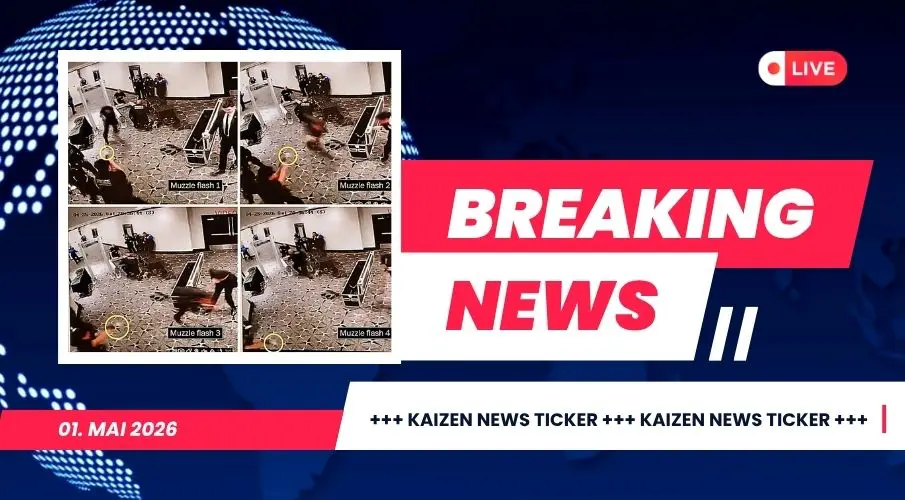
Hegseth under pressure - billions and his own line to defend the war!

The Senate hearing lasts nearly three hours, then Pete Hegseth stands up and leaves the room. What remains is a clash that shows how deep the divisions have become. Democratic senators attack him on almost every issue, from the war with Iran to the question of how many civilian casualties are still being accepted. Republicans visibly stand behind him. In the end, a single protester shouts opposition to the war into the chamber before being escorted out.
At the center is the planned defense budget of around 1.5 trillion dollars. Officially, current war costs are said to be 25 billion dollars. Research shows they are already over 40 billion. The damage to the world cannot be measured. Hegseth calls it necessary, an adjustment to reality. His own version of it. We call it more than just rough calculation errors. Senator Mark Kelly pushes back and says openly that much of it is unnecessary or will not work. Hegseth sharply disagrees. The budget reflects the world as it is and the capabilities needed. Kelly keeps pressing. Together with Elissa Slotkin, he confronts Hegseth with a previous statement that there should be no mercy toward enemies. Kelly says that violates Pentagon rules of war. Hegseth responds that they fight to win but follow the law. Kelly fires back that this answer shows exactly why Hegseth is unfit for the position.
Senator Kelly: “I’ll give you another chance to answer the question … your quote was, ‘We will keep pushing forward, keep advancing, no pardon, no mercy for our enemies.’ And yesterday you did not clarify whether you stand by that statement.”
Hegseth: [no clear answer]
Senator Kelly: “You are the Secretary of Defense. What you say matters, and your answer here, right now, shows the American people exactly why you are not fit for this job.”
It becomes even sharper when Elizabeth Warren asks about possible investments in defense companies. Hegseth reacts irritably and rejects everything. No money, no stocks, no personal benefit. No one owns him, he says. Warren remains skeptical and asks what rules prevent insider knowledge from turning into profit. Legally, Hegseth also comes under pressure. The war with Iran is approaching the 60 day limit set by law. Hegseth argues that the current ceasefire pauses that timeline. Senator Tim Kaine directly disagrees and raises serious constitutional concerns. He is right.
At the same time, criticism of the military operations themselves is growing. After an attack on a school in Iran that killed more than 165 people, including many children, several senators ask whether the Pentagon is still capable of protecting civilians. Kirsten Gillibrand wants to know why exactly the unit designed to prevent such failures was heavily cut. Hegseth speaks of a firm commitment to civilian protection and stresses that humans remain in control of decisions, even when artificial intelligence is used.
On Ukraine, the next gap opens. Jeanne Shaheen demands clear details about 400 million dollars approved by Congress. Hegseth says the money has been released but should also be used to sell weapons through NATO partners. Shaheen responds that this was not the intended purpose. The current budget contains no further support for Ukraine.
From the beginning of the hearing, Hegseth sets the tone. The greatest enemies, he says, are not only external but also voices at home that spread doubt. Jack Reed counters with a grim assessment. The war has weakened the United States strategically, the Strait of Hormuz is blocked, 13 American soldiers are dead. Trust built over decades is being destroyed in a short time.
Roger Wicker describes a growing alliance between China, Russia, Iran, and North Korea and calls it the most dangerous moment since World War II. Hegseth uses exactly this framing to justify his position. What remains is a Secretary of Defense who should be removed from that position, a Senate drifting further apart, and a war whose legal and political foundation is increasingly questioned.
Trump targets Germany, Italy, and Spain at the same time
An Oval Office full of furniture that listens, and people who look like it.
Donald Trump escalates and makes clear that it is not only about Germany. After announcing a review of US troop presence there, he openly raises the next question. Italy and Spain could also be affected. His answer is direct. Probably. Why wouldn’t they be. Italy did not help the United States, Spain was absolutely terrible. This is not an offhand remark but a direct signal to two key NATO states in the Mediterranean.
At the same time, his tone toward Germany sharpens. Trump publicly attacks Chancellor Friedrich Merz. Merz should focus on ending the war between Russia and Ukraine and solving domestic problems, especially migration and energy. His involvement in the Iran conflict is misplaced. This follows Merz’s statement that the United States is being strung along by Tehran and losing authority.
This line is not new. Trump already questioned US military presence in Europe during his first term and now again calls for reductions. Germany is the key location with multiple major bases. Any reduction there affects the entire NATO structure. That is why the debate in Europe has been watched with growing concern since his return to office. What is new is the open inclusion of Italy and Spain. Both are critical for operations in the Mediterranean. A withdrawal would have direct consequences for logistics, supply chains, and operational capability. Trump’s criticism makes clear he does not see these locations as fixed but as leverage.
The timing is no coincidence. The war with Iran has been ongoing for two months and is straining relations between the United States and its allies. Trump accuses NATO partners of not contributing enough. At the same time, he questions the very military presence that underpins the alliance. In Europe, a question long avoided is now rising. What happens if the United States fundamentally changes its role. Behind the scenes, discussions are already underway about organizing security more independently. Support for Ukraine is tied to this as well. Germany, Italy, and Spain now face pressure simultaneously.
US Senate: Russia is now officially in the war

In the Senate, a sentence is spoken that cannot be taken back. Russia is helping Iran. Confirmed by the highest ranking soldier in the United States. What exactly is happening beneath that statement is not said. But the silence weighs more than the words. General Dan Caine, chairman of the Joint Chiefs of Staff, sits before the Senate Armed Services Committee. Roger Wicker, the Republican chairman, asks directly whether Russia is doing anything in Iran that undermines US efforts. Caine answers with a single sentence. “There is definitely something going on. I will not say more in a public setting.” That makes it official. Russia is involved, and Washington acknowledges it.
What was previously suspected is now on record. The top US military officer has confirmed in a public hearing that Vladimir Putin is supporting Iran in a war against the United States. Wicker goes further. There is no doubt, he says, that Putin’s Russia is taking serious steps to undermine American success in Iran. Caine does not contradict him. He confirms through what he does not say. When a general does not object, he has confirmed it. That is the language of hearings. Everyone in the room understands it. Putin likely does as well.

The details remain hidden. What Russia provides, whether intelligence, weapons, or both, whether assistance in targeting US positions in the Middle East, all remains unspoken. American media had previously reported that Russia was helping Iran target US military assets in the region. The White House downplayed it. Defense Secretary Pete Hegseth said in early March that Russia and China were “not a real factor” in this war. Two months later, that looks very different.
Caine’s statement comes one day after a 90 minute phone call between Donald Trump and Putin. Trump described the conversation as friendly and constructive. Russian advisor Yuri Ushakov called it “frank and businesslike.” While Trump publicly said the war in Iran could soon end, his own general confirmed the next morning that Putin is prolonging it. The left hand of US foreign policy does not appear to know what the right hand is doing.
Trump calls it peace. Caine calls it war. Both are talking about the same man. America 2026.
Iran and Russia signed a formal partnership agreement in January 2025. Iran supplied Russia with Shahed drones and short range ballistic missiles for the war in Ukraine. Now the flow is reversing. Russia is repaying what it received. The war in the Middle East is no longer just a war. It has become a link where two conflicts support each other like two men too drunk to stand on their own.
For Russia, it is business. Rising oil prices fill its budget. US military resources are tied down in the Middle East instead of Ukraine. Washington’s strategic position in the region erodes, and Moscow does not even need to deploy troops. It only needs to whisper the right thing at the right time into the right ear. Volodymyr Zelensky recently said that US leadership “trusts Putin,” and that is why it downplays the Russia Iran partnership. Caine says little. He does not need to say much. Four words are enough. “There is definitely something going on.”
Resignations - Biennale escalates over Russia and sanctions

On April 28 we exposed how the Biennale brought Russia back despite sanctions. For weeks, our investigation has followed this case. Now come the consequences. The entire international jury of the 61st Venice Art Biennale resigns on April 30, just nine days before the scheduled opening on May 9. The jury included Solange Farkas, Zoe Butt, Elvira Dyangani Ose, Marta Kuzma, and Giovanna Zapperi.
See also our article: Venice and Moscow - how the Biennale is bringing Russia back despite sanctions
They do not provide a new explanation. They refer to their April 22 statement. In it, they had called for excluding participants from states whose leadership is accused by the International Criminal Court of crimes against humanity. Russia and Israel were meant. The resignation comes immediately after inspectors from the Italian Ministry of Culture visited. Culture Minister Alessandro Giuli had already announced he would boycott the opening as long as the Russian pavilion remains part of the exhibition. At the same time, the European Union reacts. A three year grant of two million euros is frozen after Russia was allowed back for the first time since 2022.
The consequences are significant. The award ceremony is postponed from May 9 to November 22. Traditional prizes are canceled. Visitors are supposed to choose winners instead. At the center are the exact processes we previously exposed. Internal communication shows that Biennale leadership helped Russian organizers bypass visa restrictions. President Pietrangelo Buttafuoco and director Andrea Del Mercato are said to have personally facilitated the entry of the curator of the Russian pavilion, Petr Musoev, into Venice. Anastasia Karneeva also requested official invitations, without which visas would not have been issued. The Biennale always emphasized the independence of its jury. Now it has fully resigned.
The man who dreams of himself while others are supposed to vote
Donald Trump complains that he is not on the ballot in the midterms. It is a problem, he says, because everyone tells him that if he were, it would be a landslide victory. His poll numbers are some of the best he has ever had. Who tells him all this, he does not say. Presumably the same circle that tells him he is physically fit enough to go to space. An echo chamber with mirrors on every wall. This is not about midterms. It is about the fact that a president who is governing a country, bombing another, and speaking to a third is at the same time complaining that there is not enough voting about himself.
Other politicians talk about their party, about policies, about what is happening in the country during midterms. Trump talks about Trump. About polls that praise him. Which ones. About landslides that exist only in his mind. When he talks about politics, he talks about himself. When he talks about the world, he talks about himself. When he talks about war, he talks about himself. That is the framework by which this White House is currently making decisions. The world is not outside. It is inside. In the mirror. Where the only voter that truly matters sits. What must he be smoking every day. The answer is simpler. He is smoking himself. Day after day. And no one in the room has the courage to take the lighter away.
Weak growth, rising prices - the US economy begins to falter

The numbers are on the table and they speak clearly. The US economy grows only 2 percent in the first quarter of 2026, below expectations of 2.2 percent. The gap to earlier forecasts by Howard Lutnick, who predicted 5 percent, is even larger. At the same time, prices are rising. In March, inflation increases by 0.7 percent, reaching 3.5 percent year over year, the highest level in nearly three years. For many households, this is immediately noticeable, especially at the pump. The national average gasoline price stands at 4.30 dollars according to AAA, the highest in four years. Public finances are also under pressure. Debt reaches 100 percent of GDP for the first time since 1946. A threshold long considered a limit is now crossed.
This development affects sentiment. Many Americans view the economic situation critically and say they rate it better under Joe Biden than now. The combination of weaker growth, rising prices, and high debt is having an impact. The economic situation becomes a political factor that will matter beyond the coming months.
Shutdown ends, conflict remains - Homeland Security funded temporarily
After nearly eleven weeks, the House of Representatives pulls the emergency brake and ends most of the longest shutdown in US history. With a bipartisan decision, most of the Department of Homeland Security is funded through September, quietly, without major staging, by voice vote. The pressure was enormous. Emergency salary funds were close to running out, and the attack at the Correspondents’ Dinner once again showed the importance of functioning security structures. The Secret Service, Coast Guard, disaster response, and aviation security will continue without interruption.
But two key areas remain excluded. Immigration enforcement ICE and border protection are to be funded separately, without Democratic support. Republicans rely on a process that requires only a simple majority and bypasses the opposition. The conflict behind it remains unresolved. Democrats had demanded stricter rules for operations after an incident in Minneapolis where two people were killed. A ban on masks, clear limits on entering private property, none of this appears in the new law. In the House, the decision was blocked for weeks. Speaker Mike Johnson openly said the bill had been held back to ensure ICE and border protection were not excluded. Frustration grew in the Senate. The bill had already passed there twice and sat untouched for weeks.
Now the bill goes to Donald Trump for signature. At the same time, the next conflict begins. After the congressional recess, a new bill is planned to fund ICE and border protection through 2028. What is presented as a solution is in reality only a temporary step. The shutdown is over, the political conflict behind it remains.


Von Hegseth habe ich nichts anderes erwartet.
Endlich kann der selbsternannte Kriegsminister Krieg spielen.
Gesetze? Regulation?
Nur wenn sie nutzen.
Sonst werden sie gedehnt, bis sie brechen.
Diese unfähigen und leider sehr gefährlichen Personen machen weiter und weiter.
Keiner hält sie auf, es gibt keine Konsequenzen. 😞
…ein schlicht unfähiger Politiker, der schon als Moderator wenig überzeugen konnte
„..Merz solle sich darauf konzentrieren, den Krieg zwischen Russland und der Ukraine zu beenden..“
Sagt der Mann, der den Krieg innerhalb eines Tages beenden wollte?
Sagt der Mann, der Europa nicht am Tisch haben wollte, weil Europa keine Rolle spielt?
Selensky hat recht.
Trump vertraut Putin.
Putin weiß, was er wie zu seinem besten Agenten sagen muss.
Trump sieht nicht, wie sich die Achse Russland, China, Nordkorea und Iran aufbaut.
Für ihn ist Putin ein vertrauenswürdiger Buddy.
Europa dagegen, mit jahrelangen transatlantischen Beziehung und ebenfalls NATO Partnern, wird als undankbar und unfähig beschimpft.
Es wird gedroht und beschimpft.
Inwieweit Trump die Truppen abzieht oder abziehen kann?
Der US-amerikanische Einfluss wäre damit in Europa, aber auch in Gebiete im Europa drastisch eingeschränkt.
Europa muss dringlichst selbständiger werden.
Militärbasen selber nutzen. Logistik aufbauen.
Bleiben Trumpisten in den USA weiter an der Macht, wird es nur schlimmer.
Zu hoffen, dass „Trumpismus“ vergeht ist eine gefährliche und naive Einstellung.
… es wird ein weiter weg für europa, da man sich jahrelang ausgeruht hat und mit der eu eine unübersichtlichen, überregulierten bürokratiemaschne aufgebaut hat incl vieler politiker, die vielleicht über einen berufswechsel nachdenken sollten
Der wichtigen Finanzierung zuzustimmen war wichtig.
Did Demokraten wollten dem schon lange zustimmen und ICE sowie Border Patrol raus zu nehmen.
Nun soll es durch einen Winkelzug trotzdem zu einer Finanzierung kommen.
Ohne die von den Demokraten geforderten Einschränkungen und Änderungen.
Damit stehen die Demokraten dumm da.
Außer kritisieren können sie nichts mehr machen.
Aber wenn ich sehe, dass 45 Demokraten mit den Republikanern zur Verlängerung der Überwachung ohne richterlichen Beschluss gestimmt haben, bin ich einfach fassungslos.
Auch die Demokraten pretend verfassungsrechtliche Erfordernisse mit den Füßen.
…die demokraten sind als partei ein scherbenhaufen in 2 lagern
Und das kann und ich fürchte wird sie die Midterms kosten.
Und 2028 gibt es dann keine freien Wahlen mehr.
Richtig, dass die Jury von der Biennale zurück getreten ist.
Allerdings hätte es hier schon viel früher Reaktionen geben müssen.
Für die Hauptverantwortlichen Präsident Pietrangelo Buttafuoco und Geschäftsführer Andrea Del Mercato gibt es wohl keine Konsequenzen.
Sirhaben nicht mal die Eier selber zurück zu treten.
…jap, so sind sie, die, die verdienen wollen, egal wie, kommt es raus, wird verantwortung abgelehnt
Im Trumpversum geht es nur um Trump.
Nicht die Partei, nicht Programme, nicht die schlechte wirtschaftliche Lage, nicht den Irankrieg etc.
Es geht nur um Trump und seine „Beliebtheit“
Mit Gerrymandering, dem letzten absurden Urteil des Marionetten Supreme Court will er sich manifestieren.
Personenkult exessiv.
…den man eben exessiv weiter bekämpfen muss