
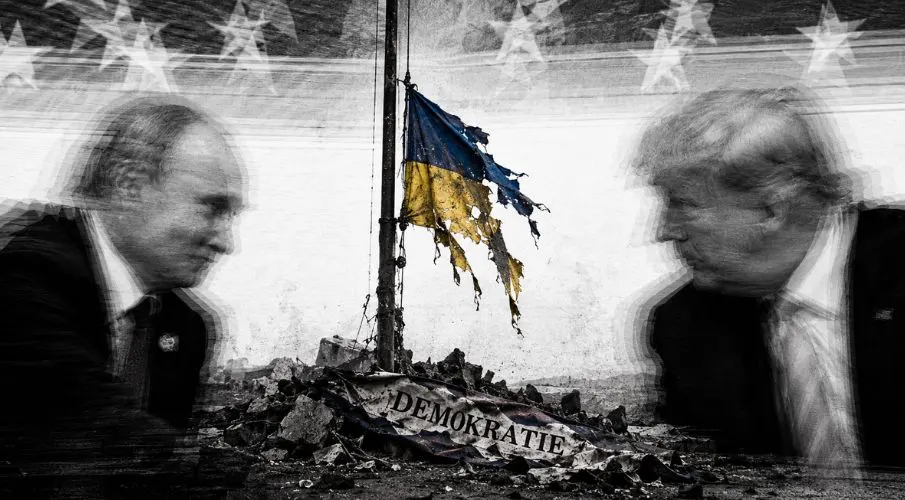
As early as September 20, 2026, our investigation, “The Russia Sanctions Law With the Built-In Escape Hatch,” exposed and warned about the political explosive power of a law that allows the president to suspend its penalties whenever he sees fit. We described the mechanism that allows Donald Trump to publicly take a tough economic stance against Russia while simultaneously shielding Vladimir Putin from the consequences. We warned that Congress had handed its president a weapon against Moscow, one whose trigger he could lock whenever he wanted. Trump is taking the economic pressure off Putin and making Europe pay for the consequences of his bloody war of aggression, while people continue to die in Ukraine and children are buried beneath the rubble of their homes. And as if that political declaration of bankruptcy weren't enough, he is keeping the tariff weapon aimed at European governments while sparing the man in Moscow the sanctions. We warned about that, too.
Here is our investigation from September 20, 2026, once again: Investigation: Investigation: The Russia Law With a Built-In Escape Hatch: Trump Signs It, Keeps the Key to Doing Nothing, and Holds a Tariff Gun to Europe's Head
On October 16, Trump delivered the confirmation. With his signature, he suspended the new sanctions before they could even take effect. The very possibility we had warned about has now become political reality. The law still bears the name of the late Senator Lindsey Graham. For now, the president has undermined its purpose. What makes this particularly serious is that our earlier investigation also exposed the danger to Europe. Trump can suspend economic sanctions against Russia while threatening other countries with massive tariffs. There is still no evidence that he has already used this authority against European governments. But the legal mechanism remains unchanged.

Congress had wanted to hit Putin economically. Trump spared him the blow. What stood as a warning in our investigation nearly 4 weeks ago now sits on the White House desk as a signed executive order. Donald Trump signed a law in September that was supposed to hit Russia hard economically. On Friday evening, October 16, 2026, he suspended the planned sanctions through an executive order. 2 days before they were due to take effect. The Kremlin can breathe a sigh of relief while Ukraine continues fighting for its very existence. Trump said the exemption was in the national interest of the United States. The White House offered no explanation. Washington has now arrived at a peculiar form of foreign policy: The president signs a law against Moscow and then personally makes sure its economic penalties won't be enforced for the time being.
The law bears Lindsey Graham's name. The Republican senator from South Carolina died in July after spending more than 1 year campaigning for tougher sanctions against Russia. Graham was one of Trump's close political allies, yet he took a hard line against Moscow. His proposal was intended to make it harder for Russian government officials to access money and put pressure on banks that help finance the war against Ukraine. Republicans and Democrats supported the measure. A joint decision by Congress that Trump himself signed into law. Now the law is in place, carefully passed and politically disarmed.

The provisions were supposed to take effect on October 18. They allow punitive tariffs of up to 100 percent against countries that continue buying Russian oil or gas. Russian imports into the United States could face tariffs of up to 500 percent. Moscow's so-called shadow fleet, which Russia uses to transport oil under conditions that make oversight more difficult, was also supposed to face greater scrutiny. The same goes for Russia's banking system. The United States therefore had substantial economic pressure at its disposal. Trump decided to set it aside for now. The law, however, explicitly gives him the legal authority to do so.
The waiver provision allows the president to forgo the sanctions as long as he notifies Congress accordingly. Trump used that authority and stated in writing that he had certified to Congress that waiving the sanctions was in the national interest of the United States. He did not explain in the published order exactly what those interests were. An explanation is said to have been submitted to Congress. For the public, the decision therefore remains behind a closed door. On the other side sits Vladimir Putin, whose country has been waging a war of aggression against Ukraine for years and desperately needs revenue.
Washington's economic interests, however, are easy to see. Rising oil prices make gasoline more expensive for Americans and drive up inflation. Just weeks before the midterm elections, that increases political pressure on Trump and the Republicans. According to the administration, Ukrainian attacks on Russian refineries have contributed to tensions in international energy markets. Trump responded with growing criticism of Kyiv. Russian sources of revenue that sanctions were supposed to restrict are suddenly being treated as a possible way to lower American gasoline prices. The war goes on. At the gas pump, a different calculation apparently matters now.

Just last week, Trump announced an agreement with Putin on Russian diesel deliveries. The United States is now expected to resume importing Russian diesel. To make that possible, the U.S. Treasury Department temporarily suspended restrictions and granted Russian energy companies a general license for the corresponding sales through April. The administration justified the move by saying it wanted to bring more diesel onto the global market. For Moscow, this opens up a sales opportunity while its armed forces continue attacking Ukrainian cities. The economic benefit to Russia stands in direct conflict with America's stated goal of limiting the war through financial pressure.
Ukrainian President Volodymyr Zelenskyy reacted angrily to the diesel agreement. European government officials also criticized Trump's actions. On October 13, Republican and Democratic senators jointly called for the Russian diesel waiver to be reversed. The dispute therefore reaches into Trump's own political ranks. Graham had pushed his legislation precisely because he wanted to deprive Russia of the financial resources needed for its war. Now Washington is opening an economic connection to Moscow while simultaneously suspending additional penalties. Putin doesn't even have to make any public concessions in return.
Democratic Representative Don Beyer described the move as yet another surrender by Trump to Putin. The president was betraying Ukraine's partners and defying the clear will of Congress to punish Russia for its illegal war of aggression. Senator Elizabeth Warren, the leading Democrat on the Banking Committee, called the decision a complete failure of political leadership. Trump was defying Congress's demand for greater pressure on the Kremlin and enabling Putin to continue his war of aggression. Her criticism targets the deliberate decision to suspend an economic pressure measure that had already been passed into law.
How far the consequences will reach remains unclear. Existing American sanctions against Russia generally remain in place. Waiving the new measures also does not automatically mean Russian banks will be allowed back into the Western financial system. Daniel Tannebaum, a partner at the consulting firm Oliver Wyman and an expert on anti-money laundering and sanctions, pointed to the restrictions that remain in force. Financial institutions would still be reluctant to take risks as long as the waivers could be withdrawn at any time. He said it was unclear to him what actual benefit the American economy would gain from this. Even the economic justification for the decision therefore remains disputed.
Trump also announced that purchases of Russian oil by other countries would continue to be monitored. His advisers were supposed to recommend additional tariff measures if necessary. The threat remains in place while Putin is spared the new sanctions. Russia can sell diesel again, bring in money, and use it to finance a state whose military attacks Ukrainian cities. Behind every economic concession to Moscow lies the question of how many more missiles that money could buy. People are dying in Ukraine while Washington considers how to bring down American gasoline prices. For those living under Russian bombardment, that calculation comes at a horrifying cost.
Lindsey Graham wanted to use economic pressure to deprive Russia of the resources for its war of aggression. After his death, Congress passed the law, Trump signed it, and then suspended the crucial new sanctions. Putin is getting relief without having to withdraw his troops or stop attacking Ukrainian residential areas. While the president signs the waiver at the White House, children are still being pulled from bombed-out buildings in Ukraine. More people will die, and more families will bury their loved ones. Every additional day of war costs lives. Trump had the opportunity to increase economic pressure on Moscow. He chose not to. The bill is being paid in Ukrainian blood.
Updates – Kaizen News Brief
Alle aktuellen ausgesuchten Tagesmeldungen findet ihr in den Kaizen Kurznachrichten.
To the Kaizen News Brief In English


Diesem bösartigen Ränckeschmieden auf Kosten von der zivilen Bevölkerung der Ukraine kann der „Normalbürger“ kaum etwas entgegensetzen. Aber Wachsamkeit und Aktivitäten gegen Gruppen die bei uns sehr ähnlich tiquen und für die Trump das grosse Ideal ist, da ist wohl Einsatz gefragt.