
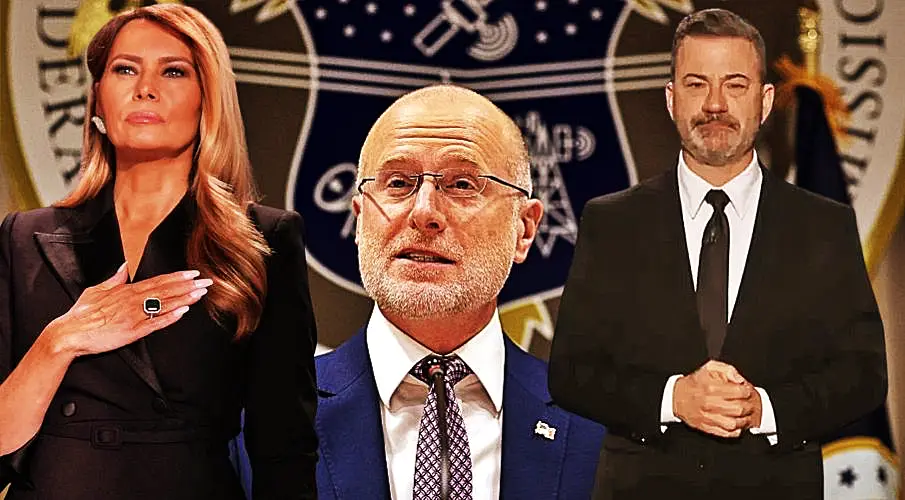
A few sentences in a late night show are enough to set a federal agency in motion. The Federal Communications Commission, under its chairman Brendan Carr, has ordered an early review of Disney’s broadcast licenses. The local ABC stations in the largest cities in the United States are affected. Officially, the issue is possible unlawful discrimination and programming related to diversity and equality. The timing tells a different story.

The trigger is a conflict that has been escalating for months. Donald Trump and Melania Trump have been publicly attacking host Jimmy Kimmel. The background is a joke about the upcoming White House Correspondents’ Association dinner, in which Kimmel described the First Lady as “glowing like a widow to be.” Two days later, shots are fired at that very event. The context shifts abruptly, and the reactions become harsher.

See also our article: Kimmel under fire - Trump demands firing after Melania joke
Melania Trump demands consequences. She speaks of hateful and violence inciting language that divides the country. Donald Trump goes further and calls for Kimmel’s dismissal. Communications director Steven Cheung publicly calls the host a “shitty person.” Kimmel rejects the accusation. His joke, he says, referred to the age difference, not to violence. He has spoken out against gun violence for years and sees no connection.
While this confrontation plays out in public, Brendan Carr sends a signal toward Disney. The licenses, which were not due for renewal until between 2028 and 2031, are now being reviewed ahead of schedule. Carr had previously announced that companies promoting diversity programs would be scrutinized more closely. In a podcast, he stated openly that the timing of a license review could be brought forward if there were doubts about a company’s direction.
Opposition comes from within the agency itself. Anna Gomez, the only Democratic member of the commission, calls the move unlawful and politically motivated. She describes it as a maneuver with no chance of standing and urges affected companies to push back. Criticism is also growing outside the agency. Seth Stern of the Freedom of the Press Foundation warns against using licenses as leverage against protected content. Jameel Jaffer of the Knight First Amendment Institute sees the move as an attempt to influence what people see and hear.
Disney rejects the allegations and announces it will defend itself in court. The company points to its long standing compliance with all regulations and its role in providing local communities with news and emergency information. It says it is confident it continues to meet the requirements for its licenses. Even within Republican ranks there is criticism. Senator Ted Cruz compares Brendan Carr’s language to threats from a mafia movie. An approach along the lines of, you have a nice business and it would be a shame if something happened to it.
What is visible here is a conflict that goes far beyond a television show. A government targets a host, an agency initiates a process that can have economic consequences. Officially, these are regulations. In effect, it is coercion. America 2026 - a country that hunts its people over their own words has stopped believing what it once taught its children.
Updates – Kaizen News Brief
All current curated daily updates can be found in the Kaizen News Brief.
To the Kaizen News Brief In English


Ted Cruz äußert sich entgegen Trump?
Das ich das noch erleben darf.
Free Speech nur noch für MAGA.
Da darf man gerne auch sagen „ich bin froh, dass er tot ist“.
Überhaupt kein Problem.
Aber für alle Anderen soll ein Maulkorb gelten.
Es wird der Weg zur absoluten staatlichen Meduenkontrolle geebnet.
CBS und NBC fahren schon zu 90% auf Trump Linie
Es ist leider nur eine Frage der Zeit, wann die anderen Sender dem Druck nachgeben werden.
Bei Disney ist der neue Eigentümer ein Trump Freund…. mehr muss man bicht sagdn, oder?