
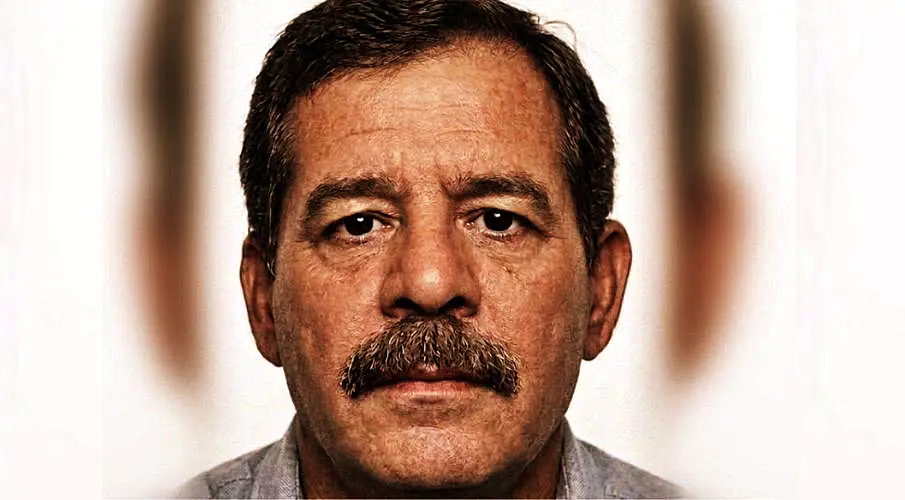
Sultanali Shirzadi Fakhr is dead. That is all that can be said with certainty. The rest is provided by a system that has learned over decades to phrase judgments in a way that leaves no question anyone is allowed to ask. Dawn on April 23. Confirmed by the Supreme Court. Carried out. No location. No witness. No space for what lies between a person and their final moment. The message arrives brief, almost cold, and yet within that brevity lies the full hardness of a system that has learned that fewer words mean fewer points of attack.
The Mizan News Agency, the mouthpiece of the Iranian judiciary, releases the statement. Membership in the Mojahedin-e Khalq Organization. Cooperation with Israeli intelligence services. Enmity against God - Moharebeh. Terms that function like doors in this language, slammed shut from the inside before anyone outside can knock. Authorities describe a man who joined the organization in the 1980s, went abroad, received military training, and took part in operations such as Forough Javidan and Chelcheragh. Decades later, they say, he returned under the pretext of a family visit - with an assignment, according to the accusation, in the service of foreign intelligence agencies. Arrest upon entry. Proceedings. Verdict. A story constructed so that it allows no other version beside it.
But this is exactly where the story, based on our own research, begins to fracture, and in a way that cannot be overlooked if one reads closely. Sultanali Shirzadi Fakhr is described by the judiciary as a former member of the Mojahedin-e Khalq Organization, an organization that, after the 1979 revolution, took up arms against the leadership in Tehran and organized itself militarily in Iraq. In that context, the operations Chelcheragh and Forough Javidan from 1988 are cited - attacks launched from Iraqi territory against Iranian targets, which to this day are regarded as cooperation with the wartime enemy and, in the language of the Iranian judiciary, as treason, regardless of how long ago they occurred or under what circumstances. His name also appears in connection with Camp Ashraf, the organization’s central base in Iraq, where in 2011 violent clashes occurred during its clearing by Iraqi forces and where he is said by authorities to have been injured. After that, his trail disappears, only to reemerge years later after extensive research, this time in Europe, specifically in Spain, where he lived. From there, he began his journey to Iran to see his father Shirali. It is precisely at this point that traceability ends.

What separates this case from a rule of law proceeding is the complete absence of everything that defines one. Not a word about the defense. No independent voice accompanying or evaluating the proceedings. No external assessment testing the substance of the accusations. Only the version of those who judge and carry out the sentence and then issue a statement that reads like an administrative act and nothing else. Even the location of the execution remains unnamed - another blind spot that joins a long line of similar cases. People disappear from public view, and even their final moment is denied a place, as if the invisibility of the end were part of the punishment.
Since the beginning of the military conflict on February 28, 2026, between Iran and the United States as well as Israel, the pace of such executions has visibly increased. Proceedings appear shorter, decisions more final, room for maneuver narrower. The war has given the system a cover under which actions become possible that in quieter times would at least have drawn attention. What once caused outrage now disappears, because the world is looking at Islamabad and oil prices and threats from Washington. Sultanali Shirzadi Fakhr dies in a week when no one is watching. And the system knows it. It has always known when the best moment is.
There is a kind of power that does not show itself through volume but through silence. That needs no explanations because it knows no one will ask. Brutality runs free, the war has only intensified it. A power that makes people disappear at dawn and issues a statement shorter than a grocery list. Since the attack on Iran, the number of executions has doubled. Trump calls this liberation. Death is the end of life, the end of the possibility to change anything. A strange form of liberation. What was carried out at this dawn is exactly that - the final decision that this person deserves no further possibility. And the system that makes that decision does not even need a place. It only needs a date.

Through our weeks in Iran, especially Tehran, we have built contacts within the opposition scene that go beyond what can be reached from the outside. We will not leave these connections behind, we left Islamabad today. Within our means, we will continue to provide clarification and help where help reaches - quietly, without major announcements, because that is the only way that works in this environment.
Sultanali Shirzadi Fakhr is one of many whose names briefly appear and then disappear. The official narrative provides a story that appears closed because it was constructed that way. What lies behind it - what this man experienced, how the proceedings actually unfolded, whether the accusations would have withstood independent scrutiny - hardly. And it will remain that way as long as the only voice speaking in such cases is the one that also judges and carries out the sentence and then falls silent.
Updates – Kaizen News Brief
All current curated daily updates can be found in the Kaizen News Brief.
To the Kaizen News Brief In English


Dies ist eine der ganz, ganz schlimmen Nebenwirkungen dieses Krieges!
leider, leider, leider …
Fakhr… ein Name der von der iranischen Regierung samt seinem Leben getilgt wurde 😞
Warum?
Weil sie es können 😞
So bleibt die Drohkulisse bestehen, die die Macht der Mullah garantiert.
Trump, er der Pro Life Aktivist, wertet den Tod als Befreiung.
Wie niederträchtig.
Es starben schon vor dem Krieg viele Menschen im Iran.
Ohne eine richtige Verhandlung, fernab der Medien.
Trump hat das befeuert… eine großartige Leistung 🤬🤬🤬🤬
Die Menschen im Iran zahlen doppelt den Preis dieses Krieges.
ja, der krieg hat denen faktisch einen freifahrtsschein ausgestellt
Diese Grausamkeit und Menschenverachtung scheint wie ein Teil der Hölle. Eine die es erleiden und andere die sich durch die Taten und Vollziehungen ohne minimale Rechtssprechung selbst ,Entmenschlichen und ärger als Raubtiere werden. Nur Grausam
„Es ist die Hölle, und es geht aus der Hölle nur bergab“