
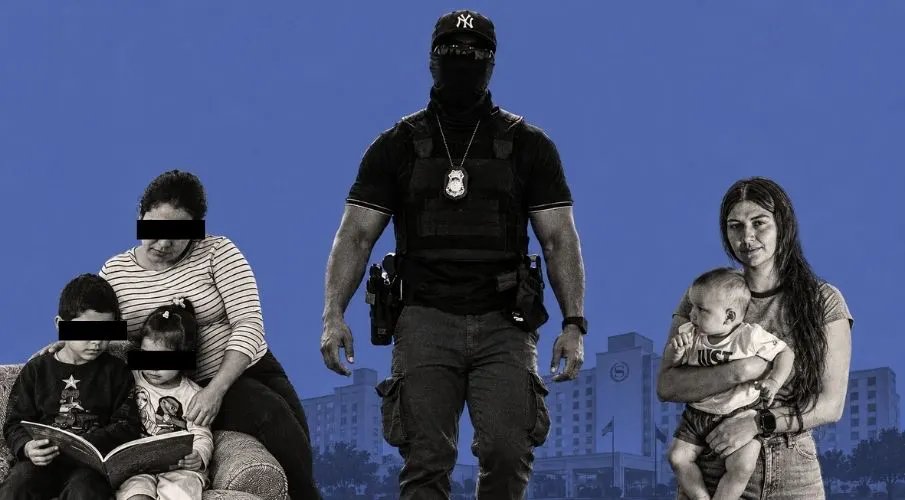
A mother goes to a scheduled appointment with U.S. Immigration and Customs Enforcement (ICE), bringing her two children along. She has lived in New York for a long time. After the appointment, she and her children are not allowed to go home. Officers arrest the family and take them to Texas, far away from the life they had known. There, a hotel room becomes a prison. For nine days, they are not allowed to leave the room or even look out the window. Two guards remain in the room at all times. When the woman asks how she can contact her relatives, the guards allow her two phone calls, each lasting 3 minutes, to her mother-in-law. At the same time, they threaten her: If she tells anyone where she is being held, they will take her children away. The woman, identified only by the initials M.S.P. out of fear of retaliation, described these events in a statement submitted to a federal court.
Her older child cried repeatedly during their confinement, afraid of falling behind in school because of all the missed classes. The younger child, 12 years old, worried about the cat back home. Both were stuck with their mother in a hotel room where strange men remained present even when someone wanted to sleep or use the bathroom. The guards reportedly identified themselves as private ICE contractors. The family's attorney spent more than a week searching for his clients. He could not find them in ICE's official detainee locator. He had no idea where his clients were being held and could not provide them with legal counsel.
Since Donald Trump's return to the White House, ICE has arrested more than 8,750 children. The figure comes from government records obtained by the Deportation Data Project. Those records, however, do not reveal how many minors were held in hotels. Court documents confirm that in February and March alone, 86 children were locked up in such accommodations for more than three days. Children held for longer periods are usually taken to the ICE facility in Dilley, Texas. For shorter periods, the government also uses hotels and rooms in administrative buildings. We describe these places as black boxes where families temporarily disappear from the sight of their relatives and legal representatives.

One mother described a cold Border Patrol station where she had to share a tiny bed with her 7-year-old son. They were reportedly given nothing but potato chips to eat. A 12-year-old child described a hotel room where guards slept on the couch, leaving the family with absolutely no privacy. These children are subjected to a form of government custody whose conditions usually only come to light through court proceedings. Even going to the bathroom happens under surveillance. The hotel bill may suggest a temporary stay. Different rules apply to the people behind the locked door.

A Sheraton hotel in Alexandria, Louisiana, was also used to house people in ICE custody, according to reporting from 2025. Families and minors were reportedly among those held there. So, the next time you check into a Sheraton, don't forget who else might be checking in.
In April 2026, U.S. District Judge Dolly M. Gee of the U.S. District Court for the Central District of California in Los Angeles reaffirmed her order in the case involving the Flores Settlement Agreement, case number 2:85-cv-04544-DMG-AGR, that ICE generally may not hold children in hotels. Only brief stays of 1 to 2 nights during transportation or immediately before flights would be permitted under narrowly limited exceptions. The court records show what those limits meant in the lives of the children affected.
Summary of Investigative Report to the Court: Children Held in Immigration Detention for Over 100 Days
Case Number 2:85-cv-04544-DMG-AGR
U.S. District Court for the Central District of California, Los Angeles
Original Report: 117 Pages
For months, we have been documenting how children are being held with their families in immigration detention under the Trump administration. We had submitted our findings to the U.S. District Court for the Central District of California in Los Angeles as a 117-page investigative report for the proceedings involving the Flores Settlement Agreement, case number 2:85-cv-04544-DMG-AGR. What we compiled fills 117 pages and is based on the cases of the affected families and statements from their attorneys. The reporting period primarily covers February through April 2026. The situation was so serious that the judge forced the agency to answer for its actions. Sick detainees waited for help, and some were afraid to even file a complaint. Every one of our findings is documented in the court records, and here is an overview.
Length of Detention
We have documented that families were held for 70 to 125 days, some even longer. Eight children were detained for more than 100 days, and another 20 for more than 50 days. One family spent over 280 days behind bars. These periods of detention are recorded in the families' complaints that we collected. The agency says it decides each case individually and complies with legal requirements. Yet for February and March, we counted 567 case entries involving children held for at least 20 days, averaging approximately 57 days. Some children appear in both months. Each of these periods of detention resulted from a series of individual decisions that kept extending their confinement, day after day.
Detention in Hotels
Hotels also served as detention sites. During those same 2 months, we identified 86 minors whose detention sequences involving hotel stays lasted more than 72 hours, including 44 who went through multiple segments. The longest documented sequence lasted 17.7 days, which may also include transportation. The agency cites canceled flights and missing travel documents, claiming that deportations were also difficult to arrange. Dismissed as a transportation issue, these stays meant additional days in custody for the children. The information provided did not allow us to determine with certainty which hotels were used.
Separation of Families
At the family detention facility in Dilley, Texas, fathers were separated from their wives and children at night. The strain on families was severe. The agency cites security and medical reasons and says it will consider longer periods of family time in the evenings during discussions with detainees. That prospect offers little comfort to a mother whose child asks for their father at night.
Access to Legal Counsel
The path to legal assistance was obstructed. Families were not given clear explanations of their rights and sometimes did not know under what circumstances their children could be released. Contacting attorneys was difficult. Email access was unreliable, and free legal phone calls remained restricted. The agency points to information sessions and written notices explaining detainees' rights. It did not restore Gmail access through library computers until March 6, 2026, and is still working on a multilingual guide. Without a clear explanation of their rights, people can hardly assert those rights in court.
Medical Care
The allegations ranged from long waits to claims that serious illnesses went untreated. The agency largely rejects those allegations and cites mostly favorable inspections. Nevertheless, unfilled medical positions are documented. One detainee underwent surgery after doctors discovered a 30-centimeter mass. A minor was taken to the hospital twice because of breathing difficulties. These incidents do not automatically establish a violation of medical obligations, but the medical emergencies are documented, and relatives were simultaneously complaining about inadequate care.
Complaints and Retaliation
Even filing a complaint was not without risk. Some detainees feared retaliation, while others did not know how to submit a complaint. Between February and April, 55 complaints were filed, 30 of them concerning staff. Two were decided in favor of detainees, 44 were explicitly rejected, and the remainder were pending or recorded differently. Whether this dismal record reflects the actual conditions remains doubtful in light of the fear described by detainees.
Flores Proceedings | 2:85-cv-04544-DMG-AGR
Reporting Period: February to April 2026
In February and March alone, ICE held 86 minors in hotels for more than 3 days, some for as long as 17.7 days. The average was 5.6 days. For 44 children, the agency recorded multiple hotel stays. Yet the practice continued even after the judge's April 3 order. According to attorneys representing affected children, another 36 minors were housed in hotels for more than 3 days in April, followed by another 24 in May. Two children were even held for more than 15 days. On May 18, the court rejected the government's request to reconsider its decision. On August 18, 2026, it also appointed an independent monitor authorized to inspect such hotels. While the courts debated the limits of government detention, children continued sleeping behind locked doors, under constant guard and sometimes without access to their attorneys. The agency's recordkeeping is particularly troubling.
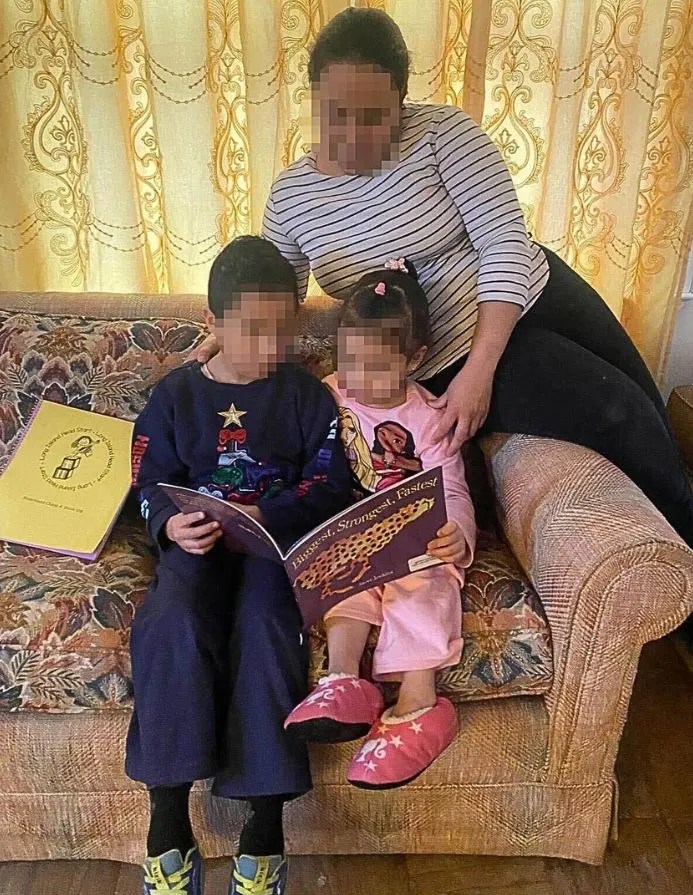
18 Days in ICE Hotel Detention: Ingrid, a Honduran woman, was arrested on December 20, 2025, along with her 7-year-old son and her 4-year-old daughter, a U.S. citizen. ICE held the family in hotels near LaGuardia Airport in New York and in Alexandria, Louisiana. They spent Christmas, New Year's, and the boy's 8th birthday cut off from the outside world. Her attorney, Andrea Soto, was unable to locate them for part of that time. The family was released on January 7, 2026. The case was heard before U.S. District Judge LaShann DeArcy Hall of the Eastern District of New York. Case Number: 1:25-cv-07023.
Under the designation "JFMTCU Temp Hotel Stay," ICE recorded hotel stays without providing the name or address of the accommodation. An attorney could therefore learn that his minor client was being detained without being able to find out where. The Department of Homeland Security and ICE did not answer questions about the detained children. In court filings, government representatives justified individual hotel stays by citing flight delays or difficulties obtaining travel documents. For the mother who was locked in with her children for 9 days, it probably made little difference which administrative problem Washington cited as the reason. She had to explain to her children why they were not allowed to leave the room while her attorney was still searching for them.
Particularly disturbing are the cases in which ICE separated children from their relatives and held them alone in hotels. Michelle Brané, a former Department of Homeland Security official under Joe Biden and now the head of Together and Free, described an 11-year-old boy who was forced to spend 5 days in a hotel room. Meanwhile, his father was taken to an adult immigration detention facility, where he continued pursuing his asylum case. The government agency responsible for refugee resettlement subsequently took custody of the boy.

Sonesta Chicago O'Hare Airport Rosemont: Colombian asylum seeker Valentina Galvis and her son Naythan, just 7 months old and a U.S. citizen, were arrested by ICE and then held in a hotel room for five days by employees of the private security company MVM Inc. The phone had been removed, and guards watched the mother and child around the clock. People searched desperately for them, while ICE's official detainee locator falsely listed Washington, D.C., as their place of detention. U.S. District Judge Franklin Valderrama of the Northern District of Illinois temporarily prohibited their removal from the United States and their transfer out of Illinois. Both were released after 5 days, and Valentina Galvis was fitted with an electronic ankle monitor.
In another case, an infant and two young children disappeared from their family's sight for approximately 10 days. Their mother was not with them. None of their relatives could find out where they were. Only later did the family learn that the children had been held in a hotel room. They were then reunited and put on a flight to Venezuela. Ten days without any information about the whereabouts of small children. A government agency holds people whose relatives are desperately searching for them, and only afterward do those relatives learn where the children had been.
The Trump administration regularly justifies its tougher immigration policies by claiming to target supposedly the most dangerous people. Brané disputes that portrayal. She says many of those detained are particularly vulnerable children who may well have legal avenues to remain in the United States. In her assessment, this approach is intended to spread fear and chaos and intimidate people through cruelty so that deportation numbers increase.

The use of hotels for this practice makes these operations particularly difficult to monitor. Relatives cannot visit their families if nobody tells them where they are being held. Attorneys cannot provide effective assistance as long as their clients are missing from government databases. The constant presence of private guards deprives even children of those few moments when a person would normally be free from observation. The promise of keeping families together loses all meaning the moment a mother is threatened with having her children taken away if she reveals her location.
A hotel room doesn't need bars on the windows to become a prison. A locked door is enough when guards sit on the other side and nobody outside knows where the people locked inside have gone. The records of these proceedings tell of children crying for their parents or worrying about a cat left behind. Washington can cite administrative reasons and transportation problems. The 11-year-old boy still spent 5 days separated from his father. The mother from New York was barely allowed to contact anyone for 9 days. And somewhere, someone first had to find out which hotel they had disappeared into so they could get legal assistance. The next search is waiting.
To be continued ...
Updates – Kaizen News Brief
Alle aktuellen ausgesuchten Tagesmeldungen findet ihr in den Kaizen Kurznachrichten.
To the Kaizen News Brief In English


Mein Gott, wie schrecklich! Noch schlimmer für all die Kinder, die ohne ihre Eltern eingesperrt werden. Unmenschlicher geht es kaum noch!
Das traumatische Schicksal meiner Tochter kam mir dabei wieder vor Augen, die durch eine Entführung durch eine vertraute Person noch heute als Erwachsene darunter zu leiden hat.
Wie viel mehr Traumata müssen es erst sein, wenn es gestapoähnliche Gestalten der ICE sind, die die Kinder festhalten!“
… es fehlen einem manchmal die Worte, und je mehr Worte fehlen, je mehr Hilfe muss geleistet werden.