
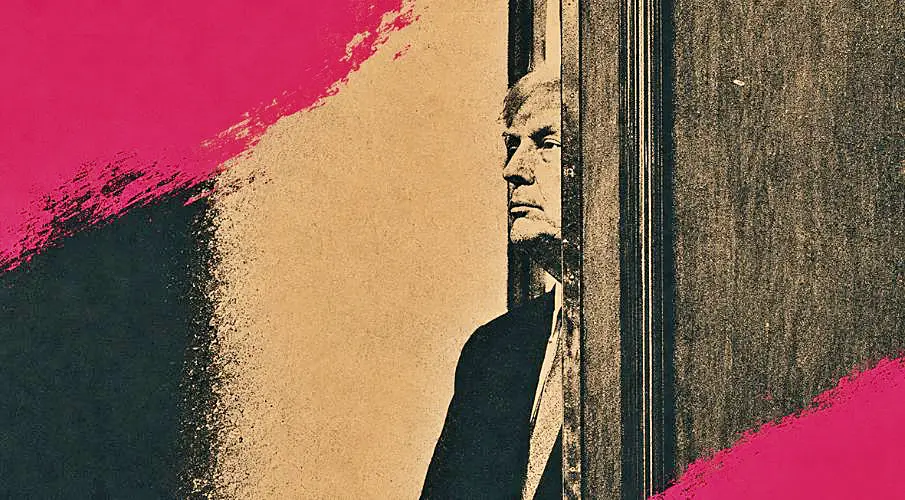
In the first year of his return to the White House, Donald Trump has amassed a fortune that surpasses anything previously imagined. The mandatory financial disclosure for 2025, released on Tuesday, reports at least $2.2 billion in income. Roughly $1.4 billion of that came from the family's cryptocurrency ventures, with the remainder generated by his other holdings, most notably real estate. During all of 2024, before returning to office, his businesses had produced at least $622 million.
The single largest inflow came when an investment firm closely tied to the government of the United Arab Emirates acquired nearly half of the family's flagship cryptocurrency company, World Liberty Financial. With that transaction, the line between the foreign policy of a nation and the private business of its president became increasingly blurred. In January 2025, just days before Trump's inauguration, the firm paid $500 million for a 49 percent stake. Shortly afterward, the same Emirati government concluded a deal with the Trump administration allowing the export of advanced computer chips used to power artificial intelligence, despite objections from some national security officials. The disclosure does not identify that transaction by name, but it lists unnamed investments that generated more than $200 million for Trump.

Together with his three sons, Trump created World Liberty, which markets a digital currency known as WLFI. Last year the company offered its coin to investors around the world, and seventy-five percent of every sale, after certain expenses, flowed to a company controlled by the president. His profit was therefore guaranteed, even if the coin itself lost value. That is remarkable for a man who once mocked cryptocurrencies as a refuge for drug dealers and fraudsters before embracing them during the 2024 presidential campaign.
The second major source of income was his novelty coin, a meme token marketed under the name TRUMP, which he began selling in the days before his inauguration. It generated more than $600 million for him, along with hundreds of millions more through World Liberty's own sales. The value of the token briefly surged before collapsing. Today it trades at $1.67, down 80 percent from its level a year earlier. Those who bought it lost money. The man whose name it bears did not.
That is where the real concern lies. Trump is not merely one of the largest participants in the cryptocurrency market. He is also its highest regulator. He profits from trading an asset while simultaneously shaping the rules that govern it. Nor is this the only example. The Trump Organization licenses the president's name to developments in countries of strategic importance to American foreign policy, including Saudi Arabia and Qatar. The White House initially declined to answer questions, while Trump has previously argued that federal conflict-of-interest laws do not apply to him. His spokeswoman, Anna Kelly, said he acts solely in the interest of the American public and that no conflicts of interest exist. As in previous years, the disclosure does not reveal whether many of these ventures ultimately generated profits or losses.
In economics, money is often understood as trust made tangible, a promise that exists only as long as people continue to believe in it. A coin bearing the ruler's name has always represented such a promise, a sign that an established order stands behind its value. Here, that relationship is reversed. The ruler mints a token bearing his own name, sells it to those willing to believe in it, and keeps three quarters of the proceeds regardless of whether the promise is ever fulfilled. It is the purest expression of the harsh logic of speculative finance. The person who issues the paper and writes the rules bears none of the risk. He simply passes it on. Trust flows in one direction. Money flows in the other.
This disclosure therefore reveals what becomes of public office when the person who holds it can no longer separate it from private wealth, or no longer wishes to do so. A nation that once prided itself on rejecting kings now watches its president turn his own authority into coinage. No statute appears to stand in his way, only the ancient principle that no one should be both judge and party to the same cause. Even that principle no longer seems capable of restraining him.
Updates – Kaizen News Brief
All current curated daily updates can be found in the Kaizen News Brief.
To the Kaizen News Brief In English


Ich dachte, er hätte einen Haufen Schulden durch die ganzen Pleiten. Und noch mehr Gläubiger, die er niemals bedienen könnte. Jetzt ist mir klar, dass er unbedingt wieder Präsident werden wollte. Er hat es einfach drauf!
Wenn Niemand ihm Einhalt gebietet, weil es keine Gesetze gegen Bereicherung im Amt gibt, dann ist er zum Ende seiner Amtszeit fein raus.
In den USA scheint es nicht verwerflich zu sein abzuzocken, zu betrügen, zu missbrauchen, zu blenden, keinen Charakter zu haben etc. und das ganze als Präsident ohne Skrupel und Manieren.
Armes Land der unbegrenzten Möglichkeiten, der unbegrenzten Möglichkeiten für Kriminelle im Massanzug.
Und wieder ein krasser Fall der Selbstbedienung Trumps.
Über das Präsidentenamt direkt in seine eigene Taschen.
Ich such und suche, aber den Vorteil für das amerikanische Volk kann ich beim besten Willen nicht finden.
Bis auf wenige Reiche, die noch reicher geworden sind, stöhnt das Volk unter steigenden Kosten.
Benin, Mieten, Strom, Heizung, Lebensmittel.