
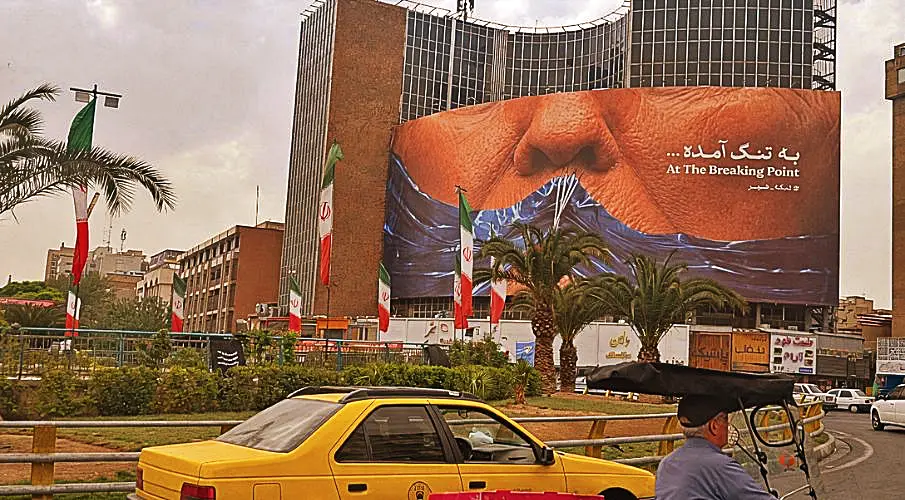
A draft declaration of intent now exists between the United States and Iran that would suspend fighting for sixty days, reopen the Strait of Hormuz, and lift the naval blockade. No one is describing the contents in detail, the core questions surrounding the nuclear program remain unresolved, and the United States has confirmed nothing!
A draft agreement between the United States and Iran is now on the table, and speculation surrounds its contents. What is firmly established remains limited. What is being negotiated is a declaration of intent, and both sides are eager to present it as their own victory. Trump and Iran’s Supreme Leader, Ayatollah Mojtaba Khamenei, have reportedly reached a preliminary understanding to reopen the Strait of Hormuz and discuss the nuclear program later.
What stands out is how much is being said and how little is actually being revealed. On Friday, Trump insisted that the details circulating publicly were false. What Iran had leaked to the media, he wrote on social media, had nothing to do with what had been agreed in writing. He did not say what had been agreed. Iranian media, meanwhile, contradicted one another, with one hardline outlet reporting terms more favorable to Iran while the state news agency described the arrangement more cautiously. Iranian Foreign Minister Abbas Araghchi declared that an agreement had never been closer but added that the media should refrain from any speculation about its contents.
Much therefore remains uncertain, and both sides have an interest in keeping it that way. What is known comes from two Iranian officials and one regional official who were briefed on the terms. The United States has confirmed none of it. According to them, the two countries agreed to a preliminary arrangement that would end the fighting, reopen the Strait of Hormuz, lift the American naval blockade, and open the way for further talks on the nuclear program. The agreement was described as resembling earlier versions from weeks of back and forth at the negotiating table, with only parts of the wording changed.
Since the end of February, the United States and Iran have been at war, with Israel involved alongside them. A ceasefire was agreed in April, yet fighting repeatedly resumed. Israeli officials expressed concern over the arrangement, fearing that Iran would avoid making concessions on its nuclear program during the next round of talks. The regional official expressed confidence that the agreement would be completed but warned that something could still cause it to collapse at the last minute.
The reported terms read as follows. Iran and the United States would begin negotiations on Iran’s nuclear program for no longer than sixty days, and during that time the war would pause on all fronts, including in Lebanon. What would happen after those sixty days if no comprehensive agreement were reached remains unanswered. Iran would reopen the Strait of Hormuz to shipping traffic, and the United States would lift its naval blockade against Iranian ports in the Persian Gulf. During those sixty days, Iran and the countries of the region would discuss the future administration of the strait. Last month it became known that Oman had discussed with Iran the possibility of charging transit fees to passing ships despite warnings from the American government.
If the agreement is finalized, the signing is expected to take place in Geneva in the coming days, where negotiators from both sides had already met in February before the war began. Vice President JD Vance is expected to lead the American delegation, the regional official said, and Trump announced on Thursday that he would send Vance to sign if everything was finalized. On the Iranian side, Mohammad Bagher Ghalibaf is expected to attend as the country’s chief negotiator and speaker of parliament.
In the declaration of intent, Iran reaffirmed its pledge not to develop or acquire a nuclear weapon. But the agreement does not resolve the central questions, neither the stockpile of highly enriched uranium nor the future of the nuclear program, leaving both to later negotiations. In the next phase, the two Iranian officials said, discussions would focus on lifting American sanctions, including those affecting Iranian oil sales and international banking, in exchange for concessions on the nuclear program.
So an agreement emerges that both sides call their victory precisely because nobody says what is actually in it. Victory is easiest to declare as long as no wording is made public, and a declaration of intent often records less what has been agreed than the desire to appear as the winner. The same arrangement, begun and abandoned for weeks, now returns with revised wording, and the war pauses for sixty days without anyone having an answer for day sixty one. The one question that triggered it, the nuclear program, is once again pushed beyond the horizon.
For now, what remains is the prospect of a signing in Geneva, that polished hall for pauses between wars, along with a strait that reopens and may eventually demand its price. And what remains is the old lesson that the announcement arrives before the event itself and that peace here becomes first and foremost a way of talking about peace.
Updates – Kaizen News Brief
All current curated daily updates can be found in the Kaizen News Brief.
To the Kaizen News Brief In English


Die USA sind definitiv die Verlierer.
Und die Weltwirtschaft.
Die Mullahs gehen gestärkt aus dem Krieg hervor.
Diese Vereinbarung stellt nicht einmal den Status Quo von vor dem Krieg dar.
Dafür sind viele unschuldige Menschen gestorben.
Der Umwelt wurde ein auf Jahrzehnte ein massive Schaden zugefügt.
Aber Trump macht neue Deals (für sich).
Hegseth konnte mal richtig Krieg spielen.