
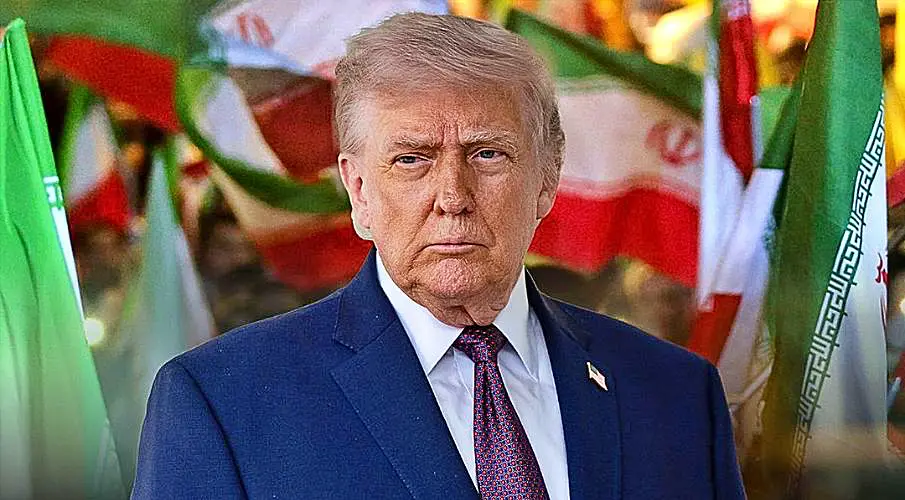
For the first time, the House of Representatives votes to stop the war against Iran. The administration declares the war over anyway while the attacks continue!
For the first time, the House of Representatives on Wednesday approved a war powers resolution that would direct the American military to end its operations against Iran. In doing so, the House broke with President Donald Trump, and a handful of Republicans joined Democrats to try to end the war that has lasted for three months and reshaped politics at home and abroad. House Speaker Mike Johnson had tried to prevent an outcome that would make growing opposition to the war visible and abruptly suspended proceedings two weeks ago when the resolution was close to passing. But frustration has only grown the longer the war has continued and the more visibly Trump has struggled with a plan for peace.
“It is enough,” said Representative Gregory Meeks of New York, the ranking Democrat on the House Foreign Affairs Committee who led the effort. “It is time for the president to do the right thing. People are tired of suffering because of his self chosen war, suffering at the gas pump, suffering in the grocery store.” The recorded vote ended 215 to 208, but what happens next remains uncertain. Trump is expected to reject any congressional measure that limits his authority as commander in chief. Even so, the result, in which four Republicans joined Democrats, amounted to a rebuke of the president’s war strategy, and cheers broke out across the House chamber.
This is the fourth attempt by the House of Representatives to place limits on the American war against Iran. Last month the Senate advanced its own resolution after a handful of Republican senators broke with the president, a rare event inside his party. With each Democratic attempt, support has increased slightly as discomfort with the war grows. Trump returned to the White House promising to end America’s foreign entanglements and focus more on domestic issues, yet the war has pulled attention back into the Middle East. Johnson insisted that Trump remained “fully focused” on domestic policy, especially with midterm elections approaching, which will determine congressional majorities. He said he had spent three hours with the president at the White House this week and that Trump was calling on allies to help reopen the Strait of Hormuz and restore trade.
Since the United States began strikes against Iran together with Israel on February 28, gasoline prices have climbed sharply, increasing inflation pressure on household spending. Iran has been able to disrupt shipping through the Strait of Hormuz, a critical waterway for a large share of the world’s oil, natural gas, and related products such as fertilizer. “We are working on this final piece,” Johnson said. “The entire world has an interest in seeing the Strait of Hormuz reopened for trade. That is what he is working on.” Although a ceasefire was announced in April, it remains fragile and uncertain. Negotiations for a more lasting end to the fighting continue and have become increasingly complicated by Israel’s expanding war against Iran backed Hezbollah in Lebanon. Meanwhile, military strikes between the United States and Iran continue to flare up.
The House resolution would not immediately end the war. It would be a step against further military action that sends a signal but carries little legal force. It now moves to the Senate, where last month four Republican senators joined Democrats to advance a similar measure, although a final vote there has not yet taken place. Secretary of State Marco Rubio warned Wednesday during a Foreign Affairs Committee hearing that Iranians would believe the administration’s “hands are tied” if Congress passed such a resolution. They would think, he said, “we cannot do anything against them, so why make a deal?” That sentence contains more than its speaker likely intended. It presents binding the president to the representatives of the people as a weakness and therefore accountability itself as a disadvantage. Anyone who speaks this way treats the Constitution as a burden better discarded in times of crisis.
This is not Congress’s only national security initiative. Democrats, who remain in the minority, are also trying to attract Republican votes beyond the Iran war. On Wednesday the House voted on another Democratic led effort, a procedural step toward a measure that would allow continued American support for Ukraine’s military operations against Russia and assist in rebuilding the country devastated by war. That vote is expected later this week. The House also plans to consider a war powers resolution intended to prevent American military action in Lebanon.
That brings the country back to an old question carried since the founding of the republic. The Constitution gives Congress the power to declare war and gives the president authority as commander in chief to conduct military operations. Between those two powers lies a continuing dispute over which branch ultimately decides war and peace. If the Senate joins the House, a new legal conflict over war powers may emerge. Under the War Powers Act, the White House has sixty days to obtain congressional approval for military action. The administration, however, has suggested that hostilities have already ended because a ceasefire has been declared in the current conflict.
This is where the real issue lies, and it has a troubling simplicity. A war declared to be over no longer needs approval. The deadline becomes meaningless once the fighting is declared finished even if the same fighting continues to flare up. In this way, a war escapes the only control the republic placed over it, not because it stops but because someone says it has stopped. On Wednesday, the House voted against that logic. Whether the voice of elected representatives carries more weight than the president’s declaration that his war is temporary remains to be seen.
Updates – Kaizen News Brief
All current curated daily updates can be found in the Kaizen News Brief.
To the Kaizen News Brief In English


Leider wird diese Regierung, wie bei allem, versuchen, den Kongress zu umgehen, unter den fadenscheinigsten Vorwänden.
Es ist ein gutes und wichtiges Signal, in meinen Augen.
Aber:
Es ist unklar, ob der Senat sich dem anschließt
Und selbst wenn, wird Trump diese Resolution nicht unterschreiben.
Damit läuft sie ins Leere.
Zusätzlich zu dem Streit über die Definition „Ende des Krieges“
Was man aber im Auge behalten sollte.
Trump hat den Krieg ohne Kongress begonnen.
Hat ihn erst auch nicht Krieg genannt.
Nun wird ez offen als Krieg bezeichnet, vomit Trump vor „dem Problem“ steht, dass er unrechtmäßig einen Krieg begonnen hat.
Vielleicht ist das der Hebel, wo man ansetzen kann und muss.