
Two disasters with eleven dead, and a government that now wants to abolish the agency that asks what caused them!
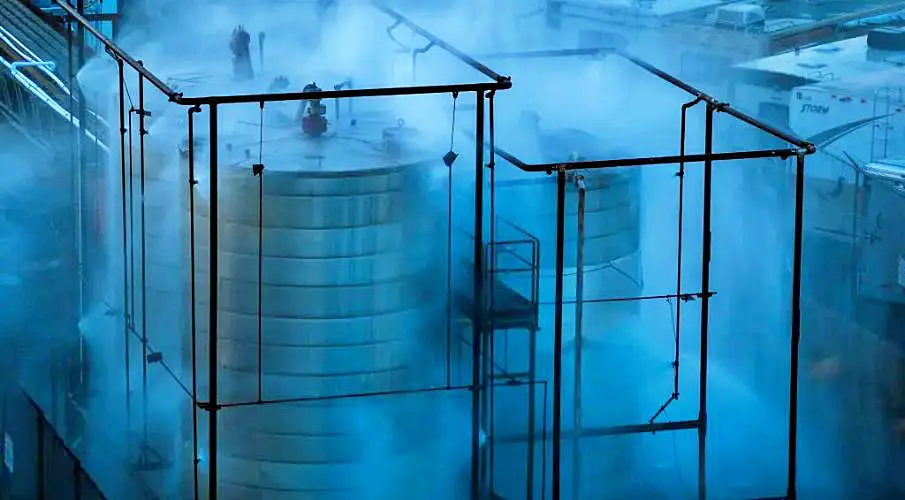
Two disasters within a matter of days reminded America of what chemistry is capable of when left to itself. At the Nippon Dynawave Packaging paper mill in the city of Longview, Washington, eleven people lost their lives. At the GKN Aerospace facility for aerospace plastics in Garden Grove, California, tens of thousands had to leave their homes. Both incidents occurred after experts and labor unions had warned for months about the consequences of the rollback of safety regulations under President Donald Trump’s administration. And it is not over. Further cuts to chemical safety rules are expected in the coming months.

As early as the end of March, members of the United Steelworkers union in Washington demonstrated against a plan by the Environmental Protection Agency. The agency wants to eliminate rules that had been introduced under former President Joe Biden. Among other things, those rules required the identification of safer technologies and chemical alternatives, made certain protective measures mandatory in specific cases, required more thorough investigations of incidents, and introduced reviews by independent third parties. Phil Stagg, a process safety specialist with USW Local 13-228, warned at the time that eliminating the rule placed “profits over safety” because it prioritized cost cutting over protecting workers.
Following last week’s two disasters, the Coalition to Prevent Chemical Disasters also described the plans to weaken the rules introduced under Biden as a serious mistake that exposes American workers to greater danger. “The deadly and devastating incidents experienced by these communities in recent days demonstrate how urgently existing protections must be implemented and expanded so that people living near chemical facilities are protected from these kinds of disasters,” the group said. “But instead of protecting workers and families from death, injury, and illness, Trump’s EPA is exposing communities to greater harm by weakening the nation’s strongest defense against chemical facility disasters.”

The administration is also targeting the Chemical Safety Board, an independent federal agency whose mission is to investigate the actual causes of chemical accidents. Trump’s budget proposal effectively eliminates the agency by reducing its funding to zero on the grounds that it merely duplicates work already being done by the EPA.
This is worth pausing over, because more depends on this justification than its brevity suggests. Jordan Barab, former deputy assistant secretary at the Occupational Safety and Health Administration, explained in an interview last week that the Chemical Safety Board provides invaluable insight into the actual causes of chemical disasters, while the EPA’s work is limited to determining whether an accident resulted from violations of federal rules. The Board, Barab said, “can also look at other problems, other causes that are not necessarily covered by regulations or standards.” He added: “Many of the ways industry has improved safety came from recommendations issued by the Chemical Safety Board.” There is therefore no duplication. The two agencies ask two different questions.

Representative Marie Gluesenkamp Perez of Washington State wrote on social media on Sunday that the Chemical Safety Board performs essential work in preventing future accidents and pledged to fight the administration’s plans to eliminate its budget. “I will make it a priority to ensure the agency receives the funding it needs for a thorough and unbiased investigation,” Perez said. “There are also currently three vacant seats on the board, and I hope we can work with the administration to ensure that people with real trade experience are appointed.”

That identifies the real substance of this cost cutting measure. A regulation asks whether a law was broken. The Chemical Safety Board asks why eleven people had to die, and it asks that question even when no law was broken. These are two different questions, and only the second one helps prevent the next disaster. Anyone who abolishes the agency that asks why is not claiming there is no why. They are only declaring that they no longer want to know.

A society that creates safety rules does something remarkable. It cares for people who have not yet been harmed, for deaths that have not yet happened. That concern is expensive, and for that very reason it can be listed as a cost and removed. Harder to calculate is the price of the alternative. That price does not appear on a corporate balance sheet. It appears in a paper mill in Washington where eleven families are waiting for someone who is never coming home.
Anyone looking at the United States these days can see how the rollback of environmental protections unfolds. It rarely announces itself loudly. More often it arrives wrapped in the friendly promise of less bureaucracy and greater freedom. Germany’s AfD also calls in important areas for fewer government interventions in climate and environmental policy and repeatedly questions existing protections. Critics therefore warn that such an approach ultimately not only accelerates procedures but also weakens the safeguards that protect air, water, health, and nature. Environmental agencies often appear unremarkable. Their value usually only becomes visible once their resources are taken away.
“Profits over safety” sounds almost too simple to be true as a phrase, yet it describes exactly what is happening here. The profit arrives today and benefits only a few. The bill comes later and is paid by others. It is a very old way of doing business. The only new thing about it is how openly it is practiced today.
Updates – Kaizen News Brief
All current curated daily updates can be found in the Kaizen News Brief.
To the Kaizen News Brief In English


Leider ist es nicht nur „Profite über Sicherheit“ es ist Profite über Allem.
Umwelt, Flora und Fauna, Menschen.
EPA ist unter Trump nur noch eine leere Worthülse.
Es wäre an den Bundesstaaten eigene Richtlinien zu erlassen.
Aberauch das wird leider, aus Angst vor Abwanderung nicht passieren.
So werden sich solch Unfälle häufen.
Menschensterben und die Umwelt leiden 😞
…leider seit Jahren ist die Tendenz steigend, bei immer weniger Gegenwehr