
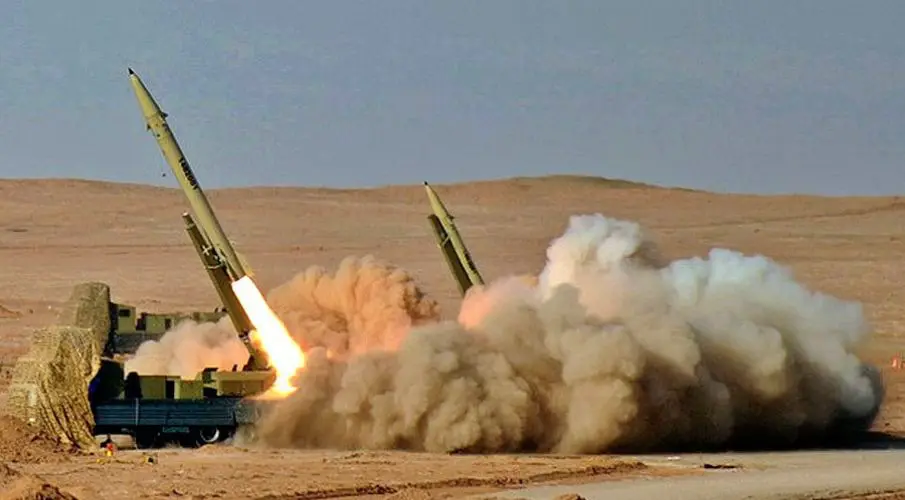
The war against Iran has apparently revealed a dimension that had largely remained hidden from public view. While the attention of many observers was focused on the military operations of the United States and Israel, another front was unfolding behind the scenes. The United Arab Emirates were reportedly far more deeply involved in the fighting than previously known. Reports and investigations paint a picture of a covert military campaign that began in the first days of the war and did not fully end even after the ceasefire announced in April.

According to these reports, the Emirates carried out dozens of airstrikes against Iranian territory in close coordination with the United States and Israel. The targets were not limited to strategically important maritime routes but extended deep into the country's economic infrastructure. Among the locations struck were the islands of Qeshm and Abu Musa in the Strait of Hormuz, the important port of Bandar Abbas, the refinery on Lavan Island, and the petrochemical complex in Assaluyeh. The attacks were therefore directed not only at military facilities but also at areas of central importance to Iran's energy sector and economy. Particularly sensitive is the justification for part of these operations. Several strikes against energy facilities were apparently carried out in direct response to Iranian attacks on Emirati oil and gas installations. The war increasingly developed into an exchange of blows against economic lifelines. In particular, the joint Israeli-Emirati strike on the Assaluyeh complex drew international criticism. According to the available information, Washington subsequently exerted pressure to prevent further attacks on energy infrastructure. Concerns over an uncontrolled escalation were clearly significant.
The development also marks a remarkable shift within the Gulf region. At the beginning of the war, several states publicly declared that their territory would not be used for attacks against Iran. As the conflict continued, however, this position began to change. New alliances and operational partnerships emerged behind closed doors. While some governments publicly advocated restraint, military decisions were being made in the background that influenced the course of the war.

Tehran responded with massive counterattacks. According to the available information, Iranian missile and drone strikes targeted cities, airports, and energy facilities across several countries in the region. The United Arab Emirates were reportedly hit particularly hard. More than 2,800 missiles and drones are said to have been launched against the country. According to these accounts, the Emirates were targeted more heavily than Israel or any other country involved. The attacks struck not only military objectives but also increasingly affected civilian infrastructure and the country's economic life. The consequences were also felt within the Gulf Cooperation Council. Tensions reportedly grew behind the scenes among member states. Saudi Arabia is said to have expressed significant reservations about Abu Dhabi's actions. Leaders in Riyadh reportedly feared that further attacks on Iran could trigger even more severe retaliation. Concerns about the region's oil industry and the impact on global markets fueled growing unease. Rising energy prices would have affected not only the Gulf states themselves but the global economy as a whole.
The tensions reportedly evolved into a personal conflict between the President of the United Arab Emirates, Sheikh Mohammed bin Zayed, and Saudi Crown Prince Mohammed bin Salman. According to the reports, the Emirati leader became increasingly frustrated with Saudi Arabia's refusal to take a more active role in military operations against Iran. The differing assessments of the risks and benefits of the war not only created political disagreements but also strained relations between two of the most influential rulers in the Arab world.
Alongside the military confrontation, the Emirates also moved against Iranian interests within their own borders. During the war, authorities intensified measures against institutions linked to Iran. Schools and associations were shut down, visa regulations were tightened, and opportunities for Iranian citizens to travel through or conduct business in the Emirates were significantly restricted. The conflict was therefore fought not only on the battlefield but also in the economic and social spheres. At the same time, cooperation between Abu Dhabi and Jerusalem deepened further. During the war, Israel deployed Iron Dome air defense batteries to the Emirates to help protect the country from missile and drone attacks. In addition, senior Israeli officials reportedly traveled secretly to the Emirates on multiple occasions. The visitors are said to have included Prime Minister Benjamin Netanyahu, the leadership of the Mossad, the head of the Shin Bet security service, and senior military commanders. Their objective was to coordinate joint actions against Iran and align security measures.
In recent weeks, however, a more cautious shift has emerged. The Emirati leadership appears increasingly inclined toward diplomatic solutions. According to sources familiar with the discussions, Sheikh Mohammed bin Zayed was among the regional leaders who urged Donald Trump in early May to pursue a political agreement with Iran. The experiences of recent months have apparently demonstrated how high the costs of an open conflict can be - militarily, economically, and politically. The war has not only created new front lines. It has also revealed how deeply individual states in the region were actually involved in the confrontation. While many decisions were made in secret, their consequences are likely to remain visible for a long time. The notion that the conflict was fought solely between Iran, Israel, and the United States is becoming increasingly difficult to sustain under closer scrutiny. Behind the official statements, a much larger network of military operations, secret agreements, and regional power struggles emerged, the full extent of which may not become visible for years to come.
To be continued ...
Updates – Kaizen News Brief
All current curated daily updates can be found in the Kaizen News Brief.
To the Kaizen News Brief In English


Danke für diese tiefgehende Recherche.
VAE scheint der einzige Staat zu sein, der mit den USA und Israel agiert.
War das vielleicht auch einer der wichtigen Gründe, warum VAE aus der Opec ausgetreten ist?
Um unabhängig von anderen arabischen Staaten zu agieren?
… ja steckt viel mehr dahinter, als die meisten vermuten würden