
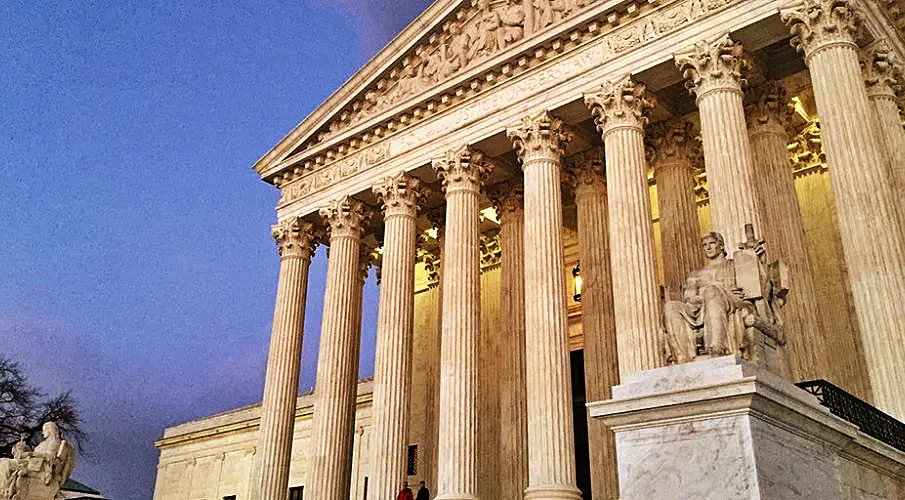
Before you understand why this story carries weight, you need to know what it is about. In 2015, the administration of Barack Obama passed an environmental regulation that should have entered the history books. The Clean Power Plan. A rule by the US Environmental Protection Agency aimed at reducing carbon dioxide emissions from power plants by about thirty two percent by 2030, measured against 2005 levels. It was the most serious attempt by an American president to put climate on the table where decisions about the economy, energy and the future are made.

The plan was not a rushed move. It gave individual states time. It gave them flexibility in implementation. It was designed for eight years. In the target year 2022, the reduction was about one percent. No one had to shut down a power plant immediately. No one had to build solar installations overnight. Those who needed more time could request a two year extension. It was, in the language of the energy sector, a gradual transition, carefully calibrated.
Still, twenty seven states and several industry associations immediately filed suit and requested a so called stay from the responsible appellate court in Washington, the D.C. Circuit. In American law, this is a temporary halt. The court is asked to suspend the rule until the case is decided. The D.C. Circuit rejected the request on January 21, 2016. The rule was to remain in effect while the courts reviewed it. That is the normal course of events.

But the opponents did not give up. They went directly to the Supreme Court, the highest court of the United States. An unusual step, because this court normally comes at the end of the chain, after all lower instances have ruled. It is a court of review, not of first view. That is the old formula. And that formula was broken in February 2016. What happened behind the scenes at the time was not accessible to the public for many years. Now it is. Internal memoranda have surfaced that the justices exchanged among themselves in February 2016. They show how a majority formed that stopped the Clean Power Plan before the appellate court had even completed its review. They show how a move that Chief Justice John Roberts himself described as unusual was carried out anyway, against the explicit opposition of Stephen Breyer and Elena Kagan.

Neil Gorsuch is now speaking about these leaks. Gorsuch was appointed in 2017 by Donald Trump to the seat of Antonin Scalia. In a rare interview with television host Shannon Bream, he speaks of a balance that must be maintained. On one side transparency. On the other side the protection of confidential deliberations. Anyone can follow the oral arguments, he says. The arguments are public. But internal deliberations need calm and protection so that justices can speak honestly with each other. An elegant formulation that circles around one word at its core. Secrecy. And that secrecy has just been torn open.
What now emerges from the files is not a harmonious consultation of sharp minds. It is a battlefield in polite tone. Lines running through the court. Conservatives against liberals. Early intervention against patient waiting. Outcome before process. And at the center is the question whether the highest court even had the right to stop a rule whose legal review had only just begun.

John Roberts, the Chief Justice, opened the internal debate on February 5, 2016 with a memorandum to the conference. He recommended granting the request of the states and industry groups. He justified this by stating that the rule was described as the most expensive regulation ever imposed in the energy sector, with net costs of up to 480 billion dollars between 2017 and 2031. In a footnote, he acknowledged that this number came from studies that were likely at the upper end of possible estimates. He acknowledged that the usual procedure would be to let the appellate court rule first. He chose immediate intervention anyway.
In his memo, he wrote that the EPA itself had admitted that the rule was being baked into the system at this very moment. He cited EPA Administrator Gina McCarthy, who had said in a BBC interview that the Clean Power Plan would be baked into the system, fixed into the energy structure regardless of what Congress or future administrations might do. Roberts read this as a threat. If the court did not act now, the rule would become effectively irreversible long before the Supreme Court had even reviewed its legality. He recommended granting the stay.
Stephen Breyer, the liberal senior justice, responded the same day with his own memorandum. It is one of the most important documents in this entire affair because it dismantles step by step what Roberts had just proposed. Breyer suggested a different solution. An order that formally denies the request but explicitly allows the states to file a new request if they do not receive the two year extension from the EPA. A smart, cautious solution that closed nothing off but did not rush anything.

Then Breyer named three reasons why he preferred this solution over a stay. First, he wrote, it is unusual for the Supreme Court to intervene while an appellate court is still reviewing the case. Second, an immediate order would suggest a view on the matter that could not reliably be formed from the available record. The D.C. Circuit had not yet taken a position, and the Supreme Court had not waited for oral argument there. Third, and most importantly, there was no indication at this stage that irreparable harm was imminent.
As for the companies, Breyer wrote that the rule would not require any action until six years later, in 2022. If the applicants lost before the appellate court, they could still turn to the Supreme Court afterward. As for the states, Breyer referred to the Solicitor General, who had stated that a two year extension from the EPA would practically always be granted if a state requested it. If a state received such an extension, it would not have to act until September 2018. Six years of room, Breyer wrote in his clear style, before the first real deadline. There was no plausible reason to intervene now with a hammer.


Roberts was not satisfied. On February 6, 2016, he wrote a second memorandum in which he disagreed with Breyer in a polite but very firm tone. He reaffirmed that in his view an immediate stay was the only correct response. He introduced two new arguments. First, the rule would already be changing the national energy sector because the industry would have to adjust its business plans now to meet the requirements for 2022. The EPA’s own models would show that coal production for the power sector would decline by two percent in 2016 and 2017 and by 4.3 percent in 2018. Second, he again referred to the Mercury Air Toxics case, in which the EPA had effectively implemented a major part of its regulations even though the Supreme Court later found them unlawful. That experience, Roberts wrote, shows that a rule like the Clean Power Plan would become functionally irreversible without a stay long before its legality could be reviewed.


Elena Kagan pushed back sharply on February 7, 2016. Her memorandum supported Breyer’s proposal with an addition and framed it with a broader principle. It was unprecedented, she wrote, for the Supreme Court to grant a stay before any court had even reviewed the case. She cited the old principle from earlier rulings. We are a court of review, not of first view. On the merits, she wrote, the government had the stronger arguments at that point. The case was complex, the statutory framework intricate. It would have been wise to wait until the appellate court held its oral argument on June 2, 2016 and provided its view.


The economic figures on which Roberts relied did not withstand internal scrutiny. While 480 billion dollars was cited publicly, Breyer referred to the EPA’s own official analysis. It listed significantly lower values. One to three billion dollars annually in 2025, five to eight billion in 2030. The EPA itself had even stated that these costs were in a range that was partly below the costs of other Clean Air Act regulations for power plants. Even Roberts acknowledged in his first memorandum that the 480 billion figure likely reflected a biased perspective.
Samuel Alito stood on the other side. His memorandum of February 7, 2016 fully supported Roberts. Alito argued that the EPA’s own model predicted that the rule would change the energy market already in 2016, not only in 2022. He cited specific figures from these models. A reduction in coal power generation by 5.1 percent in 2016 alone. Damage, once done, could not be undone. Coal plants are not shut down casually. Solar installations are not bought overnight.
This is where the break between the camps becomes clear. Some said something irreversible was already happening. Others said it was not happening, and even if it were, it was not because of this rule but because of long term trends in the energy market that were already underway. Natural gas was displacing coal. Renewables were displacing fossil energy. That was already in motion in 2016, entirely independent of the Clean Power Plan. This observation is one of the sharpest lines in the memoranda, and it appears nowhere in the final ruling.
On February 9, 2016, the Supreme Court made its decision. By five to four votes, the stay was granted. The Clean Power Plan was stopped before the D.C. Circuit had even held its hearing. A few days later, Antonin Scalia died, whose vote had made the majority possible. The rule never returned in this form. Donald Trump, who took office in 2017, buried it permanently. Today, ten years later, the country faces climate damage on the stage of reality that might have been less severe without this stay. Maybe. We will never know.
From this decision grew a practice that now has a name. Shadow docket. It describes a form of decision making in which the Supreme Court rules without full opinions, often in expedited proceedings, sometimes without revealing how each justice voted. What was once a rare exception has become a standard tool. Back then it was used to stop an environmental rule. Today it is used to enforce initiatives by Donald Trump. Migration policy. Voting rights. Emergency decrees. The tool remains the same. The hand changes. The objective shifts with each election.

Sonia Sotomayor and Ketanji Brown Jackson have openly warned about this development. Jackson points out that this accelerated procedure was once used almost exclusively in death penalty cases, where time catches up with a human life. Today it is extended to politically far reaching questions, to decisions that affect millions of lives without the public knowing exactly how the majority was formed.
Shannon Bream confronts Neil Gorsuch in the interview with the question whether such leaks damage public trust. Gorsuch evades. He gives no clear answer. Instead he repeats the line about transparency and protection of internal deliberation. He knows the question is dangerous, and he knows that any concrete answer would be ammunition. So he gives none. He delivers a formulation that seems to say something without saying anything.
But this is exactly where the real problem lies. What is publicly visible are the final rulings. What remains hidden are the paths by which they were reached. The leaks tear this separation apart. They show a court that does not only operate legally but acts politically. They show majorities that decide, and procedures that are adjusted when the desired outcome requires it. With six conservative and three liberal justices, the balance of the Supreme Court has shifted more clearly than at any other point in recent history. This majority shapes not only individual rulings. It shapes the way decisions are made. Which cases are accelerated. Which arguments carry weight. Which voices break through and which fall silent in the background.
What remains is a court that wants to project stability outward while internally it becomes visible how contested each individual decision is. The leaks are not a side phenomenon. They are not a scandal that will pass tomorrow. They are proof that even at the highest level of the American judiciary, control over its own narrative is eroding. When the final authority of a country can no longer protect its own confidentiality, one of the pillars on which the entire republic stands begins to crumble.

Gorsuch says the court must maintain balance. The truth is that this balance has long been tipping. Not just since the leaks. The leaks only show it. They show that in rooms where deliberation once took place, struggle now dominates. That in files that were once sealed, there are now fractures through which light enters, whether one wants it or not. And that light reveals something no official statement can conceal anymore. The Supreme Court of the United States is no longer the court it wants to be. It is the court it has become. And the difference between the two is the real story of these leaks.
In the background, the climate question remains, cold and without patience. While the argument about when a court may intervene was unfolding, emissions continued to rise. The Clean Power Plan, which might have mitigated part of it, was stopped before it could take effect. Today it is 2026 and we see the consequences. Fires, heat waves, droughts, a world in which weather reports sound like old apocalyptic novels. The Clean Power Plan might not have changed everything. But it would have changed something. What emerges from the memoranda is not only a legal story. It is also a story about how a country deprived itself of a chance and how a small majority of justices in a back room made a decision whose consequences we all breathe worldwide in the climate.
That is the true scope of this stay. Not a file. Not a regulation. But a piece of the future that was lost because six men and one woman in black robes could not agree on what is law and what is politics. Today we read their memoranda and we know what we should have known then. It was never only law. It was always also politics. And politics won, quietly, behind closed doors, in a majority that today stands at six to three.
Updates – Kaizen News Brief
All current curated daily updates can be found in the Kaizen News Brief.
To the Kaizen News Brief In English


Es scheint wir taumelt in eine rechtlose Zeit. Das Recht des Stärkeren wird die Devise. Die geschändet Natur wird ihre Rechnung unerbittlich stellen und ein Großteil der Menschheit wird das alles bitter bezahlen.
… ja und deshalb muss man sich dagegen wehren mit allem was nur geht
Leider sind die Richter auf Lebenszeit gewählt.
Sie sind zu 99,8 % unantastbar.
Aber unabhängig sind sie schon lange nicht.
Mit Trumps erster Amtszeit hat er Richter (es waren doch 2 oder 3?) Ernannt, die auf MAGA und nicht die Verfassung geschworen haben.
Roberts und Alito sind die Handlanger von Trump.
Egal was, egal ob verfassungskonform, sie stimmen immer und ohne Ausnahme für Trump.
Die anderen republikanischen Richter hat Trump wohl auch zu 90% in der Tasche.
Das einzige Urteil gegen Trump war das Strafzollurteil.
Und es bleibt wahrscheinlich auch das Einzige.
Das Schlimme, selbst wenn die Demokraten in den Midterms die Mehrheit in beiden Kammern erhalten, Trump weiter per Dekret und Marionetten Supreme Court regieren kann.
roberts ist ein disaster, nicht nur für U.S.
Unglaublich, dass dies schon so Lange vorbereitet wurde 😡