
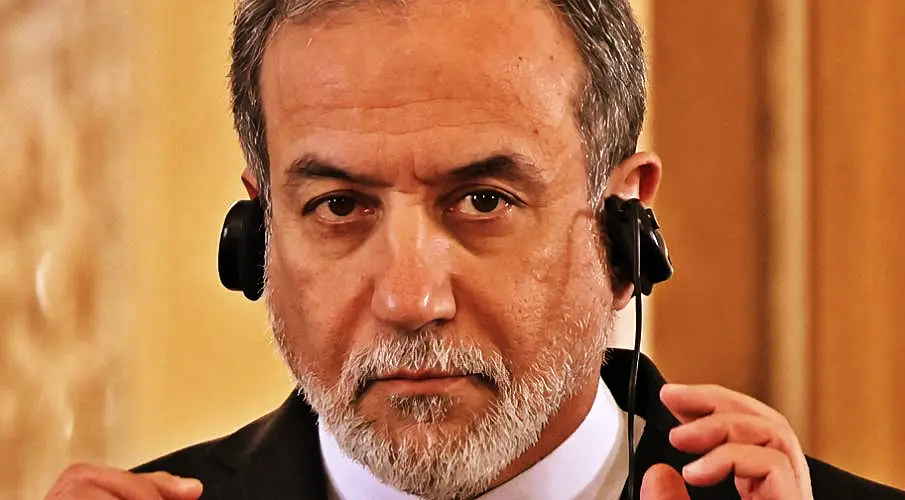
Abbas Araghchi lands in Islamabad, meets with Pakistani officials, speaks with Qatar by phone, is expected in Moscow. Movement is there, visible, tightly scheduled, but so far it leads to no breakthrough. Behind these meetings stands a condition that has settled in. No war, but no peace either. A balance that is not stable, but can shift at any moment. Pakistan continues to mediate, Egypt steps in, Qatar remains in contact with Tehran. Badr Abdelatty speaks with both sides, emphasizes the need to secure the ceasefire and turn it into real negotiations. Araghchi also relies on coordination, refers to new initiatives without giving details. The talks continue, but they run in parallel, not toward each other.

In Washington, a different decision is made at the same time. Donald Trump cancels another round of talks in Islamabad. His special envoy Steve Witkoff and Jared Kushner do not travel. The explanation is brief. Iran would only waste time. At the same time, the American blockade of Iranian ports remains in place, a central point where everything stalls.

Tehran responds accordingly. There will be no direct talks until this blockade is lifted. Without that step, any invitation to Islamabad remains politically worthless. Both sides face each other without moving. Each waits for the other to give in first. Inside Iran, pressure is growing. Layoffs are increasing, production problems in petrochemicals and pharmaceuticals are worsening the situation. Forecasts suggest inflation could rise to nearly fifty percent even in the best case. Without an agreement, a further increase is expected, in the worst case to levels that an economy can hardly sustain. At the same time, there are assessments that the political leadership can still endure this phase for several months.

The consequences are also visible outside Iran. Disruptions in oil flows and key exports could affect the global economy within weeks. That is exactly what Tehran is counting on. The assumption is that economic pressure will be felt faster in the United States than within its own leadership.
The result is a condition that remains risky for both sides. The war is over, but without any reliability. Every step can trigger escalation again. A former Iranian government official describes the situation as the end of a war without duration. A conservative newspaper calls it a strategic interim state that may be more dangerous than a short open conflict.
While diplomats travel and speak on the phone, the decisive movement remains absent. Both sides see themselves at an advantage, both believe they can hold out longer. That is exactly where the problem lies. As long as neither side gives in, everything stands still. And that stillness is the real risk.
Updates – Kaizen News Brief
All current curated daily updates can be found in the Kaizen News Brief.
To the Kaizen News Brief In English


Gut geschrieben, Rainer.
Es wird geredet, aber nebeneinander, bicht aufeinander zu.
Keine der Parteien will nachgeben.
Keine der Parteien sieht eine echte Notwendigkeit zum Nachgeben.
Russland verdient gut an der derzeitigen Situation.
Trump verdient gut.
Israel ist außen vor und in gar keine Gespräche eingebunden.
Leiden werden weiter die Normalbürger.