
Gannon Ken Van Dyke was not an ordinary soldier. A Master Sergeant in US Special Forces, stationed at Fort Bragg, on active duty since 2008, for years with expanded access to classified information. Ten years after his enlistment, he received special clearances for classified data. Later, he signed additional agreements obligating him to strictly protect military information about operations in the Western Hemisphere. It is precisely this obligation that forms the basis of the charges.

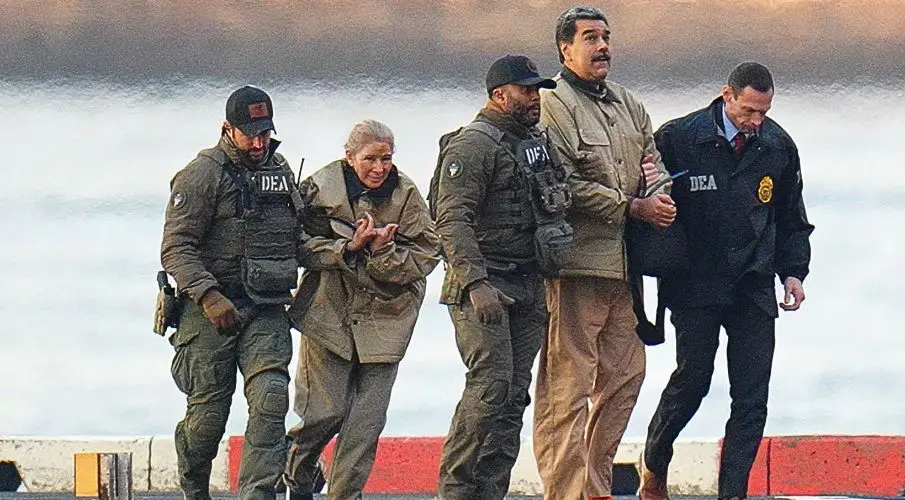
The operation in question has a specific name. Absolute Resolve. It ran over a clearly defined period - at least from December 8, 2025, to January 5, 2026. The objective was the capture of Nicolás Maduro and his wife Cilia Flores in Venezuela. During this phase, Van Dyke was not an observer but part of the planning and execution. He had access to information explicitly classified as sensitive, non-public, and confidential. This included operational details, time windows, procedures, and internal assessments that were not accessible outside this circle.


Excerpts from the 14-page indictment
This knowledge did not remain within military structures. While the operation was being prepared, Van Dyke used this very information to bet on its outcome. He did not place blind bets, but acted with knowledge of timing and probabilities. In doing so, he used a platform that functions as a prediction market. Users can place bets on future events - political developments, military decisions, or shifts in power. Bets are traded as yes or no. The price of a position reflects the expected probability. Those who are correct receive a payout.
Van Dyke used this mechanism systematically. In the hours before the capture of Nicolás Maduro in early January, a large sum was placed on the outcome that Maduro would be removed from power within the same month. The stake was approximately 32,000 dollars. The profit later exceeded 400,000 dollars. The indictment directly links these transactions to Van Dyke. This is not about isolated lucky bets, but repeated trades based on information he knew from his military role.
It did not stop at using knowledge. Van Dyke actively attempted to conceal his tracks. He used accounts not directly traceable to him, moved funds, and obscured the connection between himself and the trading activity. In one case, he is said to have moved around 300,000 dollars in a transaction derived from those profits. The goal was to conceal origin and linkage.
Another point in the indictment shows how aware he was of handling sensitive information. As early as November 2025, he saved a screenshot from a query to a system describing military information structures. It explained that special forces possess numerous classified files, operational details, and internal procedures that are not accessible to the public and remain protected even in partial disclosures. Van Dyke therefore knew exactly the value and protection level of this information.
The charges against him are accordingly extensive. Unlawful use of confidential government information for personal gain, theft of non-public data, trading fraud, wire fraud, and financial transactions involving proceeds from these acts. In addition, authorities intend to seize assets. These include brokerage accounts and bank funds directly linked to the trades. The indictment names specific amounts and accounts targeted for forfeiture.
At the same time, the platform Polymarket itself is coming under greater scrutiny. Prediction markets like Polymarket offer hundreds of markets where users can bet on events in politics, economics, or society. The structure allows traditional gambling regulations to be bypassed, as the bets are treated as tradable contracts. It is precisely this construction that allows individuals with insider knowledge to gain a significant advantage.
The case has already triggered consequences in Washington. Government employees have been warned against using such platforms. The background is a growing number of unusual trading movements, most recently also linked to the war with Iran. Authorities see this as an increasing risk because military or political information can be translated into financial decisions in real time. Todd Blanche makes clear what is at stake from the government’s perspective. Soldiers are given access to sensitive information to fulfill their duties and carry out operations safely. That access is bound by clear rules. When it is used for personal profit, it is not just a violation of regulations, but a breach of fundamental trust.
Donald Trump has also commented on this development. The world, he said, has turned into a casino. Political and military events are no longer merely observed, but become objects of betting. This statement describes a shift that goes beyond the individual case. When decisions that can determine life and death simultaneously become financial opportunities, the framework in which such decisions are made changes.
The Van Dyke case illustrates this shift in concrete terms. A soldier who is part of a classified operation uses that knowledge to generate profit. A platform that evaluates events becomes a tool for someone who already knows the outcome. And a system based on secrecy is broken because information becomes money. In the end, one question remains, and it is not technical. What happens when those who prepare operations are simultaneously betting on their outcomes. And whether a system built on trust and secrecy can endure when that very trust becomes a stake.
Updates – Kaizen News Brief
All current curated daily updates can be found in the Kaizen News Brief.
To the Kaizen News Brief In English


Sehr interessant, dass Ihr dieses Thema aufgreift. Wobei sich mir schon seit längerem der Eindruck aufdrängt , dass beim Zusammenbauen der verstreuten Info-Puzzelteile der ganze von 🇮🇱+🇺🇸 losgetretene Nahostkonflikt eine einziges „Kasino“ ist
…ja, nichts geht mir, ist aktuell sehr in
Polymarket ist brandgefährlich.
Ich bin mir sicher, dass nicht nur Van Dyke hier Insiderwissen zum Abkassieren genutzt hat.
Trump und seine Entourage werden Milliarden mit Insiderhandel verdient haben.
Wer weiß wann welche Äußerung gemacht wird, kann ziemlich risikolos seinen Einsatz vervielfachen.
Dieses Hin- und Her von Yrump.
Der Markt, Polymarket reagieren.
Trump (wenn vielleicht auch nichg mehr er selber) weiß das.
Leider sind solche Insiderhandel und dann noch bei Polymarket kaum nachzuverfolgen.
Das kostet Zeit und Geld.
Van Dyke ist ein Bauernopfer, er ghat letztlich aber nur nachgemacht, was die Trump Regierung seit einem Jahr macht.
Ich bin gespannt, wie es in dem Verfahren weiter geht.
Auf jeden Fall beginnen einige sehr mächtige Regierungsmitglieder ihre Spuren noch besser zu verwischen.
…könnte ich eine komplette rechercheabteilung mit füllen und trptzdem hätte man nicht alles
Das glaube ich Dir sofort