
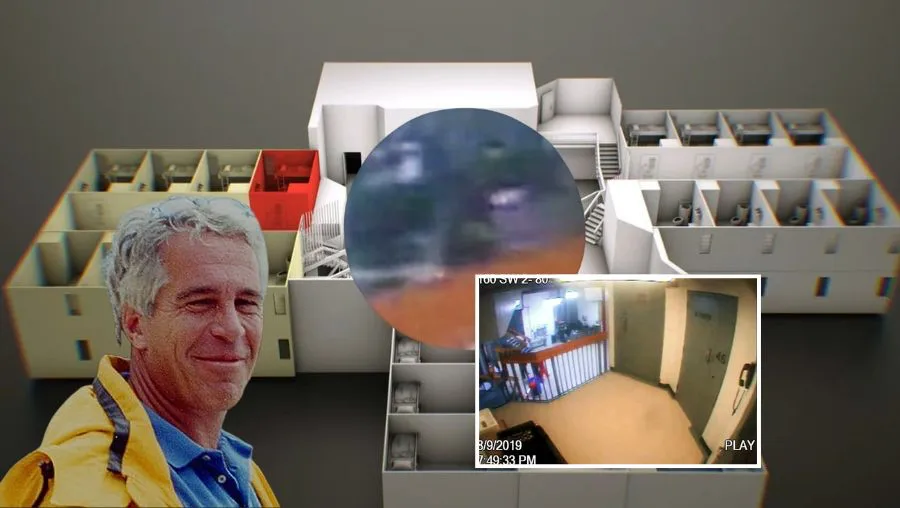
In the days after the death of Jeffrey Epstein, something unfolds at the Metropolitan Correctional Center in Manhattan that even experienced officers cannot make sense of. While an internal review officially begins, large amounts of documents are being destroyed in the background. Bags filled with shredded files are brought to the rear gate of the prison and thrown into containers. An inmate who has to transport these bags describes the quantity as unusual. “They are shredding everything,” he tells a guard. One of the men instructs him to also retrieve a specific box.
On August 16, 2019 at 6:28 p.m., a correctional officer called the FBI hotline to report shredded documents.

An officer from the Metropolitan Correctional Center in New York reports that unusually large amounts of shredded documents were removed from the prison and thrown into containers. The destruction takes place at exactly the moment when an internal team is supposed to investigate the death of Jeffrey Epstein. Several inmates are used to carry the bags of shredded documents to the rear exit and dispose of them. It is not a matter of individual bags, but of a noticeable volume that even experienced staff classify as unusual.
An inmate reports that the internal investigation team itself is destroying large amounts of documents. The situation appears contradictory because this very group is supposed to clarify what happened in the prison.
It does not remain with this observation. A correctional officer contacts the FBI on August 16 at 6:28 p.m. and reports that he has never seen such a quantity of destroyed documents. Another officer records in an internal memo that this procedure appears inappropriate and should be investigated. There is still the possibility to secure the trash. An investigator writes that the container should be checked as quickly as possible. But when someone reacts, it is too late. The waste is collected that same morning.
At the same time, another problem emerges. Documents that investigators have requested are missing. These are so called count logs of the prison for the time before August 10, 2019. These documents are considered central because they show when prisoners were checked. These records in particular can no longer be found.
The events do not remain limited to a single incident. Several investigations are initiated. One deals with Epstein’s death itself. The official determination is suicide by hanging, made by the then chief medical examiner Barbara Sampson. The forensic pathologist Michael Baden disagrees. He sees in the injuries to the neck and the hemorrhaging indications that are more consistent with strangulation than with suicide.
Alongside this investigation, two additional proceedings are underway. One focuses on possible obstruction of justice through the destruction of documents. The other concerns a case in which a correctional officer is alleged to have pressured a visitor into sex in exchange for leniency. Both proceedings are connected to the environment of Epstein’s death, without it becoming clear why they were combined.
It is also notable how jurisdiction shifts. Initially, the case is with the FBI as a criminal investigation. Later, the Office of the Inspector General takes over. This authority cannot bring charges itself, but must forward its findings. Why this change occurs remains unclear.
From the beginning, the direction is set. On the very day Epstein is found dead, then Attorney General William Barr speaks of an obvious suicide. A few days later, Sampson confirms this assessment. With that, the case is not treated as a possible crime scene. The cell is not comprehensively examined forensically. Important evidence is not secured. Even the material with which Epstein is said to have hanged himself is never clearly identified.
See also our articles: The release of new Epstein files confirms our investigation – Death in Cell 9 – Anatomy of an incident that never was an accident?
Epstein’s Death - The Pathologist Who Disputes the Official Finding
There were already indications beforehand that raised questions. On July 23, only a few weeks before his death, Epstein is found unconscious in his cell. He initially states that his cellmate Nick Tartaglione attacked and threatened him. Later he says he cannot remember. Authorities classify the incident as a suicide attempt.
The statements of inmates and officers after Epstein’s death also remain unclear. The inmate who disposes of the shredded documents is questioned. The interview lasts 15 minutes. The questions can be answered with yes or no. He states he knows nothing. He says he wants no trouble and just wants to do his job.

During questioning, a correctional officer, Michael Thomas, is repeatedly asked whether he or others removed or destroyed documents from Epstein’s file.
He answers consistently:
- He knows nothing about it
- He removed nothing himself
- He does not know where the file is kept
The officer denies any involvement or knowledge of missing or destroyed documents.
The officer who reported the incident describes in more detail what he saw and heard. He describes a man with a southern accent who apparently does not belong to the regular staff. He suspects that these are members of the internal investigation team. Nevertheless, the case is closed shortly afterward. There is no evidence, it is said. An anonymous letter from another officer suggests that there is mistrust within the agency. The author writes that he has no confidence that the responsible body is examining the events independently. There are no indications that the destruction of the documents was pursued further.
Financial irregularities also remain without visible consequences. Bank records of one of the officers on duty, Tova Noel, show several large cash deposits that are classified as suspicious by her bank. Some of these deposits fall within the period when Epstein is in prison. A clear classification of these events by investigators does not follow.

An FBI document notes that the bank JP Morgan Chase filed a suspicious activity report regarding unusual money movements. The focus is on Tova Noel, one of the correctional officers in the prison where Jeffrey Epstein was held.
According to the report, several cash deposits were recorded on her account, a total of twelve transactions within a certain period. The bank classifies these deposits as unusual and reports them to authorities.
The matter is officially handled in connection with the investigation into Epstein’s death.
In the end, many individual points remain that are not brought together. Documents disappear. Evidence is not secured. Leads are recorded, but not pursued. Proceedings are opened and then closed again.
What remains is not a clear sequence, but a series of gaps. And the conclusion that a case of extraordinary significance was never fully investigated.
Updates – Kaizen News Brief
All current curated daily updates can be found in the Kaizen News Brief.
To the Kaizen News Brief In English


Das stinkt doch zum Himmel 🤬
…aber gewaltig, doch sind wir da mit den recherchen sehr weit fortgeschritten
Eines gleich vorweg. Wer war zu diesem Zeitpunkt Präsident der Vereinigten Staaten?
Ganz genau, es war Trump.
Was da innerhal kürzester Zeit vernichtet, nicht untersucht und dokumentiert wurde, stinky wirklich zum Himmel.
Da braucht dazu kein Verschwörungstheoretiker zu sein, um zu sehen, dass es sich um eine groß angelegte und tiefgteifende Vertuschungsaktion handelt.
Bewundernswert, wie Ihr da immer noch Belege findet und ein faktenbasiertes Bild zeichnen könnt.
Hut ab!
…das wirft die fragen auf, denen wir bereits lange nachgehen