
While missiles strike and drones hit infrastructure, there is parallel talk about negotiations that officially do not exist. Karoline Leavitt states from the White House that negotiations will not be conducted through the press, everything is in motion and nothing has been decided. That is exactly the point where this conflict currently stands. Donald Trump speaks of productive contacts with Tehran, Iran rejects that, at the same time talks, calls and exploratory efforts are taking place through multiple channels. Pakistan offers itself as a host, Shehbaz Sharif calls possible talks “significant and final,” China urges that every opportunity for peace be used, Wang Yi speaks by phone with Abbas Araghchi. Egypt, Oman and several Gulf states are simultaneously trying not to let the diplomatic thread completely break. It is a situation in which everyone is talking, but no one confirms anything, and that is exactly why everything remains open.
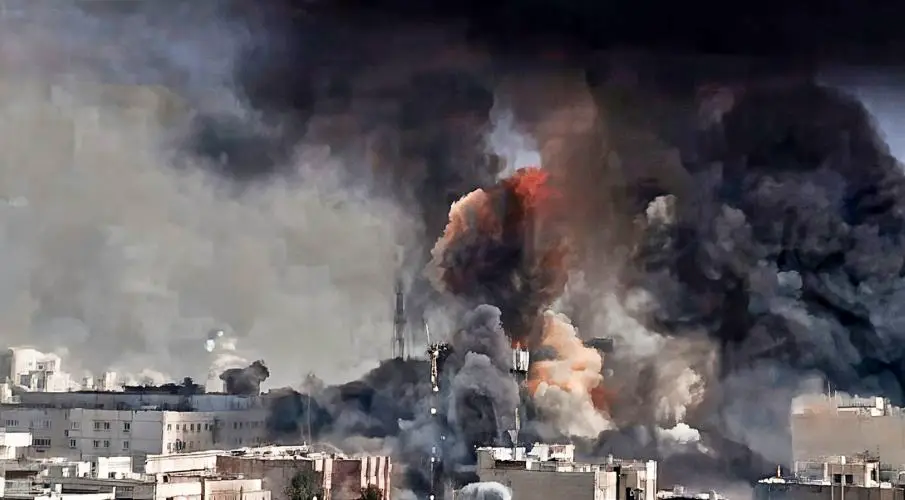
While these talks continue in the background, the situation visibly intensifies. In Tehran, attacks on the city continue, Israel reports further waves of strikes on production sites, Iran responds with repeated missile attacks. Ten waves of attacks in a single day, impacts in southern Israel, injuries, including a baby. In Tel Aviv, a warhead with around 100 kilograms of explosives hits a residential area, buildings damaged, people in the rubble. At the same time, other countries are being drawn in more and more. Bahrain is attacked with missiles and drones, a civilian contractor from the United Arab Emirates is killed, several people are injured. In Iraq, militia members are killed in airstrikes, in Lebanon rockets are intercepted, impacts damage houses. Israel openly threatens to destroy entire towns in southern Lebanon and to control a security zone up to the Litani River. Lebanon responds politically and expels the Iranian ambassador. The front lines can no longer be clearly drawn, the war has fully engulfed the region.
At the same time, it becomes clear how far the effects already reach. In Bahrain, data centers are disrupted by drone activity, Amazon has to relocate systems. In the Philippines, a national energy emergency is declared because supply chains are coming under pressure. Attention turns to the Strait of Hormuz, through which one fifth of global oil trade flows. Iran maintains control, allowing only individual ships to pass, two Indian tankers get through, closely along the coast and apparently with permission from Tehran. Narendra Modi speaks with Donald Trump, calls for deescalation and emphasizes that this route must remain open. At the same time, oil prices rise again after short term hope for talks had calmed the markets. Brent is again above 100 dollars, stock markets give up gains, the S&P 500 falls, Nasdaq more sharply. The markets react faster than politics.
And above all stands Iran’s military posture, which leaves no doubt. General Ali Abdollahi Aliabadi states that they will fight until “complete victory,” without saying what that specifically means. This statement comes at exactly the moment when possible negotiations are being discussed internationally. It is a clear message internally and externally. At the same time, Iran replaces key figures, appointing Mohammad Bagher Zolghadr as the new secretary of the security council after the death of Ali Larijani in an airstrike. The system stabilizes itself while it is under attack.
What remains is a picture without a clear direction. Diplomacy exists, but in the shadows. Military escalation is open and visible. States try to mediate while others harden their positions. Civilians stand between the front lines, whether in the West Bank without shelters or in Bedouin communities in southern Israel, where even simple structures are hit. The question is no longer whether talks are taking place, but whether those talks can still take hold in time. At the moment, both are happening simultaneously – war and negotiation – and neither has control.
Updates – Kaizen News Brief
All current curated daily updates can be found in the Kaizen News Brief.
To the Kaizen News Brief In English


