
In the detention facilities of the U.S. immigration authority U.S. Immigration and Customs Enforcement, a quiet but dangerous situation has developed. Since October 3, 2025, the agency has stopped paying external medical providers for the treatment of detainees. Not because of a lack of funds, but due to an administrative breakdown whose consequences have now become dramatic. Bills are left unpaid, treatments are postponed or denied, people are left without care. The starting point is clear. The number of migrants in ICE custody has risen sharply during the second Trump administration, from under 40,000 in early 2025 to more than 73,000 today. The law obliges ICE to ensure necessary medical care. In practice, this is often provided through external doctors, clinics and pharmacies, because many detention centers have no in house medical infrastructure. The detention facility in Buffalo, for example, holds more than 500 people and has neither a physician nor a dentist.

During an unannounced inspection of the ICE detention center Buffalo in Batavia, New York, the oversight office of the U.S. Department of Homeland Security (DHS OIG) identified significant deficiencies. The inspection took place from September 10 to 12, 2024, and the report was published on June 3, 2025. While the facility’s staff complied with many formal requirements of the applicable detention standards - including housing, food service, basic medical care, access to legal counsel, recreation for the general population and the voluntary work program - clear violations were found in central areas. Inspectors documented an inappropriate use of force as well as two additional cases in which staff resorted to immediate physical force even though de escalation would have been possible. Communication with detainees also proved problematic: requests were sometimes answered late or not at all, grievance logs were incomplete, deadlines were exceeded. Even the responsible grievance committee did not consistently adhere to the prescribed review periods.
Particularly serious are the deficiencies in the so called Special Management Unit. There was a lack of basic equipment for recreation, detainees of different classifications were housed together, and fundamental information rights were violated. Affected individuals could neither hear nor read the mandatory orientation video because audio and subtitles were missing. In addition, identification wristbands were in some cases illegible or not worn consistently. Another structural problem concerns medical care. Vacant positions for a full time physician and a dentist led to waiting times of several months. At the time of the inspection, more than 20 detainees were waiting for dental treatment, for up to five months. In addition, there was a backlog of around 150 specialist appointments that had been postponed into 2025. In total, the oversight body issued ten specific recommendations - ranging from stricter rules on the use of force to improved grievance procedures and the rapid filling of key medical positions. ICE formally agreed to all recommendations. Two are now considered resolved, but the majority remain open. The report shows that despite formal compliance with standards, detention operations in Buffalo exhibit systemic weaknesses that have direct effects on the rights and care of detainees.
Despite this, no bills have been paid since early October. ICE only recently published a notice on a little known government website stating that the processing of medical claims will not begin before April 30, 2026. Until then, all claims are to be held back. For many providers, this means months without payment. For detainees, it means: no appointments, no referrals, no medication.

The health authority IHSC has announced the launch of a new external billing system. Responsibility will now lie with the third party provider Acentra Health, whose central information page has been online since January 13. Through the new portal, updates, frequently asked questions and provider access are to be offered in the future. At the same time, IHSC states that actual claim processing is expected to begin only on April 30, 2026. Until then, all providers are to hold back all claims. The authority justifies this with the ongoing technical rollout of the new system.
The notice makes clear that the restructuring of the billing system will take several more months. For physicians, pharmacies and other medical providers, this means an extended transition period without regular submission of claims - with potential consequences for cash flow and care processes in facilities under the responsibility of the Immigration Health Service Corps.
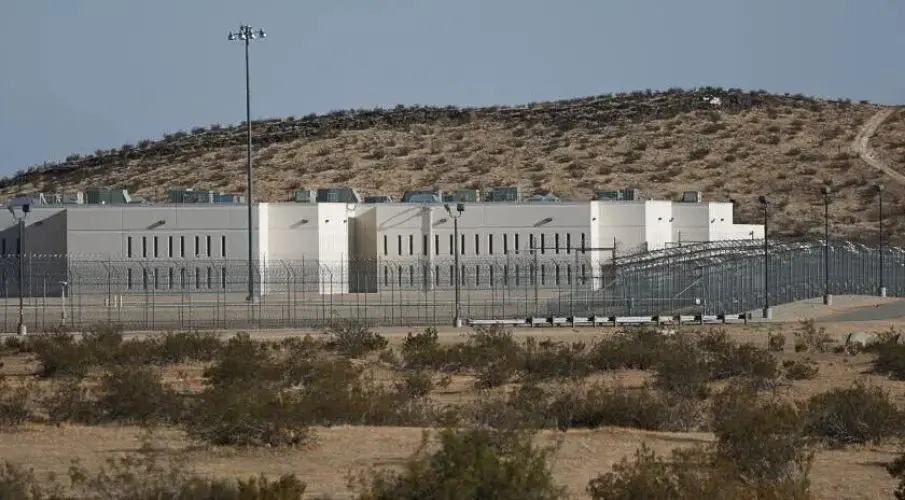
Our investigations show that some providers have already stopped treating ICE detainees. In other cases, services are being denied directly by the agency. ICE itself has not commented so far. At the same time, complaints from detainees with serious illnesses are increasing. One particularly serious case involves Viera Reyes, who is being held at the California City detention facility. His symptoms and tests point to prostate cancer. Nevertheless, a necessary biopsy has so far been denied. Without this examination, there is no diagnosis, no chemotherapy, no treatment. Reyes is one of several detainees who are suing over inhumane detention conditions.

An internal procurement document of the U.S. immigration authority ICE classifies the failure of medication supply for detainees as an “absolute emergency”. The paper explicitly warns that without the immediate restoration of so called PBM support, life saving prescriptions could be delayed or not filled at all. The consequence would be acute health risks up to and including loss of life.
The document makes clear that ICE must immediately resume supply in order to ensure a functioning mechanism for procuring medications. Otherwise, further medical complications for detainees are imminent. Particularly explosive: pharmacies could refuse new prescriptions or stop dispensing necessary medications if payments do not resume. Existing payment delays would undermine providers’ trust and further reduce their willingness to cooperate.
The internal assessment paints a clear picture of a system on the brink of collapse. Medication supply, a central component of medical care in ICE facilities, is described in the paper itself as critical to the entire detention operation. The memo shows that the agency was aware of the life threatening consequences of its own supply problems - and that swift action was considered absolutely necessary.
The cause of the crisis does not lie in medical incompetence, but in political decision making. Since 2002, the U.S. Department of Veterans Affairs had assumed a central technical role. When ICE required external medical services, the Veterans Affairs Financial Services Center handled the billing. ICE paid for this, veteran funds were not touched. The system worked.
From 2023 onward, this arrangement came under political attack. Right wing politicians and media falsely claimed that veterans were being disadvantaged in favor of migrants. Senator Tommy Tuberville took up the issue and spoke publicly of alleged abuse. After the election of Donald Trump, the debate initially faded, until at the end of September 2025 a small civil rights organization filed suit to obtain documents on the role of the Veterans Affairs Department.
Shortly thereafter, the department abruptly terminated cooperation with ICE. According to internal government documents, this happened without a transition solution. ICE itself stated that it suddenly no longer had any mechanism to procure medications or pay for life saving external treatments. Dialysis, prenatal care, cancer treatments and chemotherapy were named. Internally, the situation was described as an absolute emergency, with warnings of further medical complications and deaths. More than three months later, this emergency has become daily reality. ICE attempted to contract a private provider to replace the former system. The company Acentra, however, stated that it would not be operational before the end of April. Even then, initial bills would likely not be paid until the end of May. In the meantime, the Veterans Affairs Department is apparently examining whether it can temporarily resume billing to prevent worse outcomes.
The numbers show the scale. In 2024, the Veterans Affairs Department processed medical services for ICE detainees worth around 246 million dollars. In 2025, it was just over 157 million, even though the average daily detainee population increased by more than 80 percent. Extrapolated, there is a gap of nearly 300 million dollars between necessary care and actually paid services. This gap represents untreated illnesses, denied appointments and postponed therapies. Even before the payment stop, an investigation by Senator Jon Ossoff documented 85 credible cases of medical neglect, including heart attacks after days of untreated chest pain, severe complications from diabetes and denied medication. Since October, this situation is likely to have worsened further.

In 2025, we managed to obtain undercover footage from the notorious Krome detention center in Miami - see article: Hell on Earth – The Krome Deportation Center in Miami
What becomes visible here is not an administrative error, but a structural failure with foreseeable consequences. People in state custody are effectively being cut off from medical care, even though funds are available and the legal obligation is clear. The question is not whether this policy will backfire, but when.
Updates – Kaizen News Brief
All current curated daily updates can be found in the Kaizen News Brief.
To the Kaizen News Brief In English


Ich weiß nicht, wie oft ich noch wiederholen muß, wie unmenschlich die USA geworden sind…
…in diesen ausmaßen hat niemand mit gerechnet
So lange die Lüge geglaubt wird, dass Veteranen aufgrund krimineller und illegaler Migranten medizinisch benachteiligt werden und keine Gelder für umfangreiche medizinische Versorgung da ist, so lange wird MAGA diese unmenschlichen Haftbedingungen mit den Worten „selber Schuld, wer illegal her kommt und kriminell wird“ feiern.
Entmenschlichung von „den kriminellen Migranten“.
Fakt ist, dass die Veteranenbehörde schon seit Jahrzehnten unterbesetzt und mit einem viel zu kleinen Budget arbeiten muss.
Seit DOGE hat sich das nochmaverschärft.
Schuld sind dann natürlich die „Anderen“ für MAGA. Nicht ihr toller bester Präsident ever.
MAGA ist es egal ob die Menschen da leiden, keine medizinische Versorgung erhalten.
Es kommen leider oft Aussagen wie „sollen sie krepieren, dann kosten sie nichts mehr“ 😟😟😟
Nazideutschland und ihre Konzentrationslager.
Anders kann man es nicht mehr nennen.
Kontrollen nur noch nach Voranmeldung (gegen geltendes Recht), damit man einen kleinen Teil aufhübscht und die Gefangenen instruiert alles zu Loben.
Das ist noch nicht das Ende der Fahnenstange … es wird wahrscheinlich noch schlimmer.
… ja, leider ist die spitze noch nicht erreicht
Und im krassen Gegensatz „March of life“.
Angeblich zählt JEDES Leben…. nur nicht, wenn es Personen in Detention Centern sind.
Deren Leben verdient offenbar keinen Schutz.
Verlogene Bande