
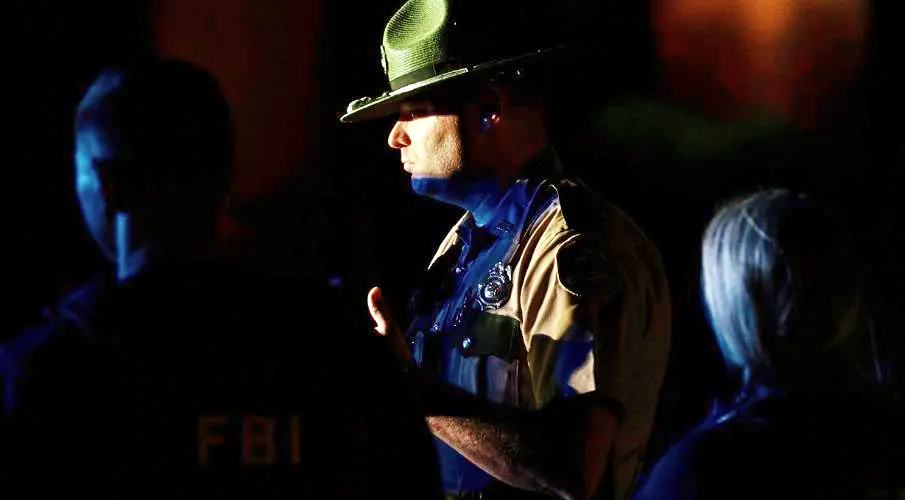
More than 3,000 arrests in just two months. 3,091 adults between October 1 and November 28, carried out by the Memphis Safe Task Force. Of these individuals, only 169 appeared to be white. That is roughly six percent. The rest - 2,879 people - visibly did not belong to the white population group. These figures come from the systematic evaluation of Task Force situation reports, in which nearly every arrested person was documented with a photograph. Four days - October 16 as well as November 12, 16, and 19 - were not available. 30 arrests without photos and 13 individuals who could not be clearly classified were excluded from the analysis. In the end, 3,048 cases remained.

In Memphis, police and ICE operate according to the principle of racial profiling; arrests and harassment directed at non-white individuals are strikingly high there. But the same approach has been documented in other areas as well, as investigations have shown.
When these figures are placed in relation to the city’s population structure, the picture sharpens. According to the census, Memphis has 610,919 residents, including 152,730 white and 458,189 non-white residents. The per capita arrest rate amounts to 1.11 arrests per 1,000 white residents and 6.28 per 1,000 non-white residents. That yields a ratio of 5.66 to 1 - rounded six to one. Non-white individuals were therefore arrested almost six times as often as white residents in the first two months.

Among the 169 individuals classified as white, 110 arrests were carried out on the basis of outstanding warrants. Another 34 arrests stemmed from traffic stops, including twelve cases in which outstanding warrants were discovered during the stop. A further 37 arrests – including eight for driving under the influence – were not explicitly linked to a traffic stop. From our perspective, the reality is straightforward: “When there is an outstanding warrant, there is no discretion. It does not matter whether someone is Black, white, or pink – the person is taken into custody. Discretionary decisions apply to arrests made without a warrant and without a serious offense.” That is precisely where the critical point lies.

For years, studies have shown that black drivers are stopped more frequently and their vehicles searched more often than white drivers - even though statistically they are less likely to carry illegal weapons or drugs. Johnson puts it clearly: “The moment an officer makes a stop, discretion begins.” And that discretion does not exist in a vacuum. In Memphis, a city with a long history of racially unequal law enforcement, context is not incidental.

The Task Force is coordinated by the U.S. Marshals Service. A concrete response to the figures was not provided. In a general statement, it was said that there is “no greater success than the Memphis Safe Task Force in the fight against crime.” The accusation that population shares are being ignored is a “misleading and irresponsible simplification” that produces “false narratives.” But the six to one ratio is not a feeling. It is a calculation: number of arrests divided by population share, multiplied by 1,000.

Shelby County Mayor Lee Harris calls the numbers “breathtaking,” though not surprising for a system that already showed significant imbalances before the Task Force. He criticizes that the unit is pushing the city toward “our worst impulses in the administration of criminal justice.” Particularly troubling is the rhetoric from Washington, where officials reportedly signaled to local authorities that they were “unleashed.”

The analysis itself was conducted by reviewing more than 3,000 photographs, each assessed by at least two people. Where images were unclear, additional publicly accessible photos were consulted. Classification was made purely visually, without consideration of names or background. This is also how many justice systems effectively operate when assigning race. 13 individuals could not be clearly classified and were not included in the calculation. Even if they were counted as white, the share of white arrests would remain around six percent. The problem is not only the number, but the absence of data. The Task Force does not publish its own demographic statistics. Without systematic collection, only external evaluation remains. Johnson says transparency would be the simplest way to build trust. Instead, the focus remains exclusively on enforcement.
In Memphis, the memory of Tyre Nichols is still fresh. Johnson warns that traffic stops could once again become pretexts - minor violations serving as gateways for broader interventions. Such a stop begins with a broken taillight and ends in handcuffs. Who is stopped is not determined solely by the law, but often by an officer’s perception.

Tyre Nichols was brutally beaten by several police officers during a traffic stop on January 7, 2023, in Memphis, Tennessee. The officers belonged to a specialized police unit.
After the stop, there was a pursuit, followed by massive violence: Nichols was punched, kicked, and struck with a baton. On video footage - including from a so-called pole cam - he can be heard calling for his mother while officers continued to strike him.
He suffered severe head injuries and died three days later in the hospital. The official cause of death was later classified as a result of the beating.
Five officers involved were dismissed and criminally charged. The case sparked nationwide protests and once again led to a debate about police violence, so-called pretextual stops, and structural problems in the U.S. justice system.
Whether the high number of non-white arrests is due to targeted discrimination or structural patterns cannot be conclusively determined without more detailed data. But a six to one ratio cannot be argued away. It is an imbalance that at the very least must be explained. Memphis is once again confronted with an old question: does enforcement serve public safety - or is a net being cast in which certain segments of the population are far more likely to be caught.
If in Memphis 94 percent of those arrested are non-white, that is not a minor detail, but an alarm signal. If in Minneapolis two people die during protests against deportations. If in Dilley, Texas, children sit behind fences and we know their letters and their faces. Then we are not talking about administration, but about a policy that acts with maximum force and knows exactly whom it hits. And if in Germany a party like the AfD elevates “remigration” to something quasi divine, appears with ICE fantasies and markets mass deportations as a model for the future, then that is a major danger to society. Whoever elevates state authority to a political program also bears responsibility for its consequences. And for exactly that reason we stand against it, investigate, document, support, and help the victims - because Europe is not far away.
Updates – Kaizen News Brief
All current curated daily updates can be found in the Kaizen News Brief.
To the Kaizen News Brief In English


Der Süden der USA ist leider größtenteils rassistisch geblieben.
Man verehrt die Südstaatenregierung/Kavallerie. Schwarze sind immer noch massiv benachteiligt.
Wahrscheinlich wünschen sich rund 50% der weißen Südstaatler die Rassentrennung und Einschränkung anderer Rechte für Farbige zurück.
Ich muss immer wieder an den Film Hidden Figures denken.
Hervorragender Film!
Bedauerlicherweise hat der Supreme Court das Racial Profiling gestattet.
Wie ein Schwarzer Richter dafür stimmen konnte, ist mir ein Rätsel.
Nur aufgrund solch mutiger Frauen und Menschen wie Martin Luther King sitzt er überhaupt dort.
Traurig, wie man das -wofür auch immer- verrät.
…ja, grade tennessee geht ab, aber auch 3-4 anderer im süden, mittelalter