
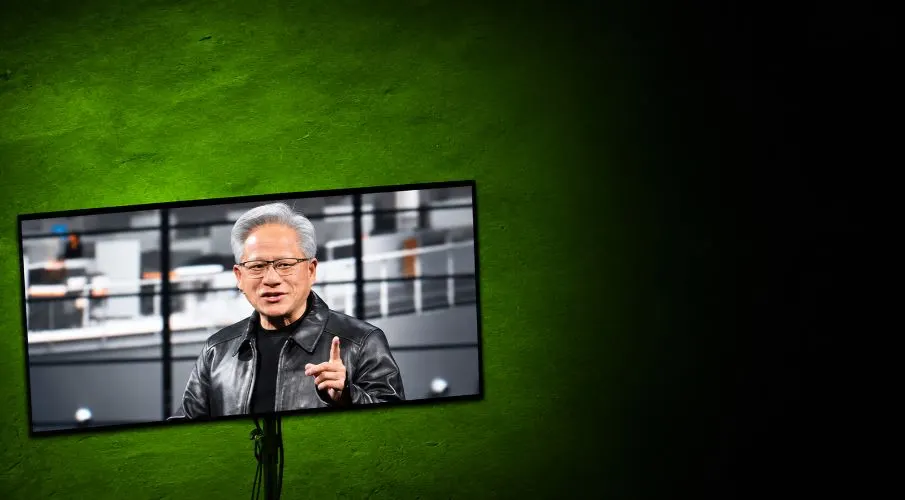
On Thursday, Jensen Huang stepped down as Nvidia's CEO. By Sunday, his allies were already discussing how to get him back in the job. Supporters in Silicon Valley even want to enlist the White House in their efforts. In these circles, a resignation apparently counts as temporary as long as enough influential friends object. Meanwhile, where advanced American computer chips ended up remains under investigation.
Huang has reportedly spoken with confidants about taking over the company again. One of his supporters said they were putting together a full-fledged war room, where leading figures from the tech industry would campaign for his return. They also want to seek help from the White House. Huang has given the plan his blessing. Meanwhile, Nvidia's board is searching for a successor and has already reached out to Rene Haas, CEO of British chip designer Arm. Chief Financial Officer Colette Kress is running Nvidia on an interim basis. Before a new CEO has even been found, the old one is already being lined up for a comeback.

The crisis was triggered by reports of Huang's extramarital affairs, including his relationship with Alice Huang, whom U.S. security officials suspected might be a Chinese spy. Reports of additional relationships involve Nvidia vice president Kimberly Powell and another employee. Personal misconduct can become a problem for a company. Here, however, the affair reaches all the way into U.S. export restrictions and the question of who profited from potentially illegal chip deals.

Singapore-based Megaspeed International is one of Nvidia's customers and business partners. The company is suspected of routing large quantities of these chips through intermediaries to Chinese businesses. On Sunday, Megaspeed said Alice Huang had left the company on August 30, 2025, and no longer held any position there. Outside lawyers had been hired to conduct an internal investigation. Its business was legitimate, the company maintained, and the allegations lacked verifiable evidence. Megaspeed did not address the specific accusations.
Corporate records show just how early Alice Huang disappeared from the company on paper. Whether she actually gave up control is another matter. The company was established in 2015 as 7Road International, the overseas arm of a Chinese video game developer. In March 2023, it was renamed Megaspeed, and its shares were transferred to Huang Le Limited in the British Virgin Islands. Alice Huang also goes by the Chinese name Huang Le. By November 2023, she was no longer listed as a director, and her shares had been transferred to a company owned by Singaporean businessman Tan Yong Pong, also known as James Tan. Yet in a report published in May, an employee still described her as the real boss who ran the day-to-day business.

The company's financial records contain the more striking numbers. Within a single year, from the end of 2023 to the end of 2024, Megaspeed's reported assets climbed to nearly $3 billion. They had increased roughly 90-fold. Such a jump does not prove a crime. But anyone asking where the servers went will also want to understand how they were financed. Ownership can easily be transferred on paper. The shipments can still be traced.
Singapore's police and customs authorities have been investigating possible false declarations involving the purchase of server equipment since February 2025. On June 24, 2025, authorities questioned Alice Huang and retained her passport. In February 2026, police found insufficient evidence that Alice Huang had committed a crime in connection with the possible false declarations under investigation. Investigators did, however, establish that Huang had knowingly provided inaccurate information to downplay her position at Megaspeed. She received a stern warning and a ban on entering Singapore. Her passport was returned. Investigations into Megaspeed and other individuals are continuing.

Read also our articles: The Man Who Had Trump's Ear: An Alleged Chinese Spy, Two Affairs, and the Looming Downfall of Nvidia's CEO
U.S. Attorney General Todd Blanche said his department had not determined whether Alice Huang was a Chinese spy. Donald Trump was equally noncommittal, while Beijing rejected the allegations. Treasury Secretary Scott Bessent, however, is concerned with a different question: Did Nvidia take U.S. export restrictions seriously, or were questionable sales potentially encouraged to boost revenue and profits? He is calling for a sweeping leadership shake-up and a new CEO from outside the company. Nvidia is also expected to answer questions about its compliance with export regulations within ten days.
Megaspeed insists it has cooperated with the relevant division of the U.S. Commerce Department. That is more useful to investigators than the public fascination with Huang's love life. The shipping routes under investigation ran through Singapore to Malaysia. Whether the servers were then forwarded elsewhere, contrary to the declarations, remains under investigation. Singapore also complained about inadequate cooperation from U.S. supplier Supermicro.

Huang's prominent supporters are nevertheless pushing for his return. Elon Musk and video game entrepreneur Tim Sweeney have also publicly spoken out in favor of bringing him back. The board will decide the outcome. The U.S. government is demanding answers about export controls, while influential friends want to restore the former CEO to power. The proceedings remain open. Yet work is already underway to restore the old power structure, as though the investigation were merely an annoying appointment on the calendar.


