
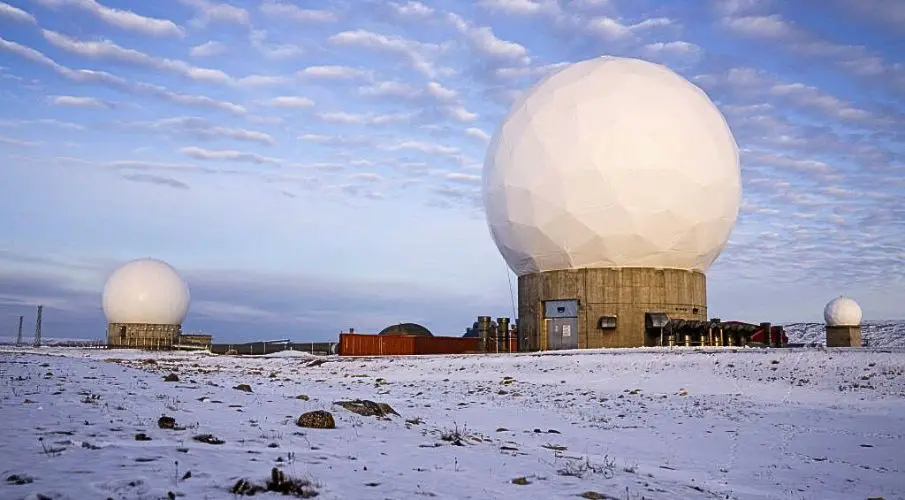
Between Washington, Brussels, and Copenhagen, descriptions of the same situation have now diverged so widely that they can no longer be explained by differing perspectives. President Trump speaks of an insecure island, of strategic necessity, of China and Russia as looming threats. Security agencies, military officials, and diplomats on both sides of the Atlantic say the opposite. There is no credible evidence of an acute threat to Greenland. No intelligence warnings. No military preparations that would suggest an impending escalation.

The origin of this narrative lies far in the past. More than a decade ago, a Chinese research icebreaker crossed the Arctic for the first time. The voyage demonstrated one thing above all: the ice is melting faster than expected. It was scientifically relevant, politically observed, but without security consequences. China has since spoken about trade routes, resources, and long term interests, but has built only a limited presence. Russia has been an Arctic actor since the Cold War. Both are known, calculable, and embedded in existing structures. Greenland is under NATO protection. Should the situation change, clear agreements are in place.

The United States could expand its military presence at any time without touching questions of sovereignty. Denmark has signaled this repeatedly. Historically, this would be nothing new. During the Cold War, tens of thousands of U.S. soldiers were stationed there. Today there are a few hundred. The infrastructure exists, the legal framework is clear.

Denmark is withdrawing troops from other deployment areas in order to relocate them to the defense of Greenland, while at the same time asking allied states for additional forces.
What is missing is evidence. Neither in internal conversations nor in public appearances has any intelligence material ever been presented that would suggest Chinese or Russian attack intentions. Former analysts who reported directly to Trump say openly: if such information existed, it would long since be known. Instead, it remains a series of claims that evade any verification. Militarily, the picture makes no sense either. China is focused on the Indo Pacific region. Russia has Arctic capabilities but poses no immediate threat to Greenland. Neither of these states needs the island to gain strategic advantages over the United States. Even critics of Moscow and Beijing see no cause for alarm here.

The real effect appears elsewhere. Trump’s push places massive strain on relations with Europe and with close allies. In Brussels, the demand was understood as an attack on a foundation that has shaped the continent since World War II: borders must not be changed against the will of those affected. This principle is not a legal technicality. It is the lesson of a century of devastation. In Davos, Europe reacted with unusual unity. The European Union and NATO demonstratively backed Denmark and Greenland, announced economic countermeasures, and made clear that territorial questions are not negotiable. When trade talks were frozen and extensive counter tariffs prepared, markets reacted as well. Shortly afterward, the tone from Washington became more cautious. Threats turned into offers of talks. Ultimatums into framework language. In this phase, the United Kingdom also stepped forward more clearly. Keir Starmer had initially opted for restraint. Closeness, it was hoped, could prevent escalation. That calculation did not hold. Despite cautious outreach, London faced new tariff threats, public disparagement, and attempts to politically instrumentalize British decisions in other regions of the world.

Grönland - and every means was justified
The unverified letter describes an alleged desire on the part of the Greenlandic government for a significantly closer political, economic, and security alignment with the United States. It raises the prospect of a possible separation from Denmark and announces an intention to pursue a referendum on this as quickly as possible. Deeper integration into the US sphere of influence is presented as strategically decisive for Greenland’s future. At the same time, the letter makes clear that concrete projects are already accompanied by financial difficulties and that additional US funds are required. Overall, the letter portrays a picture in which there has allegedly been open discussion within the Greenlandic government for years about dependencies on Washington and a fundamental political shift.
According to the current state of research, the alleged letter cannot be attributed to any state institution in Greenland. Instead, it displays the typical characteristics of a targeted influence operation. A named author is not known, but form, tone, and placement follow familiar patterns: the use of real names and official letterheads, the sharpening of politically highly sensitive issues, and the deliberate bypassing of formal diplomatic channels. Analyses classify comparable documents as part of campaigns aimed at undermining trust between partners and intensifying existing tensions. The timing in 2019 - initial US moves toward Greenland, strained transatlantic relations, and unresolved questions of sovereignty - provided an ideal environment for this. Choosing Tom Cotton as the addressee increased credibility without necessarily triggering official reactions. Subsequent security assessments explicitly identify the document as a forgery. The aim was therefore not diplomacy, but destabilization - a document constructed to be believed, to provoke political reactions and sow mistrust, without any real decision or formal policy ever standing behind it.
At the latest with the Greenland issue, Starmer drew a clear line. London made clear that it would not support a forced change of borders. This was risky in foreign policy terms and controversial domestically, but consistent. Because it had long since become clear that this was not about individual policy issues, but about a concept of power that treats alliances merely as instruments of pressure. The tone from Washington also resonated inward. In the United Kingdom, political language shifted. Right wing parties and parts of the Conservatives adopted Trump’s simplifications, his sharp contrasts, his readiness to provoke. Starmer came under pressure not only over Greenland, but because foreign policy principles were suddenly portrayed as negotiable.
British Prime Minister Keir Starmer called on Donald Trump to apologize for his statement that NATO troops had not fought on the front lines in Afghanistan:
“I consider President Trump’s remarks to be insulting and, frankly, outrageous.”
Precisely for this reason, the confrontation gained a significance that went beyond the island. It was not about ice, resources, or military bases, but about whether a medium sized state can object without being punished. Starmer did so nonetheless. And he did so publicly. When Trump disparaged European soldiers for their service in Afghanistan, he contradicted him openly and sharply. It was a deliberate break with previous restraint. At the same time, it became clearer what many former government officials are now saying openly. Greenland appears less as a strategic necessity than as a personal project. As something large, visible, possessable. Statements from interviews and internal conversations suggest that this is about significance, about size, about making a statement. The alleged threat from China and Russia appears more like a pretext than a driving force.

This pattern is familiar. In other conflicts as well, security arguments were put forward without being substantiated. In the end, it was about control, about influence, about fixations. Greenland fits into this logic. For Europe, the episode was a lesson. Not because a new danger was identified, but because an old certainty has been shattered. Rules apply only if they are defended. Sovereignty is not a casual term, but a daily decision. In Greenland, in Ukraine, everywhere great powers test how far they can go.
In the end, a sober finding remains. China and Russia do not threaten Greenland. That is what those with access to the relevant information say. The real tension arises elsewhere: from a political project that works with security claims without substantiating them. And from a Europe in which even close allies have learned that consent is no protection - and that a clear no is sometimes the only path left.
*Note to readers:
When the article was uploaded, the summarized translation was mistakenly inserted beneath the letter instead of the journalistic analysis. This technical error has since been corrected. We apologize to our readers. (January 24, 2026, 3:45 p.m. CET) (24. Januar 2026, 15:45 CET)
Updates – Kaizen News Brief
All current curated daily updates can be found in the Kaizen News Brief.
To the Kaizen News Brief In English


Trump behauptet immer, ohne Belege, etwas, was ihm für seine Aktionen von Nutzen sein kann.
Das Muster zieht sich seit seiner ersten Amtszeit durch.
Kanada und UK waren/sind für mich die Highlights in der Grönland Problemstik. Neben den Dänen und Grönländern.
Zurückhaltung hat bei Trump noch nie funktioniert.
Im Gegenteil.
Trump eskaliert, wenn es ihm nutzt.
Weil er zu wenig echten Gegenwind bekommt.
Siehe Venezuela.
Merz und andere Staatspräsidenten eiern lieber rum. Vermeiden konkrete Aussagen.
Dennoch ist das Einfrieren der Zollvereinbarung ein bemerkenswerter Schritt.
Man kann nur hoffen, dass sie nächste Woche nicht gleich wieder einknicken, weil Trump „zurück gerudert“ ist.
Auch das ist Taktik der Trump Regierung.
Worst Case androgen, Reaktionen abwarten, ggf etwas zurück rudern. Dann freut sich die „Gegenseite“, dass es doch „nicht schlimm geworden“ ist.
Eine sehr naive und gefährliche Reaktion.
…absolut richtig analysiert
Was ist denn eigentlich mit den E-Mails die Macron und Rutte an Trump schickte und über die Trump sich lustig gemacht hat?
….da haben wir uns überhaupt nicht groß darum gekümmert, weil es einfach nur das untere niveau von trump aufzeigt, geschichtlich aber nie eine bedeutung haben wird