
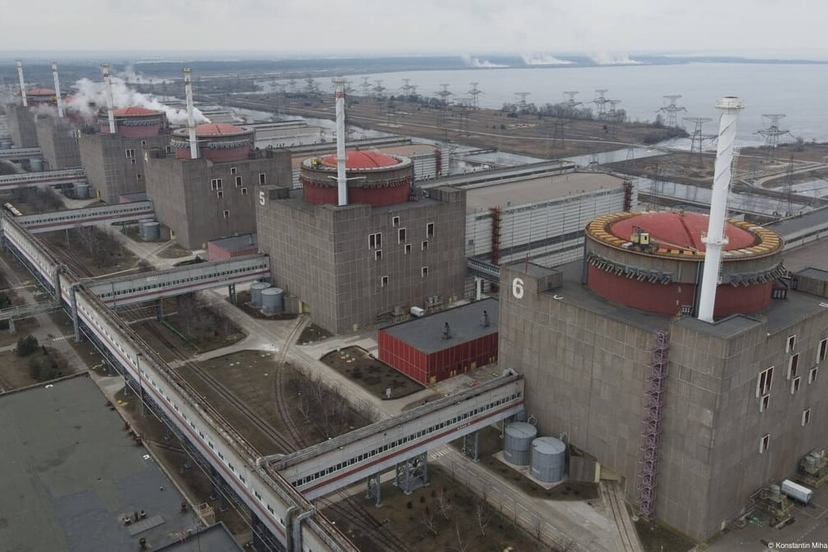
A nuclear power plant doesn't need an operating reactor to become dangerous. All it takes is a failure of the cooling system. At Russian-occupied Zaporizhzhia in southern Ukraine, diesel supplies are running low for the generators meant to prevent a nuclear catastrophe during power outages. Plant management has already ordered fuel-saving measures and changed how the emergency power system operates. Europe's largest nuclear power plant is becoming increasingly dependent on a resource whose supply can no longer be guaranteed in the middle of a war.
Rafael Grossi, director general of the International Atomic Energy Agency (IAEA), described the situation to the agency's Board of Governors on November 18. On November 8, the plant had reportedly lost all external power for the 27th time since Russia launched its full-scale invasion. Emergency diesel generators had to keep the safety systems running for more than 12 hours. Four generators started automatically, but two were later shut down to conserve diesel. The equipment works. But how long it can keep running now depends on dwindling fuel reserves.

A change introduced on September 25 is particularly alarming. Of the plant's 20 diesel generators, only four now start automatically when external power fails. The others have to be started by plant personnel. Previously, every available generator would start on its own. A safety system that requires human intervention during an emergency loses part of its most important advantage: independence from human reaction time. By late October, the IAEA was already warning about low reserves. In August and September, the emergency generators had been needed for almost three weeks. Since March 2026, the agency has received no information about new diesel deliveries to the plant. Although the operating fuel tanks of all generators were reportedly full, overall reserves remained low. Demand will rise further in winter because buildings and technical equipment also need heating.
Before the invasion, Zaporizhzhia had ten external power lines. Just one connection remains, the 330-kilovolt Ferrosplavna-1 line. Even infrastructure that had been repaired following a local ceasefire brokered by Grossi was destroyed again in the fighting. The IAEA is now negotiating a ninth local ceasefire. The goal is to allow repairs to the Dniprovska substation and a severely damaged 750-kilovolt power line. Airstrikes have so far prevented the restoration of this second external power connection before winter.
All six reactors remain in cold shutdown. Even so, the radioactive fuel continues to generate heat. If both external power and the emergency generators fail, the loss of cooling could lead to a severe nuclear accident. Grossi is therefore negotiating with Russia and Ukraine to arrange new diesel deliveries. Meanwhile, the war continues to claim the lives of the very people working to prevent a catastrophe: On November 9, one plant employee was killed in a drone attack, and the following day another employee was killed in an explosion.
The reactors are shut down. The war shows no regard for power lines or the people working at the plant. And the time available to keep the fuel cool in an emergency is now also being measured in liters of diesel.
Updates – Kaizen News Brief
Alle aktuellen ausgesuchten Tagesmeldungen findet ihr in den Kaizen Kurznachrichten.
To the Kaizen News Brief In English


Jeder der Tschernobyl erlebt hat, weiß, was das für eine immense Gefahr das ist.
Ich glaube, dass Putin es sogar darauf anlegt.
Um dann zu behaupten, dass die Ukraine an dieser Katastrophe Schuld ist.
Menschenleben, Umwelt, all das interessiert ihn nicht.
Er hat sein Leben gelebt.
So wird es kommen. Er lebt nach dem Prinzip: Nach mir die Sintflut