
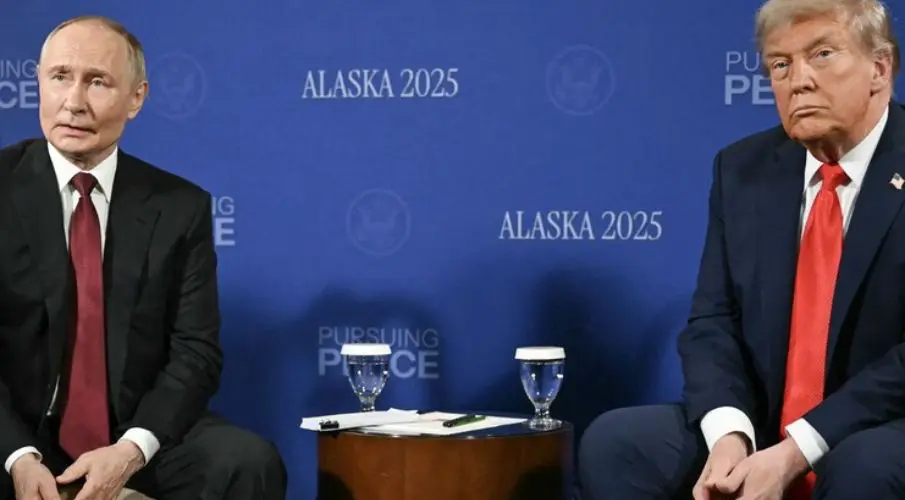
What yesterday still sounded like a diplomatic revival of the Cold War turns out today to be what it was from the very beginning: another bluff from the White House. As early as Monday evening, research had suggested that Donald Trump’s supposedly upcoming meeting with Vladimir Putin in Budapest was never seriously planned. Today it is confirmed: once again, it was nothing but staging - a calculated fog of insinuations, denials, and political theater. A White House spokesman has now officially declared that President Trump has “no plans at this time for a meeting with President Putin.” The same administration that only days ago had deliberately spread rumors of an imminent peace summit in Europe now pretends that no such thing was ever mentioned. What remains is the impression of a foreign policy guided less by strategy than by mood - and that uses the world as a backdrop for its own headlines.
For weeks, officials at the State Department say, communication between Washington and Moscow has taken place through informal channels - through unofficial envoys, lobbyists, and, it is said, old acquaintances from Trump’s first term. The rumor of a Budapest meeting, one diplomat said, was “planted from within to have an effect abroad.” A psychological maneuver, not a diplomatic one. The goal was to stage Trump as a mediator between East and West, as a peacemaker against the institutions - and thus as the man who could accomplish what Biden and the Europeans had failed to do. But the plan collapsed almost as soon as it was spoken. Brussels reacted with irritation, Kyiv with dismay, and Moscow - according to insiders - with a hint of mockery. Putin, the political mathematician, has learned to treat Trump’s impulsive hints as calculation errors. He knows that there is a world of difference between a tweet and a meeting.
Trump’s team wanted to create the impression of new foreign policy momentum, but in fact, the denial from the White House reveals how little strategy lies behind the rhetoric. The pattern is familiar: first a narrative is placed - of the great peace plan that is supposed to “bring both sides together” - then comes the retraction, which relieves the center of power while maximizing public attention. The effect: Trump remains at the center, even when nothing happens. In the corridors of the White House, people now openly say that communication about Russia is being kept “deliberately nebulous.” The goal is to create expectations, not to meet them. Even senior members of the National Security Council apparently first learned of the Budapest plans from the media. One of them told a European colleague it was “like a different weather pattern every day - no one knows what climate will prevail tomorrow.”
This episode fits into a larger picture: Trump’s foreign policy in his second term is a policy of impression, not of structure. It operates through shockwaves, not systems. Today an invitation to Putin, tomorrow a threat against NATO, the next day a denial - every move serves only to preserve the illusion that the president is acting, when in truth he is reacting.
What is particularly striking is that this reversal did not come by accident. It coincided with growing criticism of the chaotic situation in the Middle East, where Vice President J.D. Vance in Israel tried to explain Trump’s policy without understanding it. While Vance remained silent on television because he did not know how to defend a crumbling cease-fire, the White House tried to restore media balance with the Putin rumor. A classic distraction maneuver - the old school of Trumpism: chaos shifts what crisis obscures.
What remains from the Budapest episode is a lesson in power and manipulation. It shows how thin the line has become between diplomatic calculation and public relations - and how the institutions of the state have long since become the tools of a president who never wanted to understand them, only to use them.
“It was never about peace,” says a former national security adviser. “It was about creating the impression that only Trump can make peace. And once the audience applauds, the purpose is fulfilled.” But within this staging lies a dangerous subtext: when the credibility of U.S. foreign policy becomes a prop, words lose their weight - and with them the ability to defuse crises before they escalate.
Europe, which constantly oscillates between hope and shock at Trump’s announcements, is learning what it means to live in a world where truth is only one option among many. So what remains? A president who paints new pictures every day to cover old ones. A Russia that has long understood how to play in this chaos. And a West that fails to realize it is moving within the scenery of its own deception. The truth is simple: there was never a plan. Only the wish that people would believe in one - and once again, everyone fell for it.

Investigative journalism requires courage, conviction – and your support.
Please also strengthen our journalistic fight against right-wing populism and human rights violations. We do not want to finance ourselves through a paywall so that everyone can read our research – regardless of income or origin. Thank you very much!


Aufmerksamkeit, während 7 Mio gegen die Zerstörung der Demokratie auf die Straße gehen, Ablenkung, um Selenskyj auf’s Wartegleis zu stellen und das einzige was ihn interessiert sind „sein Ballsaal“ und demnächst der „Arc de Trump“ 🤢
Europa, die NATO… sie begreifen es nicht.
Anders kann man den Blitzbesuch von Rutte (der Trump leider auch in den Allerwertesten kriecht) nichg erklären … man wolle Trump vor dem Budapest Treffen ins Gewissen reden.
Wacht auf!
Es gibt kein Friedenstreffen und Trump hat kein Gewissen.
Wie oft fallen die Politiker in Europa und der NATO noch auf ihn rein.
Seit 9 Monaten verars*** er Jeden.
Ihm geht es um sich, um sich, viele Deals die ihn bereichern und natürlich die mediate Präsenz mit Applaus.
Mehr liebe NATO und natives Europa kann man aus den USA nicht erwarten.