
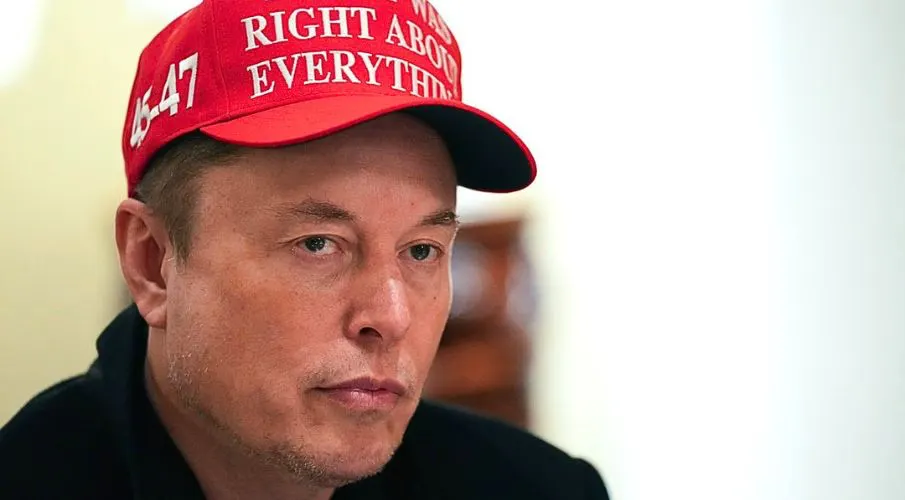
Donald Trump picks up the phone. On the other end is Elon Musk, whose company SpaceX has just restricted technology Ukraine uses to fight off Russian drones. The American president demands that the speed limit be lifted. By Thursday, the military satellite system is working better again. At least partially. What could previously be restricted with the push of a button can apparently be restored just as quickly. In Kyiv, experiences like this must leave an increasingly bitter taste. Decisions about the country's ability to defend itself are being made by people sitting thousands of miles away.

The call took place on Wednesday, October 21. According to U.S. government officials, Trump asked Musk to lift the restrictions on the military version of Starlink. The speed limit of approximately 100 mph had significantly hampered Ukrainian attack drones and interceptor drones. As soon as those aircraft exceeded that speed, they lost their satellite connection. A functioning defensive weapon could suddenly become a useless aircraft, while Russian attacks continued.
American and Ukrainian officials reported improvements on Thursday. According to Ukrainian officials, however, the system had initially not been fully restored to its previous capabilities. Some units reported higher connection speeds, while others continued to experience restrictions. Military expert Michael Kofman of the Carnegie Endowment for International Peace said lifting the restrictions could significantly improve Ukraine's ability to strike military targets farther away and expand its use of jet-powered interceptor drones. Initial reports from Ukrainian units suggested more reliable connections.
The question of who issued the original order remains unanswered. Trump denies asking Musk to impose the restrictions or knowing who was responsible. Musk, meanwhile, pointed out that decisions about military use ultimately rested with the U.S. government. Previous reporting indicates that Musk ordered the restrictions. Whether he acted independently or followed political instructions remains unclear. That uncertainty is precisely what makes this situation so dangerous.

The timing deserves attention. Shortly beforehand, Trump and Musk had publicly criticized Ukrainian President Volodymyr Zelensky for Ukrainian attacks on Russian diesel refineries. Trump holds those attacks partly responsible for rising energy prices. Just days later, Ukrainian drones lost critical capabilities. A causal connection has yet to be established. Still, the sequence of events demands an explanation that Washington has yet to provide.
Even within the U.S. administration, officials disagree over who has authority. Vice President JD Vance expressed understanding for Musk's reluctance to get involved in a war without clear instructions from Washington. Defense Secretary Pete Hegseth, meanwhile, pointed to the company's terms of service. Secretary of State Marco Rubio also said SpaceX could decide how its technology was permitted to be used. Between these conflicting explanations lies a question of enormous consequence: How much power should a private businessman have over the defense of a country under attack?
Our Further Investigations Lead Directly to Germany
Germany finances Ukraine's access to the Starlink system. That gives the situation an additional political dimension. Germany helps provide communications technology whose availability can be restricted by decisions made outside German jurisdiction. This raises particular questions about what commitments SpaceX is actually required to honor toward governments funding its services. Was the German government informed before the restrictions were imposed? Did Berlin receive any notification at all, even after Ukrainian defense systems had already been affected? What contractual rights does SpaceX have to restrict its services, and what obligations does it have toward Germany? This also raises the question of whether SpaceX had contractual obligations to notify the German government. If SpaceX was required to inform Berlin of such restrictions, it would have to be determined whether the company violated that obligation. The German government should disclose when it learned about the throttling and what contractual rights Germany actually holds. Our investigations have so far uncovered no clear answers. Nor have we received confirmation that the German government knew about the measure beforehand. Our inquiry has so far gone unanswered.

A distinction must be made between the Starlink access financed by Germany and the military Starshield system purchased by the U.S. government. Both rely on SpaceX technology but operate under different contractual arrangements. Which specific services financed by Germany were affected by the recent throttling therefore needs to be established separately. The German government should disclose what service availability guarantees were agreed upon and who has the authority to approve changes to the military communications services being used.
A Test Conducted by Ukrainian Officials Raises Further Questions About the Official Explanations
Ukrainian officials had Starlink devices tested in vehicles traveling through European Union countries. According to Zelensky, the connection continued working there at speeds above 112 mph. Inside Ukraine, however, the connection dropped at approximately 100 mph. The same technology, different geographical limits. Zelensky interpreted the results as evidence of a deliberate restriction. The available measurements weigh against a general technical failure affecting all Starlink devices. They do not, however, establish who ordered the restriction or whether different device settings or contractual conditions played a role. That is precisely why an independent technical examination would be necessary. Ukrainian officials say they have recordings documenting the tests.
We are where, it hurts
Our work doesn't stop at reporting. We investigate and stand by those affected, providing real, hands-on support. None of this is possible without your support.
Another detail adds to the questions. Since March 2026, SpaceX has offered special aviation service plans that allow connections at speeds above 100 mph. The company is therefore familiar with the technical capability to transmit data at higher speeds. That does not automatically mean civilian aviation plans and military Starshield contracts are equivalent. The crucial question concerns the permissions that were configured or changed for Ukrainian devices.
While Washington debates who is responsible, Russia continued its attacks on Kyiv. The latest massive wave of attacks came shortly after Moscow announced its willingness to hold talks with Washington and Ukraine. Ukrainian officials warned that the restrictions could cost lives. Interceptor drones that lose their connection may no longer be able to reach incoming weapons. Senator Richard Blumenthal announced an investigation on Thursday. It will examine the unannounced restrictions and the U.S. Defense Department's dependence on SpaceX for critical satellite communications. The issue has therefore become a matter of American national security as well.
Trump's phone call may have partially eased the immediate crisis. Responsibility for creating it remains unresolved. Germany is paying for technology whose military availability apparently depends on decisions made in the United States. And in Ukraine, nobody is waiting for those responsible to figure out who controls the switch.
To be continued ...
Updates – Kaizen News Brief
Alle aktuellen ausgesuchten Tagesmeldungen findet ihr in den Kaizen Kurznachrichten.
To the Kaizen News Brief In English


