
Today in our brief news: The United States deported 2 Cuban men to the Central African Republic without the documents they would need to leave the country again. Canada has pulled the plug on talks with Washington after their dispute and is building closer ties with the EU, while France wants to better protect its infrastructure against possible Russian drone and cyberattacks.
In the United States, more Republicans in tough races are also putting some distance between themselves and Donald Trump over tariffs, the Iran war, immigration and data centers. And from Bolivia comes a completely different story: A previously unknown wild cat species has been discovered in the cloud forest, smaller than an ordinary house cat.
U.S. deports 2 Cuban men to Central Africa - without papers, they cannot get out

Yasmany Moreno de Armas thought he was once again being transferred somewhere inside the United States. The 32-year-old Cuban had lived in the country for around 10 years, including for a time with his family in Miami, and after other forms of immigration relief were denied, he had tried to secure legal status through asylum. He had been in immigration detention since May. In Louisiana, he was put on a plane. Only around 2 hours after takeoff did he learn where he was going: the Central African Republic. He has no connection to that country. He is not a citizen there and had never lived there.

Aristides Fernandez Garcia was deported with him. The men say they arrived without passports or other necessary documents. Fernandez Garcia says he has neither a visa nor sufficient papers and therefore could not leave even if he had the money for a ticket. “We are prisoners here,” he says of their situation. They are not simply allowed to leave. Then comes the sentence that hardly needs any explanation: “I feel kidnapped.” Moreno de Armas describes the experience as a nightmare and says they face risks every day.

What makes the case especially bitter is the U.S. government’s own assessment. The Department of Homeland Security describes the Central African Republic as a “safe country” for these deportations and says it is applying the law. At the same time, the State Department places the same country at its highest Level 4 warning and explicitly tells Americans not to travel there. The department points to a serious security situation and the risk of kidnapping. It also says the U.S. government can provide only limited help to American citizens there. Apparently, that warning does not apply to the men who were deported.
The case is far from isolated. Human rights organizations documented repeated deportation flights in 2026 to third countries with which the people involved often have no personal or legal connection. In August alone, 16 such flights were recorded to 13 countries. In the cases of Moreno de Armas and Fernandez Garcia, some very basic questions remain unanswered: Why were they sent there in particular? What real warning were they given? Who is making sure they receive valid documents and can leave the country again? The United States deported 2 men. According to their own account, the deportation ended where their freedom of movement did.
Canada stops talks with Washington and starts building a new alliance with the EU

Canada is drawing consequences from its dispute with the United States. Prime Minister Mark Carney told his Liberal caucus in Ottawa that the decision to break off talks with Washington 1 month ago had been the right one. The American side had offered too little while asking for too much. “They offered too little - we couldn’t accept it. They asked for too much - we weren’t going to give it up.” Canada would not give in, he said. Ottawa would return to the negotiating table only when Washington was ready and when any agreement respected Canadian sovereignty. The country’s official languages and culture would also have to be protected. Jobs on both sides of the border would have to be part of it as well.
At the same time, Canada is expanding its ties with the European Union. In Strasbourg, the process of building a new alliance has begun, which Carney described as cooperation “for the future.” Freedom and solidarity are supposed to form its political basis. Prosperity and resilience come with it. For Carney, the country’s independence stands at the center: Citizens should be able to “live freely on free land.” He called the new U.S. tariffs unjustified. They would hit workers and businesses, and in some communities the damage could be especially severe. In addition to 25 billion dollars in support already announced, the government is adding another 7.5 billion. Small businesses are supposed to get faster access to capital. Workers will receive support and retraining. Particularly affected sectors such as the auto industry and forestry are supposed to receive targeted help. Steel and aluminum are also included.
Ottawa has already been working to broaden its trade. Within 1 year, Canada has concluded more than 20 trade and security agreements across 5 continents. The latest, with the United Arab Emirates, was reached within 47 days. According to Carney, Canadian exports to countries outside the United States are at their highest level in 4 decades. Over the next 6 months, Ottawa wants to double the number of markets it can reach and gain access to around 3 billion consumers. Carney also pointed to the partnership with Ukraine and the visit by Volodymyr Zelenskyy. He cited the contract for TKMS submarines, the largest defense procurement in Canadian history, as an example of closer Canadian-European cooperation.
From the European side, an unusual proposal is now on the table. European Commission President Ursula von der Leyen proposed on September 16 that Canada become the first “associated partner” of the European Union. No such status currently exists. Canada could use it to integrate more closely with the EU without becoming a full member. Cooperation in industry and technology would also be expanded. Defense and energy are on the list as well. An EU-Canada summit is supposed to take place in Montreal in October. Washington can decide by then whether it wants to keep putting pressure on Canada. Ottawa is already working on paths where the United States is no longer automatically at the center.
Macron orders protection plan against drones and cyberattacks - Russia in focus

France is preparing for attacks on its infrastructure. President Emmanuel Macron has ordered the government to draw up a protection plan for particularly sensitive facilities. That includes defense industry sites. The focus is on drone attacks and attacks on computer systems. Macron sees the threat from Russia growing and wants to prevent critical facilities from being protected only after the damage has already been done. The French president pointed to the situation in Europe. Polish Prime Minister Donald Tusk had previously warned that Russia was preparing so-called hybrid attacks against countries supporting Ukraine. According to him, that could involve drones and missiles. Macron made clear on Friday that France would not leave such attacks unanswered. Moscow, he said, was trying to intimidate Europeans and weaken their support for Ukraine. “We will not allow ourselves to be intimidated,” he said. Ukraine’s security directly affects Europe’s security, both today and in the years ahead.
Alongside the military threat, pressure from energy prices is growing. Macron therefore wants to convene a G7 meeting in the coming weeks. The group is supposed to discuss a joint response to the energy crisis. The war in the Middle East is driving prices higher. The war in Ukraine is putting additional pressure on supply. On top of that come disruptions to shipping through the Strait of Hormuz. European households eventually see all of it on the bill. Macron acknowledged how hard rising energy prices are hitting families. He called the situation “difficult and worrying.” France is therefore facing 2 tasks at the same time: protecting sensitive facilities against possible attacks and preventing the consequences of international conflicts from becoming ever harder to bear in everyday life. Paris is making increasingly clear that Russian pressure is no longer being viewed only at the Ukrainian front. It is being treated as a threat that can reach all the way to French power grids and industrial facilities.
Republicans in tight races put some distance between themselves and Trump

Donald Trump wants to turn the midterm elections into a referendum on himself. At an event in North Carolina on Wednesday, he urged voters to act “as if I’m on the ballot one more time.” That is exactly what is starting to become a problem for some Republican candidates in tough races. They are not breaking with Trump, but they are visibly distancing themselves from some of his decisions. Susan Collins of Maine is criticizing his tariff policy because she says it hurts small businesses. Roger Marshall of Kansas is warning about the impact on aircraft production there. Pete Ricketts of Nebraska doubts that Trump’s temporary increase in foreign beef imports will actually lower prices for consumers. Ranchers oppose the move. All 3 senators are running for reelection this year.
Support is also thinning when it comes to the war with Iran. 7 House Republicans joined Democrats in voting to require Trump to remove U.S. forces from the fighting unless Congress authorizes the war. Zach Nunn and Mariannette Miller-Meeks of Iowa had backed Trump in earlier votes on the war but switched sides this time. Both are fighting to hold narrow seats. The same frustration is growing around the expansion of large data centers. Trump had accused communities that oppose such facilities of wanting to become “backwards and poor.” Republican Senator Jon Husted of Ohio openly pushed back: “That’s not my position.” As lieutenant governor, he had supported new data centers himself. Now he is trying to protect consumers from having to pay additional electricity costs tied to those facilities. His effort failed in the Senate on Thursday. In the House, a companion bill had previously passed with 210 Republican votes and 206 Democratic votes. Co-sponsor Gabe Evans of Colorado is also fighting for a seat whose outcome is considered too close to call.
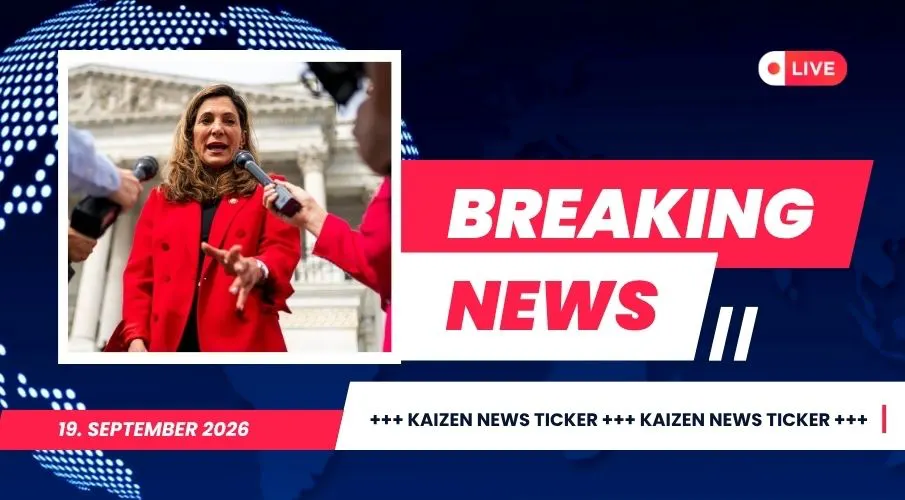
The clearest distance came on immigration policy. Republican Representative Maria Elvira Salazar of Florida released a television ad directly in front of the White House and said Trump’s approach had “gone too far.” Hispanic voters who helped him win in 2024 now felt betrayed, she said. For a party whose president exercised enormous influence over nominations during the primaries, that is an unusually direct statement. Trump had successfully pushed Republican lawmakers out of Congress whom he considered insufficiently loyal. But in November, the party’s own base will not be enough for many candidates. They need independent voters and people in the political middle. Texas Senator John Cornyn, whom Trump helped knock out of the Republican primary by backing Ken Paxton, therefore called it a mistake for Trump to make himself the center of the midterms. He said he did not see how that would appeal to independent voters or disaffected Democrats.
The White House is still betting on Trump. His advisers believe strong turnout among his supporters can save Republican majorities. According to people around him, he is expected to appear on the campaign trail almost every day before the election. Kevin Cramer of North Dakota describes the calculation openly: Many Republican voters are Trump voters first, and in some cases Trump voters only. They have to feel that voting for a Republican majority also means voting for him. At the same time, Cramer acknowledges anxiety in Congress. Farmers are frustrated by inflation and high energy prices. The Iran war has triggered another jump in fuel prices just weeks before the election. Ashley Hinson, the Republican Senate candidate in Iowa, calls Trump’s plan to temporarily lift tariffs on certain beef imports a “bad idea.” Trump’s announced payment of 5,000 dollars to every adult American if Republicans keep both chambers is also drawing skepticism inside his own party. Susan Collins puts the possible cost at around 1.2 trillion dollars and openly asks where that money is supposed to come from. Trump points in part to tariff revenue, but such a payment would likely require additional deficit spending. That leaves his party in a strange position just weeks before the election: Trump wants to be everywhere on the ballot while some of his own candidates are trying, on certain issues, to get as far away from him as possible.
Bolivia has a new cat species - and it lived unnoticed in the cloud forest

It is smaller than an ordinary house cat, weighs just 1.4 kilograms and still managed to go unnoticed by science. In Bolivia’s Yungas forest, researchers have identified a previously unknown cat species. People in the region call it Tilcayo, and its scientific name is Leopardus tilcayo. Its fur is light brown and covered with irregular rosettes. At around 46 centimeters long, it is one of the smallest wild cats in South America. For the 1st time in more than 100 years, a living cat species has been newly described.
The discovery began with an animal whose features did not match the known descriptions of South American tiger cats. Researchers therefore turned to its genetic material. They analyzed samples from 38 cats across several South American countries, including 8 museum specimens. The result overturns an old classification: The tiger cats previously grouped together actually consist of 5 genetically distinct species. The Tilcayo lineage split from its relatives around 1.4 million years ago. No one had previously proposed classifying the Bolivian animals as a separate species or even a subspecies.
Much more about the cat is still unknown. Scat samples contained remains of small rodents, which apparently form part of its diet. Camera-trap footage suggests the animals may be more active at night. Everything currently known about living individuals, however, is based on just 2 animals and a small number of images. One of the known Tilcayos is a 10-year-old male that now lives at the Senda Verde wildlife refuge. Before that, a local family had kept him in their home. Researchers also described a new subspecies from the Peruvian part of the Yungas and named it Leopardus tigrinus antisuyo.
For the protection of the animals, the new classification could expose some uncomfortable facts. Until now, tiger cats have internationally been treated as 2 vulnerable species with declining populations. In the future, the 5 genetically distinct lineages are supposed to be assessed separately. That could show that the Tilcayo is far more threatened than previously thought. Its habitat in the Yungas is losing forest to clearing and agriculture. Human-caused fires and mining add more pressure. Damaged forest areas need to be restored, while the remaining habitat must stay connected. The fact that a new cat species can still be discovered in 2026 is good news. The less pleasant part comes right behind it: Some species may disappear before anyone even realizes they exist.


Das man nach 100 Jahren eine neue Katzenart entdeckt hat, ist schon erstaunlich.
Da stellt sich unweigerlich die Frage, wieviele Tierarten in den letzten 100 Jahren ausgestorben sind, ohne, dass wir von deren Existenz wussten.
Extinction is forever 😞
Danke für diesen Artikel.
Die zwei Kubaner tun mir unendlich leid.
Abgeschoben in ein unsicheres Land. Ohne Chance auf Ausreise.
Wie pervers muss man sein, das anderen Menschen anzutun?
KI ist eine Gefahr.
Daran besteht nach den jüngsten Vorfällen kein Zweifel mehr.
Dazu verbraucht es immens viel von der wichtigsten Ressource, dem Wasser.
Es ist gut, dass die Menschen sich wehren.
Datencentren dürfen, genau wie KI, nicht unregulated bleiben.
Das Ergebnis der Wahl in Russland steht doch ohnehin fest.
Ob die Leute wählen gehen oder bicht.
Es werden 97% für Putin werden.
Und schon kann Putin behaupten, dass Russland hinter ihm steht.
Das Einzige, was in Russland hinter einem steht, ist der Soldat mit der Waffe. Der dafür sorgt, dass man sein Kreuz an der richtigen Stelle macht.
Kanada ist derzeit der einzige Staat, der es richtig macht. Und absolut konsequent.
Warum können andere Staaten sich nicht daran orientieren, anstatt ständig vor Trump einzuknicken?
Es ist Wahlkampf.
Natürlich nehmen republikanische Kandidaten bestimmte Themen und gehen ein wenig auf Abstand zu Trump.
Aber man darf nicht vergessen:
Sie haben alle für „the big beautiful bill“, für die Milliarden an ICE gevotet.
Für die Kürzungen bei Medicaid.
Sie haben Trump keine Grenze gesetzt, obwohl sie die Chance hatten.
Das jetzt ist alles nur Gewäsch um Stimmen zu gewinnen.
Susan Collins ist da übrigens eine rjchtig able Lügnerin.
Erst äußert sie Zweifel, votet dann dafür und behauptet hinterher, dass sie nicht über das Ausmaß informiert war.
Leider fallen zu viele MAGA und auch gemäßigtere Republikaner auf das Gewäsch rein und werden wieder rot wählen.
Sie lernen es nicht.
Wie immer hervorragend recherchiert und geschrieben.